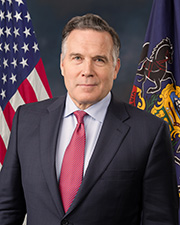
Photo of David McCormick
R United States Senate · Pennsylvania

Sen. David McCormick

Compare
Total votes
440
all sessions
Attendance
99%
4 missed
Near the chamber average
With party
99%
of cast votes
Higher than 83% of chamber peers
Bipartisan score
0%
crosses aisle rarely
Lower than 87% of chamber peers
Sponsored
411
bills & resolutions
Near the chamber average
Committees
13
assignments
411 bills and resolutions

Sponsored bills

Total
411
Primary
46
Co-sponsor
365
This page
411
matching current filters
Co-sponsor S 489
In committee · Texas Senate · Co-sponsor
Air Guard STATUS Act of 2025

Maddy summaryThis bill creates a permanent program to cover tuition and educational expenses for Air National Guard members who meet their training requirements. It requires the Air Force Secretary to use existing authority under federal law (10 U.S.C. §2007) to pay for these costs, replacing temporary or inconsistent approaches. The program directly affects active-duty Air National Guard members who comply with their training obligations under 32 U.S.C. §502(a). This is a concrete policy change to standardize and ensure ongoing tuition assistance, not a new funding source or eligibility expansion.

In committee Feb 6, 2025 1 co-sponsor
Co-sponsor S 404
In committee · Texas Senate · Co-sponsor
Focus on Learning Act

Maddy summaryThe Focus on Learning Act requires the Surgeon General to study how mobile device use affects student learning, mental health, and school climate in K-12 schools. It establishes a pilot program offering $5 million to fund secure containers/lockers for schools to create "mobile device-free environments" during school hours (excluding school-issued devices). Participating schools must maintain communication systems for staff/emergency response, have clear parent contact processes, and get parental input before implementing the policy. The bill directly affects elementary and secondary schools, students, and parents by mandating a study and pilot program to test device-free learning environments.

In committee Feb 5, 2025 1 co-sponsor
Co-sponsor S 421
In committee · Texas Senate · Co-sponsor
American Beef Labeling Act of 2025

Maddy summaryThis bill requires mandatory country of origin labeling for beef products, including ground beef, so consumers can see where their beef comes from. It updates existing labeling rules under the Agricultural Marketing Act of 1946 to specifically include beef (and ground beef) alongside other meats. The law directs the U.S. Trade Representative and Agriculture Secretary to find a World Trade Organization-compliant way to reinstate this labeling within a year of enactment. It directly affects beef producers, retailers, and consumers by changing how beef packaging must identify its country of origin.

In committee Feb 5, 2025 1 co-sponsor
Co-sponsor S 424
In committee · Texas Senate · Co-sponsor
Retirement Fairness for Charities and Educational Institutions Act of 2025

Maddy summaryThis bill amends federal securities laws to expand regulatory exemptions for retirement plans used by charities and educational institutions. It specifically updates definitions to include 403(b) plans (common for nonprofit employees) under exemptions from certain registration and oversight rules, provided they meet three conditions: (1) they follow federal retirement law (ERISA), (2) the employer acts as a fiduciary for investment choices, or (3) they are governmental plans. This change directly affects employees of qualifying charities and educational institutions who participate in these 403(b) plans, reducing compliance burdens for their retirement plans. The policy change streamlines regulatory requirements without altering retirement benefits or funding.

In committee Feb 5, 2025 1 co-sponsor
Co-sponsor S 427
In committee · Texas Senate · Co-sponsor
TAILOR Act of 2025

Maddy summaryS 427 (TAILOR Act of 2025) requires federal banking regulators (like the Federal Reserve and FDIC) to adjust rules based on each financial institution’s specific risk level and business model, rather than applying uniform regulations. It directly affects all federally regulated banks, particularly community banks, by limiting unnecessary regulatory burdens like costly reporting. Key provisions include tailoring rules to minimize costs (e.g., reducing reporting requirements for community banks eligible under the Community Bank Leverage Ratio, as specified in Section 3), documenting this tailoring in rulemaking notices, and submitting annual reports to Congress on implementation. The bill aims to modernize supervision while preserving flexibility for institutions serving local communities.

In committee Feb 5, 2025 1 co-sponsor
Co-sponsor S 401
In committee · Texas Senate · Co-sponsor
Fair Access to Banking Act

Maddy summaryThe Fair Access to Banking Act (S 401) prohibits large financial institutions ($10 billion+ in assets) and payment networks from denying services to lawful businesses based on political or reputational factors, such as the type of legal business they operate. It requires banks to justify denials using objective, risk-based standards instead of category-based decisions, and mandates written explanations for denials. The law enables lawsuits against violators with treble damages and civil penalties up to 10% of service value (capped at $10,000 per violation). It directly affects major banks, payment processors, and credit unions that serve large-scale customers, ensuring fair access for businesses operating within federal law.

In committee Feb 4, 2025 1 co-sponsor
Co-sponsor S 334
In committee · Texas Senate · Co-sponsor
American Values Act

Maddy summaryThis bill permanently prohibits U.S. foreign assistance funds from being used for abortions, involuntary sterilizations, or related biomedical research. It amends the Foreign Assistance Act of 1961 and the Peace Corps Act to block funding for organizations supporting coercive abortion or sterilization programs. The law directly affects all U.S. government programs distributing foreign aid, including international health and development initiatives. It ensures funds cannot cover abortion services as family planning, lobbying on abortion, or programs involving coercion.

In committee Jan 30, 2025 1 co-sponsor
Co-sponsor S 339
In committee · Texas Senate · Co-sponsor
A bill to amend title XVIII of the Social Security Act to provide for Medicare coverage of multi-cancer early detection screening tests.

Nancy Gardner Sewell Medicare Multi-Cancer Early Detection Screening Coverage Act This bill allows, beginning in 2028, for Medicare coverage and payment for multi-cancer early detection screening tests that are approved by the Food and Drug Administration and that are used to screen for cancer across many cancer types, if the Centers for Medicare & Medicaid Services determines such coverage is appropriate. Coverage is limited to those under a certain age (age 68 in 2028, increased by one year every year thereafter) and to one test every 11 months.

In committee Jan 30, 2025 1 co-sponsor
Co-sponsor S 292
In committee · Texas Senate · Co-sponsor
Educational Choice for Children Act of 2025

Maddy summaryThis bill establishes tax credits for individuals and corporations who contribute to scholarship granting organizations that provide educational scholarships for eligible students. The individual tax credit is limited to 10% of adjusted gross income or $5,000, while corporate credits are capped at 5% of taxable income. The bill defines "eligible students" as those from households with income not exceeding 300% of the area median gross income, and specifies that scholarships can cover tuition, materials, tutoring, and educational therapies. The bill includes a $10 billion annual cap on tax credits, with a first-come, first-served allocation system, and requires scholarship organizations to meet specific financial and operational standards.

In committee Jan 29, 2025 1 co-sponsor
Co-sponsor S 5
Signed into law · Texas Senate · Co-sponsor
Laken Riley Act

Laken Riley Act This act requires the Department of Homeland Security (DHS) to detain certain non-U.S. nationals ( aliens under federal law) who have been arrested for burglary, theft, larceny, shoplifting, assault of a law enforcement officer, or any crime that results in death or serious bodily injury to another person. The act also authorizes states to sue the federal government for decisions or alleged failures related to immigration enforcement. Under this act, DHS must detain an individual who (1) is unlawfully present in the United States or did not possess the necessary documents when applying for admission; and (2) has been charged with, arrested for, convicted of, or admits to having committed acts that constitute the essential elements of the above crimes. The act also authorizes state governments to sue for injunctive relief over certain immigration-related decisions or alleged failures by the federal government if the decision or failure caused the state or its residents harm, including financial harm of more than $100. Specifically, the state government may sue the federal government over a decision to release a non-U.S. national from custody; failure to fulfill requirements relating to inspecting individuals seeking admission into the United States, including requirements related to asylum interviews; failure to fulfill a requirement to stop issuing visas to nationals of a country that unreasonably denies or delays acceptance of nationals of that country; violation of limitations on immigration parole, such as the requirement that parole be granted only on a case-by-case basis; or failure to detain an individual who has been ordered removed from the United States.


Signed into law Jan 29, 2025 1 co-sponsor
Showing 381 to 390 of 411 bills
Previous 1 38 39 40 42 Next