

Maddy summaryThis bill, known as the Gun Records Restoration and Preservation Act, aims to repeal specific restrictions on how the Bureau of Alcohol, Tobacco, Firearms and Explosives manages gun-related data. By removing these limits, the legislation would allow federal agencies to keep instant background check records longer than the current 24-hour requirement and enable the ATF to conduct annual inventory audits of gun dealers. Additionally, the bill would permit the consolidation of firearms records and allow for more Freedom of Information Act requests regarding gun traces. These changes are intended to help law enforcement track illegal firearms more effectively and support research into gun trafficking patterns.
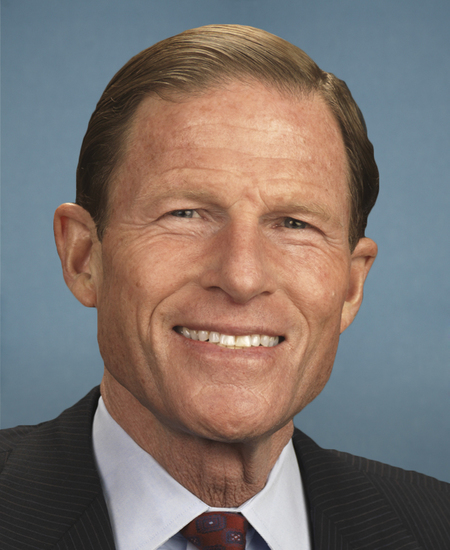
Sen. Richard Blumenthal
Sponsored bills
Maddy summaryThe AI Bubble Transparency Act requires major financial institutions to report detailed data on their investments in companies that build artificial intelligence hardware and infrastructure, such as chip makers and data centers. These reports must include specific information about the size, type, and financial health of the companies involved, while smaller banks and those with minimal exposure are exempt from these requirements. Within a year of passing, regulators will compile this information into a public report assessing how risks in the AI sector could impact overall financial stability and will offer recommendations to reduce those risks.
Maddy summaryThe Critical Defense Ownership Review Act requires the Department of Defense to review any attempt by an investment company to acquire at least a 25 percent stake or control of a major defense supplier. Under this law, such transactions must undergo a premerger notification process where the Department evaluates national security risks, competition impacts, and the financial stability of the involved companies. If the Department identifies concerns, it must report its findings to federal antitrust authorities within 30 days. Additionally, the bill mandates a triennial review every three years to assess how mergers and acquisitions affect the health of the defense industrial base, with results reported to Congress. These provisions directly impact investment firms seeking to invest in defense contractors and aim to ensure the continued reliability of critical military supply chains.
Maddy summaryThe No Toxic Chemicals in Food Packaging Act of 2026 prohibits the use of specific harmful substances, such as PFAS, certain phthalates, and bisphenols, in materials that come into contact with food. This law directly affects manufacturers and regulators by amending federal statutes to classify these chemicals as unsafe and requiring the FDA to consider potential risks to vulnerable groups, including children and pregnant women, when evaluating alternative substances. The bill sets a minimum national standard while explicitly allowing states to enforce stricter regulations without fear of federal preemption. These restrictions will not take effect until two years after the law is enacted to provide time for industry adjustments.
Maddy summaryThis joint resolution seeks to reject a specific federal rule issued by the Centers for Medicare & Medicaid Services regarding the WISeR Model, which was designed to reduce wasteful spending by requiring prior authorization for select Medicare services. If passed, the measure would legally nullify the rule, preventing the Centers for Medicare & Medicaid Services from enforcing the new prior authorization requirements on healthcare providers. The bill directly affects Medicare beneficiaries and medical facilities that would otherwise have to comply with these administrative changes. By invoking the Congressional Review Act, the legislation aims to stop the implementation of the policy without altering the underlying statute governing Medicare.
Maddy summaryThis bill authorizes the Department of Veterans Affairs to construct a major medical facility project in St. Louis, Missouri, during fiscal year 2026. It specifically funds a new bed tower, expanded clinical buildings, a consolidated administrative building, warehouse, utility plant, and parking garages, with a maximum funding limit of $1,762,668,000. The bill directly affects veterans receiving care at the St. Louis VA medical facility by enabling physical infrastructure upgrades. It does not change existing VA benefits or policies but provides the necessary funding authorization for these construction projects. The authorization is for fiscal year 2026, not fiscal year 2025 as referenced in the bill's title.
North Platte Canteen Congressional Gold Medal Act This bill provides for the award of a Congressional Gold Medal to recognize the individuals and communities that provided financial and other support for the North Platte Canteen in North Platte, Nebraska, during World War II.
Maddy summaryThis Senate resolution expresses support for designating June 5, 2026, as National Gun Violence Awareness Day and June 2026 as National Gun Violence Awareness Month. The bill calls on people across the United States to promote awareness of gun violence and safety, wear orange on the designated day to honor victims, and encourage community leaders to discuss ways to make neighborhoods safer. While the resolution highlights statistics on gun-related deaths and injuries, it does not create new laws or change existing policies. Instead, it serves as a symbolic gesture to raise public attention about the issue during a specific time period.
Maddy summaryThe Freedom to Travel for Health Care Act of 2026 prohibits any person or government entity from restricting, sanctioning, or discriminating against individuals who travel to another state to receive reproductive health care that is legal there. It also protects those who assist travelers and reproductive health care providers from facing penalties for offering services to out-of-state patients, effectively overriding any conflicting state laws. The bill establishes a private right of action allowing affected individuals, organizations, and providers to sue in federal or state court for violations, with provisions for damages and attorney's fees. Additionally, it removes state sovereign immunity defenses for officials enforcing laws that interfere with this travel right, ensuring federal courts can hear such cases directly.
Maddy summaryThe Complete America's Great Trails Act creates a new federal tax credit to encourage donations of land that includes National Scenic Trails or their surrounding corridors. This provision allows taxpayers to claim a credit equal to the fair market value of the donated land, provided the property meets specific width requirements and is used for conservation purposes. The bill also permits continued recreational or agricultural use of the donated land as long as such activities do not harm significant conservation interests. Additionally, the legislation requires the Secretary of the Interior to study the credit's effectiveness and report back to Congress within four years regarding potential changes like making the credit refundable.