Require Evaluation before Implementing Executive Wishlists Act of 2021 or the REVIEW Act of 2021 This bill prohibits a final agency rule from taking effect until (1) the agency submits the rule to the Office of Information and Regulatory Affairs (OIRA), and (2) OIRA makes a determination as to whether the rule is a high-impact rule that may impose an annual cost on the economy of at least $1 billion. In addition, an agency must postpone the effective date of a high-impact rule until the final disposition of all actions seeking judicial review of the rule.
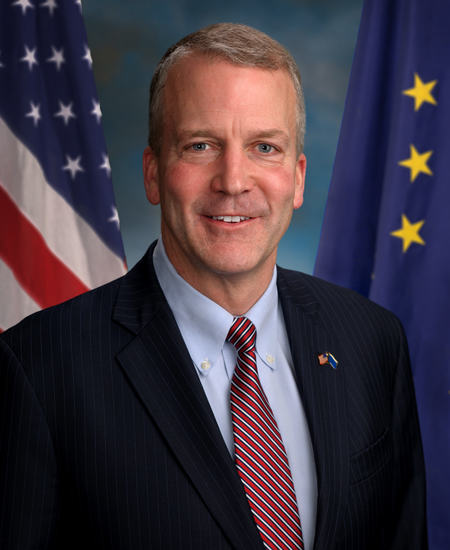
Sen. Dan Sullivan
Sponsored bills
Regulations Endanger Democracy Act of 2021 or the RED Tape Act of 20 21 This bill prohibits, with certain exceptions, a federal agency from issuing a rule that causes a new financial or administrative burden on businesses or people in the United States unless the agency has repealed or amended two or more existing rules causing such a burden and the cost of the rule to be issued is less than or equal to that of the rules repealed or amended. In determining whether to repeal such a rule, an agency must consider (1) whether the rule has achieved its purpose, has become obsolete, or overlaps with a rule to be issued; (2) any adverse effects that could materialize if the rule is repealed; and (3) whether the costs of the rule outweigh its benefits.
This resolution opposes any attempt to expand the number of justices on the Supreme Court.
True Reciprocity Act of 2021 This bill directs the Department of State to report to Congress on how China's government creates barriers to the work of U.S. diplomats, officials, journalists, businesses, and nongovernmental organizations in China. The report shall include assessments of (1) the impact of Chinese government sanctions on U.S. nonprofit organizations, (2) the Chinese government's treatment of U.S. citizens and whether such treatments adhere to international agreements related to due process, and (3) activities that the Chinese government and affiliated entities are allowed to conduct in the United States but that are denied to U.S. entities in China.
This resolution recognizes the importance of the relationship between the United States and Mongolia, as well as the continued democratic development of Mongolia. The resolution also encourages expanded U.S. efforts to support Mongolia in certain areas, particularly with respect to economic development.
Protect Funding for Women's Health Care Act This bill prohibits federal funding of Planned Parenthood Federation of America or its affiliates, subsidiaries, successors, or clinics.
Summer Meals Act of 2021 This bill revises provisions related to the Summer Food Service Program (SFSP) of the Department of Agriculture (USDA), which provides meals to children and teens in low-income areas during the summer months when school is not in session. The bill redefines areas in which poor economic conditions exist , where the SFSP may operate, as areas in which at least 40% (currently, 50%) of the children have been determined to be eligible for free or reduced price school meals under the school lunch and breakfast programs. The bill reimburses service institutions (other than school food authorities) for up to one meal and one snack per child each day during after-school hours, weekends, and school holidays during the regular school calendar. Currently, such institutions are reimbursed for meals and snacks served to children over the summer months or to children who are on vacation under a continuous school calendar. USDA must award competitive grants to service institutions to increase participation in the summer food service program for children who lack the ability to access a congregate feeding site through (1) innovative approaches to limited transportation, (2) mobile meal trucks, and (3) any other method or approach that does not require children to access a congregate feeding site. Service institutions that are participating in the summer food service program for children may serve up to three meals, or two meals and one snack, during each day of operation. Currently, this option is reserved for camps and service institutions that serve meals primarily to migrant children.

Eliminating Global Market Distortions To Protect American Jobs Act of 2021 This bill addresses unfair trade practices by making various changes to U.S. antidumping and countervailing duty law. Antidumping provides relief to U.S industries and workers that are materially injured or threatened with injury due to imports of like products sold in the U.S. market at less than fair value, while countervailing duty provides such relief from imports of products subsidized by a foreign government or public entity. Specifically, the bill establishes a process for successive antidumping and countervailing duty investigations. Successive investigations may be concurrent (an ongoing investigation of the same product from different countries) or recently completed (not more than two years before the date of the initiation of the successive investigation). Further, the bill establishes a time line for the Department of Commerce to issue determinations in successive investigations. Among other provisions, the bill authorizes Commerce to apply countervailing duty law to subsidies provided by a foreign government or public entity to a company operating in a different country, use another method for calculating the cost of production in specific circumstances, and require importers to provide a certification that the imported merchandise is not subject to an antidumping or countervailing duty order. Additionally, the bill establishes procedures for Commerce to conduct circumvention inquiries, including by specifying the deadlines for preliminary and final determinations.
Affordable Housing Credit Improvement Act of 2021 This bill revises provisions of the low-income housing tax credit and renames it as the affordable housing credit . The bill increases the per capita dollar amount of the credit and its minimum ceiling amount beginning in 2021 and extends the inflation adjustment for such amounts. The bill modifies tenant income eligibility requirements and the average income formula for determining such income. It also revises rules for student occupancy of rental units and tenant voucher payments, and prohibits any refusal to rent to victims of domestic abuse. The bill further modifies the credit to increase state allocations of the credit; repeal the qualified census tract population cap; prohibit local approval and contribution requirements; increase the credit for certain projects designated to serve extremely low-income households; increase the credit for certain bond-financed projects designated by state agencies; eliminate the basis reduction for properties that receive certain energy-related tax benefits; and increase the population cap for difficult development areas (i.e., areas with high construction, land, and utility costs relative to area median gross income). The bill also includes Indian and rural areas as difficult development areas and modifies other requirements relating to casualty losses, acquisition credits, and foreclosures.
This resolution honors the memory of U.S. Capitol Police Officer William Francis "Billy" Evans for the selfless acts of heroism he displayed on April 2, 2021.