

Maddy summaryThe Marketplace Fraud Accountability Act requires the healthcare.gov website to use multi-factor authentication for users enrolling in health plans or accessing their personal enrollment data. This security measure, which involves verifying identity through at least two methods like passwords and biometrics, must be implemented within one year of the bill's enactment. The law includes an exception for individuals who lack access to broadband or cellular service or cannot otherwise use this technology. By strengthening identity verification, the bill aims to protect consumer information while maintaining access for those with connectivity limitations.
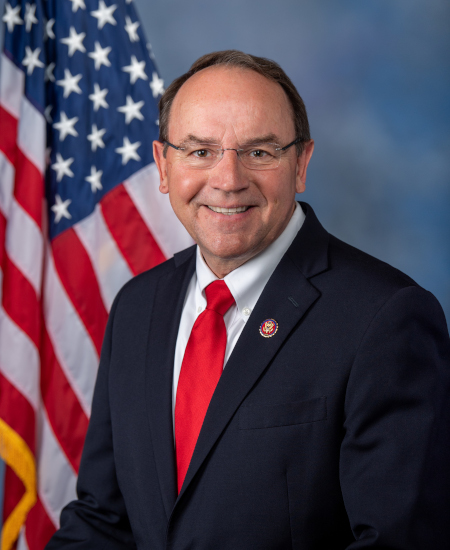
Rep. Thomas P. Tiffany
Sponsored bills
Maddy summaryThis bill redesignates the existing National Parks and Public Land Legacy Restoration Fund as the America's Legacy Restoration Fund to address deferred maintenance on federal lands. It directs revenue from recreation fees and a portion of energy development income into the fund, which must be used primarily for repairing critical infrastructure like roads, trails, and buildings managed by agencies such as the National Park Service and the Forest Service. The legislation establishes strict rules requiring that most funds go toward non-transportation projects, mandates transparency through public dashboards tracking project status, and sets aside a small percentage for matching private donations. Additionally, the bill increases entrance fees for foreign visitors to ensure they contribute to the fund, while prohibiting the use of these specific funds for land acquisition or employee bonuses.
Maddy summaryHR 2978, the GUARD Act, allows state, local, and tribal law enforcement agencies to use existing federal grant funds for investigating elder financial fraud, "pig butchering" investment scams, and general financial fraud. The bill directs these funds toward hiring specialized staff, training on blockchain tools and transnational fraud, purchasing investigative software, improving data collection, and creating financial sector liaisons to coordinate with banks. It requires annual reports from law enforcement on fund usage and outcomes, and mandates federal agencies to submit comprehensive reports to Congress on scam statistics, enforcement actions, and funding allocation. The legislation directly affects law enforcement agencies and aims to strengthen efforts against fraud targeting vulnerable populations, particularly elderly individuals.
Maddy summaryThe REAL Butter Act requires food manufacturers to clearly label products made from lab-created milkfat as "lab-created butter" on their packaging. This rule applies to any item marketed as butter that uses non-agricultural sources for its milkfat instead of traditional dairy. The law defines these products specifically as those that do not meet the existing federal standard of identity for butter. By mandating this specific wording on labels, the bill aims to ensure consumers can easily distinguish between traditional butter and synthesized alternatives.
Repealing Big Brother Overreach Act This bill repeals the Corporate Transparency Act. The act requires existing companies and newly created companies to report beneficial ownership information to the Department of the Treasury’s Financial Crimes Enforcement Network for purposes of addressing the financing of terrorism and money laundering.
Maddy summaryHR 1468 establishes a new "CCP Initiative" within the Department of Justice's National Security Division to counter threats from the Chinese Communist Party. The initiative specifically targets intellectual property theft, economic espionage, and unauthorized technology transfers by Chinese entities, focusing on protecting U.S. businesses, academic institutions, and critical infrastructure. Key mechanisms include developing enforcement strategies, prioritizing cases involving trade secret theft and hacking, and requiring annual congressional reports on progress, resource use, and economic impacts. The initiative is designed to operate separately from other DOJ programs and will expire six years after enactment.
Maddy summaryThis bill designates a specific section of International Place Northwest in Washington, D.C., as Tiananmen Square Memorial Boulevard and officially changes the address of 3505 International Place Northwest to 1 Tiananmen Square Memorial Boulevard. It requires the Administrator of General Services to install street signs with this new name at designated locations, including the nearest federal property and specific street corners. The legislation updates all federal records, maps, and documents to reflect these new names and addresses, ensuring consistent official usage.
Maddy summaryThis bill creates new grounds for deporting non-citizens who are members of or associated with criminal gangs. It defines a "criminal gang" as a group of five or more people whose primary purpose is committing serious crimes like drug offenses, violence, trafficking, or weapons violations. The Secretary of Homeland Security can designate groups as criminal gangs after consultation with the Attorney General, and these designations make gang members ineligible for asylum, temporary protected status, parole, and other immigration benefits. The bill also establishes procedures for reviewing and revoking these designations, with limited judicial review options.
Maddy summaryThis bill, known as the State Emissions Authority Act of 2026, modifies the Clean Air Act to reduce federal mandates on vehicle inspection and maintenance programs. It primarily affects state governments by removing requirements for them to maintain specific inspection schedules and by limiting the federal government's ability to credit states for emissions reductions achieved through these programs. Additionally, the legislation adjusts rules regarding how states must report their environmental plans and clarifies compliance standards for federal vehicles and installations. By striking several existing sections of the law, the bill effectively shifts more authority over vehicle inspection policies from the federal level to the states.
Maddy summaryThis bill would cancel a 2001 federal rule that restricted road building on National Forest System lands and direct the Secretary of Agriculture to construct new roads on those lands. The legislation specifically nullifies the Roadless Area Conservation rule and prohibits the Agriculture Department from creating any similar restrictions in the future. Under the bill, the Forest Service must build permanent and temporary roads to support forest restoration, reduce wildfire risks in at-risk communities and municipal watersheds, replace roads harming forest health, and fulfill the intent of the 1897 Forest Management Act. The changes directly affect federal land management decisions and would impact communities and organizations that rely on forest access and wildfire prevention efforts.