Earned Income and Child Tax Credits Outreach Act of 2021 This bill directs the Department of the Treasury, not later than March 1, 2021, to carry out a public outreach program to inform certain individual taxpayers of their potential eligibility for the earned income and child tax credits. The Inspector General for Tax Administration of Treasury must study the outreach program and make recommendations for improving it.
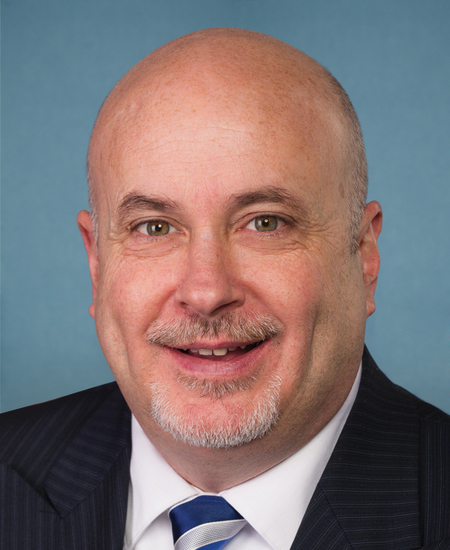
Rep. Mark Pocan
Sponsored bills
Health Care Fairness for Military Families Act of 2021 This bill modifies the extension of dependent coverage under TRICARE by allowing a dependent under the age of 26 to be covered without an additional premium. Additionally, the bill authorizes such coverage of dependents without a premium regardless of whether they are eligible to enroll in an employer sponsored plan.
Access Technology Affordability Act of 2021 This bill allows a refundable tax credit equal to the amounts paid for qualified access technology for use by a blind individual who is the taxpayer, the taxpayer's spouse, or a dependent of the taxpayer. Qualified access technology is hardware, software, or other information technology with the primary function of converting or adapting information that is visually represented into forms or formats useable by blind individuals. The credit is limited to (1) costs that are not compensated by insurance or otherwise, and (2) an aggregate amount of $2,000 per blind individual in any period of three consecutive taxable years. The credit must be adjusted for inflation after 2021 and terminates after 2026.
Emergency Pension Plan Relief Act of 2021 This bill modifies the funding rules and provides financial assistance for certain pension plans that are underfunded or insolvent. First, the bill expands the authority of, and provides funding for, the Pension Benefit Guaranty Corporation (PBGC) to provide special partition assistance to a multiemployer pension plan that is insolvent or at risk of insolvency. The bill expands eligibility for partition assistance, provides funding for a plan to reach a projected funded ratio of 80% over a 30-year period, and does not require a plan to repay such assistance. The bill further permits a multiemployer pension plan to elect to retain its funding zone status from the previous year for either (1) the first plan year beginning during the period from March 1, 2020, through February 28, 2021; or (2) the next succeeding plan year, as designated by the plan sponsor. A plan may also extend by five years the funding improvement or rehabilitation period if the plan is designated as in endangered or critical status for a plan year beginning in 2020 or 2021. A plan in critical and declining status may not suspend payment of plan benefits. Additionally, the bill adjusts the minimum funding standards for a multiemployer pension plan to account for investment losses and other losses related to the COVID-19 (i.e., coronavirus disease 2019) pandemic and modifies the PBGC guarantee formula to increase the maximum potential benefits under a multiemployer pension plan. Finally, the bill makes changes with respect to single employer pension plans, including revising the amortization rules and extending and modifying the pension funding stabilization percentages.

Federal Firefighter Pay Equity Act This bill modifies certain pay calculations that are used to determine retirement and annuity benefits for federal firefighters. Specifically, the bill adjusts the method of determining the average pay of a federal firefighter by adding one-half of a firefighter's basic hourly rate multiplied by the number of overtime hours included as part of such firefighter's regular tour of duty.
Presidential Tax Transparency Act This bill requires the President, the Vice President, and certain candidates for President and Vice President to disclose federal income tax returns for the ten most recent taxable years. The returns must be disclosed to the Federal Election Commission (FEC), which must make the returns publicly available after redacting information that is necessary for protecting against identity theft, such as Social Security numbers. If the tax returns are not disclosed to the FEC as required by this bill, the Internal Revenue Service must provide the returns to the FEC upon receiving a written request from the FEC.
Incentivizing Medicaid Expansion Act of 2021 This bill provides an enhanced federal matching rate to every state that expands Medicaid coverage for individuals who are newly eligible under the Patient Protection and Affordable Care Act, regardless of when such expansion takes place. Under current law, the enhanced Federal Medical Assistance Percentage (FMAP) is equivalent to 100% in 2014 through 2016, 95% in 2017, 94% in 2018, 93% in 2019, and 90% thereafter. The bill retains this enhanced FMAP, but bases it on a term of years rather than on specific dates. The bill applies retroactively.
Wall Street Tax Act of 2021 This bill imposes a 0.1% excise tax on certain purchases of stocks, bonds, and derivatives. The tax applies to the purchase of a security if (1) such purchase occurs on, or is subject to the rules of, a qualified board or exchange located in the United States; or (2) the purchaser or seller is a U.S. person. The tax applies to transactions with respect to a derivative if (1) the derivative is traded on, or is subject to the rules of, a qualified board or exchange located in the United States; or (2) any party with rights under the derivative is a U.S. person. The bill exempts from such tax (1) initial issues of securities; and (2) any note, bond, debenture, or other evidence of indebtedness which is traded on or is subject to the rules of, a qualified board or exchange located in the United States, and has a fixed maturity of not more than 100 days. The tax applies to transactions by a controlled foreign corporation and must be paid by its U.S. shareholders.
This resolution expresses the sense of the House of Representatives that Congress should ensure that the U.S. Postal Service is not privatized and remains an independent establishment of the federal government.
Equal COLA Act This bill revises the formula used to calculate the cost-of-living adjustment for annuities paid under the Federal Employees Retirement System.