

Maddy summaryThis bill establishes federal protections and funding to expand access to in vitro fertilization and intrauterine insemination for individuals, military service members, and veterans. It requires most private health plans, Medicaid programs, and Medicare to cover these fertility treatments without imposing higher cost-sharing than other medical services. Additionally, the legislation mandates that the Department of Defense and the Department of Veterans Affairs provide specific fertility preservation and treatment benefits to uniformed service members and eligible veterans. The bill also includes preemption clauses that override state laws restricting these procedures and prohibits discrimination based on marital status, sex, or sexual orientation in the provision of care.
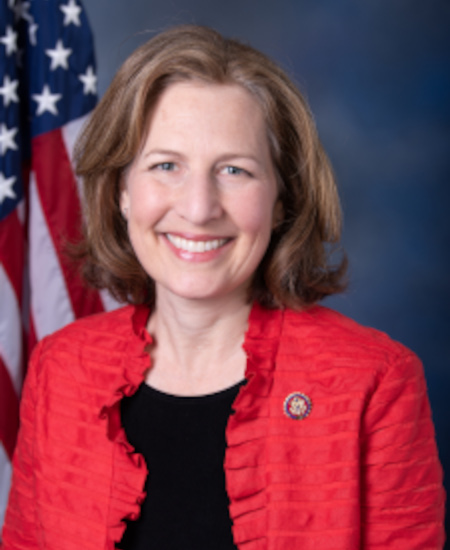
Rep. Kim Schrier
Sponsored bills
Maddy summaryThe Rural Hospital Cybersecurity Enhancement Act directs the Department of Health and Human Services to create a workforce development plan aimed at training cybersecurity professionals specifically for rural hospitals. This strategy requires the Secretary to consult with various federal agencies and healthcare representatives while focusing on partnerships, curriculum development, and identifying local security challenges. Additionally, the bill mandates the publication of free instructional materials and an awareness campaign to help rural hospital staff learn fundamental cybersecurity skills. The legislation does not authorize any new funding, relying instead on existing resources to implement these training and educational initiatives.
Maddy summaryThis bill reauthorizes and expands the Accelerating Access to Critical Therapies for ALS Act through 2031, extending funding for research into treatments for amyotrophic lateral sclerosis. It requires drug manufacturers to share interim clinical trial data with the FDA to better assess the progress of investigational drugs and clarifies that phase 3 clinical trial definitions include combined phase 2/3 trials and planned trials not yet enrolling participants. The legislation also mandates the FDA to publish an updated five-year action plan for ALS and other rare neurodegenerative diseases, including resource needs and coordination strategies with broader disease communities. Additionally, the bill requires the Government Accountability Office to submit a report on the program's implementation four years after enactment.
Maddy summaryThe Wildfire Reduction Market Expansion Act of 2026 updates the Clean Air Act to broaden the definition of renewable biomass eligible for carbon credits. It specifically allows materials from forest management, such as slash, storm debris, and wood residuals, to be counted as renewable fuel if they come from sustainably managed lands or public forests designated for fuel reduction. The bill also includes vegetation cleared from defensible space around buildings and from wildfire risk reduction projects in the wildland-urban interface. By clarifying these categories and establishing certification requirements, the legislation aims to increase the supply of biomass available for generating renewable energy credits.
Maddy summaryThe FLOWS Act updates regulations for hydropower projects by clarifying which changes require Federal Energy Regulatory Commission approval and exempting routine maintenance from such requirements. It also establishes a new, streamlined licensing process for small-scale micro hydrokinetic energy projects that generate up to 5 megawatts from moving water without impounding it. Under this new section, applicants would file a notification of intent followed by a formal application, with the Commission required to issue a final decision within one year. Additionally, the bill mandates that the Commission create specific rules to define project alterations and implement categorical exclusions to speed up environmental reviews for these smaller projects.
Maddy summaryThe Affordable Innovation for the Grid Act directs the Department of Energy to study how artificial intelligence and high-performance computing can improve the reliability and efficiency of the national power grid. This assessment will specifically examine how these technologies can speed up the process of connecting new power sources to the grid and identify any technical or cybersecurity barriers to their use. Within one year of passing, the Department of Energy must submit a report to Congress outlining its findings and offering recommendations to overcome identified limitations and encourage wider adoption of these tools. The bill primarily affects federal agencies responsible for energy oversight and the electric power industry, aiming to gather data rather than immediately changing laws.
Maddy summaryHR 2004, titled "Tyler’s Law," requires the Secretary of Health and Human Services to study how often hospital emergency departments test for fentanyl during overdose cases (beyond standard drug tests), including associated costs, patient benefits/risks, and impacts on privacy and patient-physician relationships. The study must be completed within one year of the bill's enactment. Based on the study results, the Secretary must issue guidance within six months on whether emergency departments should routinely test for fentanyl, how to inform clinicians about test contents, and how such testing may affect future overdose risks and health outcomes. This bill directly affects hospital emergency departments and patients experiencing overdoses by shaping future testing protocols.
Maddy summaryThis bill requires Medicare to create separate payment codes for ultralightweight manual wheelchairs based on their frame material (specifically titanium or carbon fiber vs. other materials), starting in 2026. It ensures Medicare pays the standard rate for titanium/carbon fiber wheelchairs regardless of material, while allowing suppliers to charge beneficiaries the difference between Medicare's payment and their actual cost. Beneficiaries must receive a notice about potential additional costs before purchasing or renting such wheelchairs. The bill directly affects Medicare beneficiaries needing these specialized wheelchairs and the suppliers who provide them.
Maddy summaryHR 1266, the Combating Illicit Xylazine Act, adds xylazine - a veterinary sedative increasingly found in illicit drug mixtures - to Schedule III of the Controlled Substances Act, regulating its use and trafficking. It directly affects veterinarians, animal owners, and manufacturers by allowing xylazine to be legally dispensed for animal use under specific veterinary prescriptions, while prohibiting non-veterinary human use. The bill includes transition periods (60 days for practitioners, 1 year for labeling) to ease compliance for manufacturers and practitioners, and requires the DEA and FDA to expedite necessary applications. It also mandates two congressional reports on xylazine's illicit use and trafficking patterns, and directs the Sentencing Commission to review penalties for offenses involving xylazine.
Maddy summaryThis bill establishes a comprehensive federal program to reduce diagnostic errors and improve patient safety by funding research, creating new research centers, and developing standardized data systems. It directs the Agency for Healthcare Research and Quality to launch a multi-year initiative that includes an advisory committee with patient representatives to design strategies for preventing medical mistakes and reducing associated health care costs. A key provision creates a voluntary reporting system for patients to share experiences of diagnostic errors without fear of legal repercussions, while also forming an interagency council to coordinate efforts across various health departments. The legislation authorizes significant funding over several years to support these research activities, data standardization, and the implementation of tools that leverage artificial intelligence and data science to enhance diagnostic accuracy.