

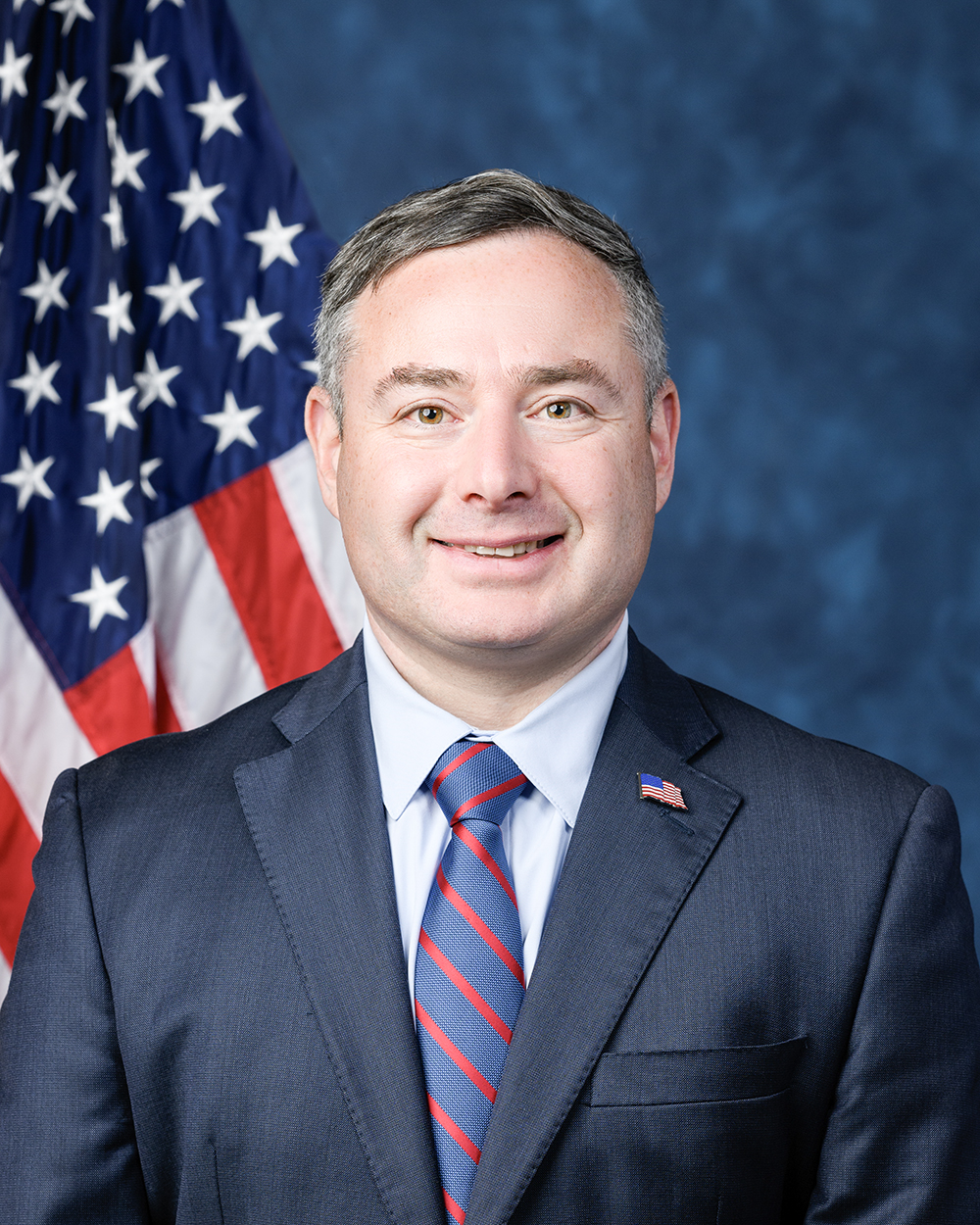
Photo of Eugene Simon Vindman
D United States House · District 7 · Virginia On the 2026 ballot

Rep. Eugene Simon Vindman

Compare
Total votes
650
all sessions
Attendance
99%
5 missed
Higher than 80% of chamber peers
With party
91%
of cast votes
Lower than 93% of chamber peers
Bipartisan score
5%
crosses aisle rarely
Higher than 92% of chamber peers
Sponsored
1,089
bills & resolutions
Higher than 98% of chamber peers
Committees
6
assignments
1,089 bills and resolutions

Sponsored bills

Total
1,089
Primary
69
Co-sponsor
1,020
This page
1,089
matching current filters
Co-sponsor HR 1177
In committee · Texas House · Co-sponsor
Improve and Enhance the Work Opportunity Tax Credit Act

Maddy summaryHR 1177, the "Improve and Enhance the Work Opportunity Tax Credit Act," increases tax credits for employers hiring from targeted groups. It raises the credit rate from 40% to 50% for qualified first-year wages up to $6,000, plus 50% for wages between $6,000 and $12,000. The bill also creates higher credit limits for veterans (up to $24,000/$48,000), removes an age cap for Supplemental Nutrition Assistance Program (SNAP) recipients, and adjusts rules for summer youth workers and long-term family assistance recipients. These changes apply to employees hired after December 31, 2024, directly benefiting employers who hire from these eligible groups.

In committee Feb 10, 2025 1 co-sponsor
Co-sponsor HR 1158
In committee · Texas House · Co-sponsor
Freedom First Lend Lease Act

Maddy summaryHR 1158, the Freedom First Lend Lease Act, authorizes the U.S. President to lend or lease defense equipment to Ukraine and Eastern European countries impacted by Russia's invasion, for fiscal years 2026 and 2027. It specifically removes certain legal restrictions (like sections of the Foreign Assistance Act and Arms Export Control Act) that would normally apply to such assistance for Ukraine. The bill requires the President to establish expedited delivery procedures for defense articles within 60 days of enactment and mandates that any loan or lease must comply with standard return, reimbursement, and repayment requirements. This policy change directly affects U.S. foreign military assistance to these nations, streamlining support for defense capabilities and civilian protection.

In committee Feb 10, 2025 1 co-sponsor
Co-sponsor HR 1178
In committee · Texas House · Co-sponsor
Alpha-gal Allergen Inclusion Act

Alpha-gal Allergen Inclusion Act This bill expands the definition of major food allergen to include galactose-alpha-1,3-galactose (commonly known as alpha-gal ). Under current law, food labels generally must identify each major food allergen found in labeled food products.  (Certain tick bites cause an allergic condition known as alpha-gal syndrome that can result in an allergy to the alpha-gal molecule, which is found in red meat and other products made from mammals.)

In committee Feb 10, 2025 1 co-sponsor
Co-sponsor HR 1154
In committee · Texas House · Co-sponsor
Space Infrastructure Act

Maddy summaryThe Space Infrastructure Act requires the Secretary of Homeland Security to designate space systems, services, and technology as a critical infrastructure sector within 30 days of enactment. It mandates that the Secretary issue detailed guidance within 180 days, defining the scope (including satellites, launch facilities, and related infrastructure), appointing a Sector-Specific Agency, and establishing coordinating committees. This procedural bill affects federal agencies managing critical infrastructure and the space industry by formally integrating space systems into existing national security frameworks under the Homeland Security Act.

In committee Feb 10, 2025 1 co-sponsor
Co-sponsor HR 1175
In committee · Texas House · Co-sponsor
Blind Americans Return to Work Act of 2025

Blind Americans Return to Work Act of 2025 This bill requires the Social Security Administration to carry out a demonstration project during which blind Social Security Disability Insurance (SSDI) beneficiaries receive reduced benefits commensurate with income above certain thresholds. Under current law, only individuals who earn under a specified monthly income, known as the substantial gainful activity (SGA) threshold, are considered disabled and thereby eligible for SSDI benefits. For blind workers, this limit is $2,700 per month in 2025. SSDI beneficiaries may earn beyond the SGA threshold for a limited period of time, known as the trial work period , before their benefits are suspended and ultimately terminate. The bill establishes a 20-year demonstration project during which individuals who are entitled to SSDI benefits by reason of blindness and who earn above the SGA threshold continue to receive benefits at an amount gradually reduced commensurate with their earnings beyond a specified amount. During this period, blind workers’ SSDI benefits must be reduced by $1 for every $2 that a worker earns above the sum of (1) the SGA threshold, and (2) the worker’s expenses reasonably attributable to their work. The SGA threshold may not be used to determine whether an individual is disabled during this period, and blind workers’ SSDI benefits may not be terminated due to work-related earnings. The trial work period also must not apply.  After 10 years, affected beneficiaries may opt out of the modified benefits structure.

In committee Feb 10, 2025 1 co-sponsor
Co-sponsor HR 1171
In committee · Texas House · Co-sponsor
SAFE Act

Maddy summaryThe SAFE Act requires Medicare to cover falls risk assessments and fall prevention services for seniors aged 65+ who have fallen in the previous year. These services, provided by physical or occupational therapists, will be included in Medicare's annual wellness visits and initial preventive physical exams starting January 1, 2026. The bill also mandates annual reports to Congress beginning in 2027 on falls among seniors aged 65+ that required treatment for fall-related injuries. This policy directly affects Medicare beneficiaries with a documented history of falls by adding targeted preventive care to their covered benefits.

In committee Feb 10, 2025 1 co-sponsor
Co-sponsor HR 1143
In committee · Texas House · Co-sponsor
Medicare IVIG Access Enhancement Act of 2025

Maddy summaryThis bill expands Medicare coverage to include in-home administration of intravenous immune globulin (IVIG) treatments for two specific neurological conditions: chronic inflammatory demyelinating polyneuropathy (CIDP) and multifocal motor neuropathy (MMN), effective January 1, 2027. It directly affects Medicare beneficiaries diagnosed with CIDP or MMN who currently face limited coverage for these treatments. The key mechanism modifies Medicare payment rules to allow the Secretary to adjust payments based on whether IVIG is used for primary immune deficiency diseases or the newly covered conditions (CIDP/MMN), following a formal rulemaking process. These changes aim to improve access to a critical treatment for patients with these chronic neurological disorders.

In committee Feb 7, 2025 1 co-sponsor
Co-sponsor HR 1131
In committee · Texas House · Co-sponsor
Family Farm and Small Business Exemption Act

Maddy summaryHR 1131 exempts certain family farms and small businesses from being counted as assets when calculating financial need for federal student aid under the Higher Education Act. Specifically, it amends the law to exclude the net value of a family farm where the family resides and small businesses (with ≤100 employees) owned by the family from need analysis calculations. This change directly affects students from qualifying family farm or small business households when applying for federal financial aid. The exemption applies to need analysis conducted for award years beginning after the bill's enactment date. The bill modifies Section 480(f)(2) of the Higher Education Act of 1965 to implement this policy change.

In committee Feb 7, 2025 1 co-sponsor
Co-sponsor HR 1151
In committee · Texas House · Co-sponsor
Freedom to Invest in Tomorrow’s Workforce Act

Maddy summaryThis bill expands 529 college savings account flexibility by allowing funds to cover costs for industry-recognized postsecondary credentials, not just traditional degrees. It defines "qualified expenses" to include tuition/fees for recognized credential programs (like certifications or apprenticeships), required testing fees, and continuing education needed to maintain credentials. To qualify, programs must meet specific criteria, such as appearing on state lists under the Workforce Innovation and Opportunity Act or being listed in VA or Defense directories. The change applies to 529 distributions made after the law's enactment, giving families more options to use these accounts for job-focused training.

In committee Feb 7, 2025 1 co-sponsor
Co-sponsor HR 1121
In committee · Texas House · Co-sponsor
No DeepSeek on Government Devices Act

Maddy summaryHR 1121, the "No DeepSeek on Government Devices Act," prohibits U.S. federal executive agencies from using the DeepSeek application (or any successor by High Flyer) on government information technology devices. It requires the Office of Management and Budget to develop removal standards within 60 days, directing agencies to remove the application while complying with existing security rules. Exceptions are permitted for national security, law enforcement, and security research activities, but agencies must document risk mitigation plans for any authorized use under these exceptions. The bill directly affects all executive agencies covered under federal information technology policies.

In committee Feb 7, 2025 1 co-sponsor
Showing 1,021 to 1,030 of 1,089 bills