

Maddy summaryHR 9520, the Federal Cyber Workforce Training Act of 2024, creates a Federal Cyber Workforce Training Institute to standardize and enhance cybersecurity training for federal employees. The bill requires the National Cyber Director to develop a plan within 180 days for the Institute to provide modular, hands-on training for new federal cybersecurity hires and personnel transitioning to mid-career roles, using the national NICE cybersecurity workforce framework as a guide. Training will include work-based learning, skill assessments, and a badging system to certify proficiency, with no requirement for a college degree in cybersecurity. The Institute will also train HR staff on recruiting and managing cybersecurity professionals, coordinating with agencies like DHS and DoD, and will leverage existing programs without authorizing new funding.
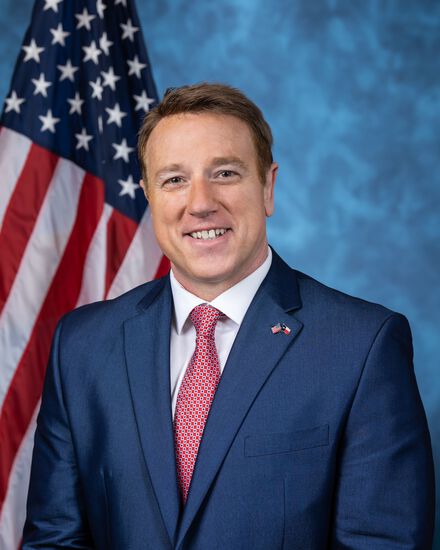
Rep. Pat Fallon
Sponsored bills
Maddy summaryThe SAFE Supply Chains Act requires U.S. federal agencies to only purchase or use covered information and communications technology products (such as hardware, software, and firmware) from original equipment manufacturers (OEMs) or authorized resellers (entities with direct OEM contracts). It prohibits agencies from using non-compliant products except under limited waivers for scientific research or critical mission functions, which must be justified and reported to Congress annually. Agencies must also provide procurement guidance to help vendors become authorized resellers, and the Office of Management and Budget must submit yearly reports on waiver usage. The law takes effect one year after enactment and does not require new federal funding.
Maddy summaryThis resolution establishes a House task force to investigate the July 13, 2024, attempted assassination of Donald J. Trump in Butler, Pennsylvania. The task force, composed of up to 11 members appointed by the Speaker (with minority leader input), will examine actions by federal, state, local, and private entities related to the incident and must issue a final report with recommendations by December 13, 2024. It has standing committee authority to hold hearings, issue subpoenas, and access relevant records, and will terminate 10 days after submitting its report. The task force directly affects the House of Representatives and the entities under investigation.
Maddy summaryThe SAVE Act (HR 8281) requires U.S. citizens to provide documentary proof of citizenship when registering to vote in federal elections. It defines acceptable proof as documents like passports, REAL ID-compliant IDs, military IDs, or birth certificates, and mandates that states verify citizenship using information from government agencies like DHS and Social Security. States must establish processes for voters without required documentation to provide an attestation under penalty of perjury. The law also requires states to remove noncitizens from voter rolls when verified evidence shows they're not citizens. This bill directly affects all applicants registering to vote in federal elections and state election officials who must implement these requirements.
Maddy summaryThe GOOD Act requires all federal agencies to publish their non-binding policy guidance documents (like memos, letters, or blog posts) on a single, centralized online repository within 180 days of enactment. It directly affects every federal agency by mandating that all such documents - excluding those already exempt under the Freedom of Information Act - be organized into clear categories on agency websites. Key provisions include designating a central website by the Office of Management Budget Director, maintaining rescinded guidance with clear disclaimers, and ensuring public access to all published guidance. The bill focuses solely on improving transparency in how agencies share interpretive guidance, not on changing policy substance.
Maddy summaryHRES 1365 is a non-binding House resolution calling for the immediate termination of Kimberly Cheatle as U.S. Secret Service Director. It directly addresses the Secret Service Director and the executive branch, though it has no legal force to remove her from office. The resolution’s sole provision is a formal request for her termination, reflecting the sponsors' position on her leadership. As a symbolic gesture, it does not change her employment status or require any action from the President or Secret Service.
Maddy summaryHJRES 164 is a congressional resolution seeking to block a rule issued by the Department of Commerce regarding firearms license requirements. It directly targets the rule published in the Federal Register (89 Fed. Reg. 34680), which would have revised licensing procedures for firearms dealers. If passed, the resolution would prevent this rule from taking effect by invoking the congressional disapproval process under federal law. The bill does not create new regulations but aims to halt an existing rule affecting gun license applicants and dealers.
Maddy summaryHRES 1345 is a ceremonial resolution recognizing the 100th anniversary of diplomatic relations between the United States and Ireland, established on October 7, 1924. It commemorates the historical milestone, highlighting the strong cultural ties (with over 30 million Americans claiming Irish heritage), economic partnership (over $1 trillion in annual trade), and shared values supporting peace in Northern Ireland. The resolution does not create new laws or directly affect any individuals or entities, as it is purely symbolic. It affirms congressional support for continued U.S.-Ireland friendship and the enduring people-to-people connections between the two nations.
Maddy summaryThis bill amends U.S. immigration law to make certain military property trespassing a basis for denying entry or deporting non-citizens. It adds to the Immigration and Nationality Act that anyone convicted of entering military, naval, or Coast Guard property without authorization (as defined under 18 U.S.C. §1382) is both inadmissible upon arrival and deportable if already in the U.S. The law directly affects non-citizens with prior convictions for this specific offense. The key mechanism is updating existing immigration grounds for inadmissibility and deportability to include unauthorized entry onto military installations.
Maddy summaryHR 4132 would require the U.S. to impose sanctions on Chinese officials responsible for forced organ harvesting from Falun Gong practitioners, including blocking their property and denying visas. It mandates a report on China's organ transplant system within one year, assessing organ sources, procurement timelines, and whether persecution of Falun Gong constitutes an atrocity. The bill directs the U.S. to avoid all cooperation with China's organ transplantation system while the Chinese Communist Party remains in power. It cites findings of systemic persecution and alleged organ harvesting as justification for these policy measures.