

Maddy summaryThe PBM Reform Act of 2025 aims to increase transparency and fairness in pharmacy benefit manager (PBM) operations within Medicare Part D and Medicaid programs. The bill requires Medicare Part D plans to allow any pharmacy meeting standard terms to join their networks, establishes "essential retail pharmacies" in underserved areas (with limited pharmacy access), and mandates detailed reporting on drug pricing, rebates, and reimbursement rates. It creates a process for pharmacies to report PBM violations of reasonable contract terms and prohibits "spread pricing" in Medicaid, where PBMs retain the difference between what they pay pharmacies and what they charge plans. These provisions aim to improve pharmacy access for Medicare beneficiaries and ensure fairer reimbursement practices for pharmacies.
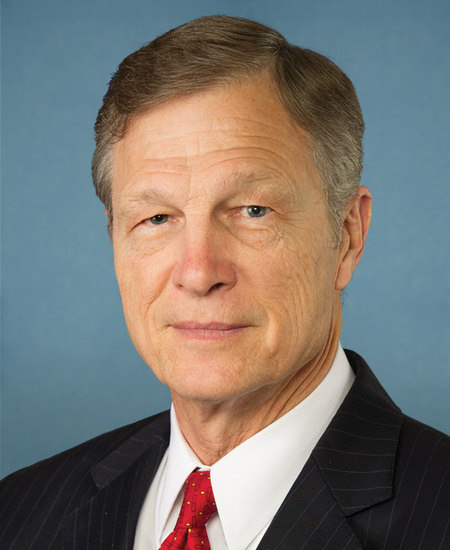
Rep. Brian Babin
Sponsored bills
Maddy summaryHR 3179 proposes renaming the Anahuac National Wildlife Refuge in Texas to the "Jocelyn Nungaray National Wildlife Refuge." The bill directly affects the refuge's official name and all federal references to it, including documents and maps. It cites findings about 12-year-old Jocelyn Nungaray's murder in Houston and states the renaming honors her, given her love of animals and local connection. The key mechanism is a straightforward name change for all federal records, with no new policies or funding impacts.
Maddy summaryThis bill requires drug manufacturers to pay rebates to Medicare when their "selected drugs" (cancer and complex therapies subject to negotiated maximum fair prices) are used. Manufacturers must calculate rebates based on the difference between current Medicare payment rates (ASP+6) and new negotiated rates (MFP+6), covering the gap for beneficiaries. This lowers patient coinsurance from the current 20% of ASP+6 to 20% of MFP+6 for these specific drugs during the negotiated price period. The rebates are paid to the Medicare trust fund and apply to Medicare Part B beneficiaries using these drugs, directly affecting drug manufacturers and patients covered under Medicare Part B.
Maddy summaryHR 4201, the TPS Reform Act of 2025, changes how Temporary Protected Status (TPS) is granted to immigrants from foreign countries facing crises. It requires Congress, not the executive branch, to pass a specific law designating a country for TPS, based on strict criteria like ongoing armed conflict, major natural disasters, or extraordinary conditions preventing safe return. The law sets clear time limits: initial designations last up to 18 months, with extensions capped at 12 months, and mandates Congress to find that crisis conditions continue for any extension. This directly affects immigrants from designated countries who would otherwise be allowed to live and work temporarily in the U.S. due to unsafe conditions in their home countries. The bill also shifts administration from the Attorney General to the Secretary of Homeland Security.
Maddy summaryThis bill adds specific Medicare coverage for treatments of dialysis-related amyloidosis, a condition affecting some long-term dialysis patients. It defines these treatments as FDA-approved items/services provided in dialysis facilities, including necessary adjunct supplies. Medicare will pay 100% of reasonable charges for these treatments separately, outside standard dialysis payment bundles. This directly affects Medicare beneficiaries receiving these specific treatments at approved dialysis facilities.
Maddy summaryHRES 520 is a House resolution honoring former First Lady Barbara Pierce Bush on the occasion of her 100th birthday, recognizing her life, achievements, and public service. It specifically highlights her advocacy for literacy - including establishing the Barbara Bush Foundation for Family Literacy and supporting the National Literacy Act - and her roles as Second Lady and First Lady during her husband George H.W. Bush's presidency. This commemorative resolution does not create new laws or policies; it serves only to formally acknowledge her legacy. The resolution was introduced by House members on June 17, 2025.
Maddy summaryHR 3901, the Jurisdictional Determination Backlog Reduction Act, requires the U.S. Army Corps of Engineers to eliminate existing backlogs for two specific types of applications within 60 days of the bill's enactment. It directly affects developers, construction companies, and others needing federal permits for projects involving waterways (under Clean Water Act Section 404) or jurisdictional determinations. The bill mandates the Corps to expedite processes and reallocate personnel/resources to clear all pending applications as of June 5, 2025. This is a concrete policy change focused on reducing processing delays for permit applicants.
Maddy summaryH.J.Res. 88 disapproves an Environmental Protection Agency (EPA) rule that would have allowed California to enforce its "Advanced Clean Cars II" vehicle emission standards. This rule, submitted by the EPA on January 6, 2025, sought to grant California a waiver to override federal preemption for its stricter vehicle pollution controls. The resolution, passed by Congress and signed into law on June 12, 2025, formally nullifies the EPA rule, preventing California from implementing its Advanced Clean Cars II program under this specific waiver. The bill directly affects California's ability to set its own vehicle emission standards for passenger cars and light trucks.
Maddy summaryHR 3705 requires the NOAA Under Secretary to improve coastal marine fog forecasts. It directs the collection of more fog observations using buoys, weather stations, vessels, drones, and satellite data, aiming to enhance forecast accuracy and safety for vessels navigating fog-prone coastal waters. The bill mandates better communication of fog advisories and decision support tools for mariners and coastal communities. It also requires stakeholder and tribal engagement in developing the project plan, which must be finalized within one year of the bill's enactment.
Maddy summaryHRES 481 is a symbolic resolution condemning recent antisemitic attacks in the U.S., specifically referencing the June 1, 2025, Boulder, Colorado, assault on a Jewish community gathering and other incidents like the May 2025 Washington, D.C., embassy shooting. It formally recognizes a pattern of violence targeting Jewish individuals and institutions, including attacks during religious events. The resolution calls on law enforcement to thoroughly investigate and prosecute such incidents and urges elected officials to publicly oppose antisemitism and politically motivated violence. As a non-binding resolution, it does not create new laws or allocate funding but serves to affirm congressional stance against antisemitism.