

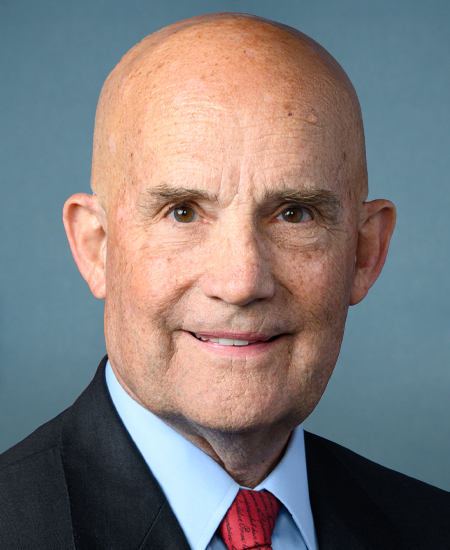
Photo of Keith Self
R United States House · District 3 · Texas On the 2026 ballot

Rep. Keith Self

Compare
Total votes
1,879
all sessions
Attendance
99%
23 missed
Near the chamber average
With party
85%
of cast votes
Lower than 98% of chamber peers
Bipartisan score
8%
crosses aisle rarely
Higher than 97% of chamber peers
Sponsored
704
bills & resolutions
Near the chamber average
Committees
8
assignments
704 bills and resolutions

Sponsored bills

Total
704
Primary
82
Co-sponsor
622
This page
704
matching current filters
Primary HR 8187
In committee · Texas House · Lead sponsor
To amend title 51, United States Code, to direct the Administrator of the National Aeronautics and Space Administration to seek to establish the initial elements of a lunar outpost, and for other purposes.

Maddy summaryThis bill directs the NASA Administrator to begin planning and establishing the initial components of a lunar outpost by December 31, 2030. The legislation amends existing federal law to create a specific timeline for this space exploration initiative, requiring NASA to actively pursue the development of these outpost elements. The primary affected party is the National Aeronautics and Space Administration, which must incorporate this directive into its operational planning and budget considerations. This measure formalizes a long-term goal for lunar presence without specifying detailed design requirements or funding allocations.

In committee Apr 2, 2026 0 co-sponsors
Co-sponsor HR 8182
In committee · Texas House · Co-sponsor
Banning Perpetrators of Religious Persecution Act of 2026

Maddy summaryThis bill prohibits the issuance of U.S. visas to individuals who have committed particularly severe violations of religious freedom, either while serving as foreign government officials or while acting outside the United States. It directly affects foreign nationals by adding them to the list of inadmissible aliens under U.S. immigration law if they meet specific criteria related to religious persecution. The law requires the Secretary of State to publish the names and locations of these individuals on a public website, though the Secretary retains discretion to withhold identities if doing so would harm U.S. foreign policy interests. This measure expands existing immigration restrictions to specifically target those responsible for religious freedom violations, creating a new ground for visa denial.

In committee Apr 2, 2026 1 co-sponsor
Primary HR 8166
In committee · Texas House · Lead sponsor
GUARD Act

Maddy summaryThe GUARD Act would deny tax-exempt status to U.S. nonprofit organizations that receive contributions from citizens or nationals of designated foreign adversaries. This change directly affects charities, religious groups, and other 501(c)(3) and 501(c)(4) organizations that accept donations from individuals in countries like China, Cuba, Iran, North Korea, and Russia. Under the bill, any organization receiving such contributions would lose its tax-exempt status starting with the taxable year following the donation. The Secretary of the Treasury, in consultation with the Secretary of State, could also designate additional countries as foreign adversaries if national security interests require it. This provision applies only to contributions received after the bill is enacted into law.

In committee Mar 30, 2026 0 co-sponsors
Co-sponsor HR 8101
In committee · Texas House · Co-sponsor
Ensuring Better Interest Treatment and Deductibility Act (EBITDA)

Maddy summaryThis bill, titled the Ensuring Better Interest Treatment and Deductibility Act, would change how businesses calculate the limit on interest expenses they can deduct on their taxes. It directly affects corporations and other businesses that pay interest on loans by modifying the rules for determining adjusted taxable income. The key provision removes a specific clause from the tax code that currently limits how much interest can be deducted based on a company's earnings, effectively allowing more interest to be treated as a deductible business expense. These changes would apply to tax years starting after December 31, 2025, meaning businesses would need to adjust their financial planning for future tax filings.

In committee Mar 26, 2026 1 co-sponsor
Primary HR 7653
In committee · Texas House · Lead sponsor
Biodefense Diplomacy Enhancement Act

Maddy summaryHR 7653, the Biodefense Diplomacy Enhancement Act, requires the U.S. Secretary of State to develop two new strategies to strengthen international cooperation on biodefense, biosecurity, and biotechnology. The bill mandates a NATO Biodefense Strategy to improve alliance coordination on biological threat response and a broader International Cooperation Strategy to enhance partnerships with U.S. allies and major non-NATO partners on export controls for dual-use biotech items and adherence to safety standards. These strategies must identify gaps in current efforts, recommend improvements, and assess coordination with U.S. agencies, with reports due to Congress within 270 days of enactment. The bill directly affects U.S. diplomatic engagement with NATO and allied nations on biological threat preparedness, focusing on policy development, capabilities, and enforcement of the Biological Weapons Convention.

In committee Mar 26, 2026 0 co-sponsors
Primary HR 7632
In committee · Texas House · Lead sponsor
SHADOW Act

Maddy summaryThe SHADOW Act creates a new State Department Coordinator to lead U.S. efforts against hybrid warfare threats from China and Russia, particularly in Europe. The Coordinator will assess threats like cyberattacks and disinformation campaigns, coordinate with NATO allies and partners (including Japan and Australia), and help protect critical infrastructure sectors. The bill requires the Coordinator to submit a strategy within 60 days and annual reports for three years detailing threat assessments and coordination progress. It also mandates a specific report within 180 days identifying Chinese entities supporting Russia’s defense industry.

In committee Mar 26, 2026 0 co-sponsors
Co-sponsor HR 7616
In committee · Texas House · Co-sponsor
Transatlantic Academic Security and Risk Mitigation Act

Maddy summaryThis bill requires the State Department to create a strategy within 180 days of enactment to address risks posed by certain Chinese entities to U.S. interests through European academic institutions. The strategy must identify, evaluate, and mitigate relationships between covered European institutions (universities/research centers in Europe) and specific Chinese entities of concern - such as those linked to military-civil fusion, defense industries, Confucius Institutes, or activities involving Uyghur detention. It mandates a country-by-country assessment of these entities’ scale and activities, evaluation of security threats to the U.S. and allies, and recommendations for diplomatic engagement. The plan must be submitted unclassified to congressional foreign affairs committees, with a classified annex permitted.

In committee Mar 26, 2026 1 co-sponsor
Co-sponsor HR 3447
In committee · Texas House · Co-sponsor
Chip Security Act

Maddy summaryHR 3447, the Chip Security Act, requires manufacturers to equip specific advanced integrated circuits (classified under export control numbers like 3A090) with security mechanisms before exporting them. These mechanisms must verify location and prevent unauthorized access, diversion, or tampering. The law mandates this for covered chips within 180 days of enactment, with a follow-up assessment within one year to develop additional security requirements. It directly affects U.S. chip exporters and importers of these high-tech products, aiming to strengthen export control compliance and national security.

In committee Mar 26, 2026 1 co-sponsor
Primary HR 7319
In committee · Texas House · Lead sponsor
VA Bonus and Relocation Recovery Act

Maddy summaryHR 7319, the VA Bonus and Relocation Recovery Act, allows the Department of Veterans Affairs (VA) to recover payments made to former employees. It specifically targets former VA employees who received awards, bonuses, or relocation expenses but failed to repay them within 180 days after a final decision. The bill amends existing law to expand recovery authority to cover former employees, enabling the VA to collect these amounts as debts owed to the U.S. government. This change directly affects individuals who left VA employment with outstanding payments, ensuring the government can pursue repayment even after their employment ended. The law does not create new benefits but clarifies the process for recovering previously disbursed funds.

In committee Mar 25, 2026 0 co-sponsors
Co-sponsor HR 8064
In committee · Texas House · Co-sponsor
Career Criminal Accountability Act of 2026

Maddy summaryThis bill creates a federal "three-strikes" sentencing system that mandates longer prison terms for repeat offenders based on the severity of their prior convictions. It directly affects defendants convicted of federal crimes by requiring judges to calculate "strikes" from past misdemeanor and felony convictions, with violent felonies and firearm offenses counting as full strikes while lesser offenses count as partial strikes. Under the new rules, offenders with three or more strikes face consecutive sentences of 10 to life years in prison depending on whether their current offense involves violence or firearms, while preventing enhancements from being triggered solely by misdemeanor convictions. The law also limits how juvenile convictions count toward strike totals and excludes strikes from a single continuous criminal episode to prevent harsh penalties for related crimes committed at once.

In committee Mar 24, 2026 1 co-sponsor
Showing 81 to 90 of 704 bills
Previous 1 8 9 10 71 Next