

287(g) Program Protection Act This bill requires the Department of Homeland Security (DHS) to allow qualified state and local law enforcement agencies to perform certain immigration enforcement activities if the agency requests such authority. DHS may refuse to grant the request only if there is a compelling reason. Currently, DHS is authorized to grant such authority but is not required to do so.
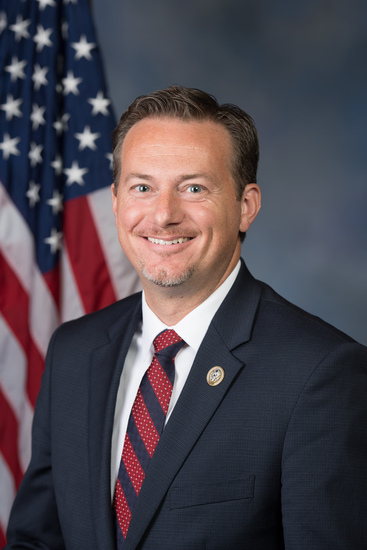
Rep. Michael Cloud
Sponsored bills
Ending Catch and Release Act of 2022 This bill changes the treatment of certain non-U.S. nationals ( aliens under federal law) without lawful immigration status, including by prohibiting the release of asylum seekers into the United States while their cases are pending. The Department of Homeland Security (DHS) may not (with some exceptions) release an individual who is not clearly entitled to admission into the United States while the individual's case is pending, even if the individual is an asylum seeker. DHS may instead detain the individual or return the individual to a neighboring country in certain situations. The bill also expands expedited removal from the United States (i.e., removal without further hearing or review) to include individuals present in the United States without being admitted, with certain exceptions. Under current law, individuals are subject to expedited removal if they lack proper documentation or obtained an immigration benefit through fraud; such individuals are still subject to expedited removal under the bill. The bill also modifies the standard for establishing a credible fear of persecution to avoid expedited removal. Generally, an asylum seeker may avoid expedited removal if an asylum officer finds such a credible fear. Under this bill, an officer may find credible fear if it is more likely than not the individual can establish their eligibility for asylum, whereas under current law, the officer may find credible fear if there is a significant possibility that the individual can establish their eligibility.
Protect Children's Innocence Act This bill places restrictions on the provision of gender affirming care. Gender affirming care includes performing surgery, administering medication, or performing other procedures for the purpose of changing the body of an individual to correspond to a sex that differs from the individual's biological sex. Specifically, the bill makes it a felony to perform any gender affirming care on a minor and it permits a minor on whom such care is performed to bring a civil action against each individual who provided the care. Additionally, the bill prohibits the use of federal funds for gender affirming care or for health insurance that covers such care. Such care may not be provided in a federal health care facility or by a federal employee. The bill also prohibits qualified health plans from including coverage for gender affirming care. Further, plans that include coverage for such care are not eligible for federal subsidies. Finally, the bill prohibits institutions of higher education from offering instruction in gender affirming care. It also makes any non-U.S. national ( alien under federal law) who performs gender affirming care on a minor deportable and inadmissible to the United States. The restrictions under this bill do not apply to the provision of care under certain circumstances such as when an individual does not have normal sex chromosome structure, sex steroid hormone production, or sex steroid hormone action.
Maddy summaryHR 8563, the Sunset Act of 2022, requires most federal agency rules to automatically expire 10 years after issuance unless Congress passes a specific extension. Agencies must submit reports to Congress 180 days before expiration and identify rules for annual review, with 10% of rules reviewed each year for 9 years. Congress can extend rules only through a joint resolution introduced within 3 days of receiving the agency report, requiring bipartisan leadership sponsorship. This law directly affects federal agencies (who create rules) and Congress (who must vote on extensions), changing how long regulations remain in effect without renewal.
Shall Not Be Infringed Act This bill repeals the Bipartisan Safer Communities Act, which was signed into law on June 25, 2022. The act makes various changes to federal firearms laws, including to expand background check requirements, broaden the scope of existing restrictions, and establish new criminal offenses. The act also reauthorizes, funds, and supports various programs, grants, and activities to promote access to behavioral and mental health services, enhance school safety and security initiatives, and address gun violence in communities.
Closing Loopholes and Ending Asylum Abuse Act of 2022 This bill imposes restrictions on noncitizens ( aliens under federal law) applying for asylum, authorizes asylum seekers to apply for asylum abroad, and requires applicants to apply abroad in certain instances. For example, the bill requires a refugee's persecution or well-founded fear of persecution to stem from a government (or affiliated entity), whereas currently the persecution does not have to stem from a government. The bill also requires an applicant who passes through another country with a U.S. diplomatic mission that processes asylum claims to apply for asylum while physically in that country.
Lone Star Reimbursement Act This bill requires the Department of Defense to provide approximately $1.43 billion to the state of Texas as reimbursement for the costs of Operation Lone Star incurred in FY2021 and FY2022. (Operation Lone Star is a border security operation initiated and carried out by the state of Texas.)
Maddy summaryThis bill prohibits federal funding for any activities related to Executive Order 14074 (issued May 25, 2022), which aimed to improve policing and criminal justice practices. It directly affects federal agencies that would otherwise implement the executive order's requirements using taxpayer dollars. The key provision blocks all federal funds from being used to carry out the order's provisions, effectively halting its implementation through budgetary means. The bill does not alter the executive order itself but prevents its federal financial support.
Border Safety and Security Act of 2022 This bill requires the Department of Homeland Security (DHS) to suspend the entry of any non-U.S. nationals ( aliens under federal law) without valid entry documents during any period when DHS cannot detain such an individual or return the individual to a foreign country contiguous to the United States. A state may sue DHS to enforce this requirement. (Under current law, non-U.S. nationals who arrive at the border without entry documents are generally subject to expedited removal. However, if such an individual is found to have a credible fear of persecution, they are typically subject to detention while their asylum claim is being considered.) The bill also authorizes DHS to suspend the entry of non-U.S. nationals without entry documents at the border if DHS determines that such a suspension is necessary to achieve operational control over such a border.
No Retaining Every Gun In a System That Restricts Your Rights Act This bill modifies the retention requirements for firearm transaction records of federal firearms licensees (FFLs) that go out of business. Current law generally requires FFLs that go out of business to deliver their firearm transaction records to the Bureau of Alcohol, Tobacco, Firearms and Explosives (ATF). This bill removes the requirement for FFLs that go out of business to deliver their firearm transaction records to the ATF. Further, the bill requires the ATF to destroy all out-of-business records it has collected from FFLs.