

Maddy summaryHR 311, the Cost Estimates Improvement Act, requires the Congressional Budget Office (CBO) and Joint Committee on Taxation (JCT) to include debt servicing costs in their budget estimates where practicable and to list duplicative federal programs covered by legislation. The bill mandates that all CBO and JCT cost estimates must identify overlapping or redundant agency programs, initiatives, or activities within the proposed legislation. This change aims to improve transparency in federal budget analysis by providing clearer data on long-term debt impacts and program efficiency for lawmakers. The bill directly affects the CBO and JCT as they prepare budget estimates for Congress.
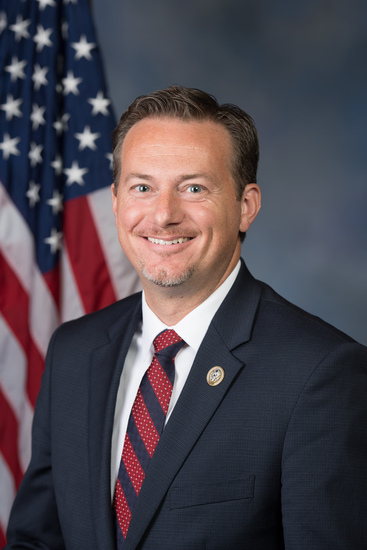
Rep. Michael Cloud
Sponsored bills
Maddy summaryHR 297 requires the military Secretary to reinstate service members who were involuntarily separated solely for refusing a COVID-19 vaccine. It applies specifically to those separated only due to vaccine refusal, not other reasons. If a covered member chooses reinstatement, they must be returned to their previous rank and branch of service. The bill mandates this action without requiring the member to receive the vaccine.
Maddy summaryThe Less is More Resolution (HRES 18) amends House rules to require that any bill funding a new federal program must include reductions in funding for at least two existing programs (each reduction equal to or greater than the new program's funding). It mandates that the introducing member submit a written certification confirming this offset, which must be made public. This procedural rule applies to all House members and aims to enforce budgetary offsets for new spending proposals without creating new fiscal obligations.
Maddy summaryHR 24, the Federal Reserve Transparency Act of 2023, requires a comprehensive audit of the Federal Reserve System's Board of Governors and Federal Reserve banks within 12 months of the bill's enactment. The Congressional auditor (Comptroller General) must then submit a detailed report to Congress within 90 days, including findings, conclusions, and recommendations for improving transparency. This bill directly affects the Federal Reserve System by mandating greater oversight of its operations and financial activities. The key provision repeals a prior limitation that prevented audits of certain Fed programs, aiming to clarify which activities are subject to audit under existing law.
WHO Withdrawal Act This bill requires the President to immediately withdraw the United States from the World Health Organization (WHO) and prohibits using any federal funds to provide for U.S. participation in the WHO. The bill also repeals the 1948 act authorizing the United States to join the WHO.
No Frivolous Application for Short-Barreled Shotguns Act or the NFA SBS Act This bill removes certain short-barreled shotguns from the definition of firearms for purposes of the National Firearms Act. It also eliminates the prohibition on the sale or transportation of such shotguns in interstate commerce and treats persons who acquire or possess a short-barreled shotgun as meeting the registration or licensing requirements for such shotguns where such requirements are determined by reference to the National Firearms Act. The bill preempts state or local laws that impose a tax or recordkeeping requirements on short-barreled shotguns. The Department of Justice must destroy records relating to the registration of shotguns described by this bill within one year after the enactment of this bill.
Maddy summaryThis bill establishes nationwide recognition for valid concealed carry permits. It allows permit holders from any state to carry concealed handguns in states that either issue such permits or don't ban concealed carry, provided they carry a photo ID and their valid permit. Key provisions include making presentation of a valid permit and ID prima facie evidence of compliance, shifting the burden of proof to prosecutors if challenged, and requiring courts to award attorney fees to successful defendants. It does not override state laws prohibiting concealed carry on private property or government lands, nor does it affect restrictions on federal lands like national parks.
Maddy summaryHR 146, the "Old Glory Only Act," prohibits U.S. diplomatic and consular posts from flying any flag other than the U.S. flag above the buildings. This law directly affects all U.S. embassies, consulates, and other official diplomatic facilities abroad. The Secretary of State is required to ensure compliance with this rule, mandating that only the U.S. flag be displayed at these locations. The bill makes no exceptions for foreign flags or other symbols at these specific government properties.
Maddy summaryHR 53 (FIND Act) requires federal contractors to certify they do not refuse to work with firearm manufacturers, dealers, ammunition sellers, or related safety device companies based on bias. It prohibits main contractors from awarding subcontracts exceeding 10% of a contract’s value to entities that fail to make this certification, and bans efforts to circumvent the rule through complex subcontract tiers. The law applies to all federal procurement contracts, directly affecting businesses bidding on government work. Violations risk contract termination and suspension from future government contracts.
This act designates the facility of the United States Postal Service located at 4110 Bluebonnet Drive in Stafford, Texas, as the Leonard Scarcella Post Office Building.