

No Partisan Radio and Partisan Broadcasting Services Act or the NPR and PBS Act This bill prohibits federal funding of National Public Radio (NPR) and the Public Broadcasting Service (PBS), including by prohibiting the use of federal funds received by a public broadcast station to pay dues to or purchase programming from NPR or PBS.
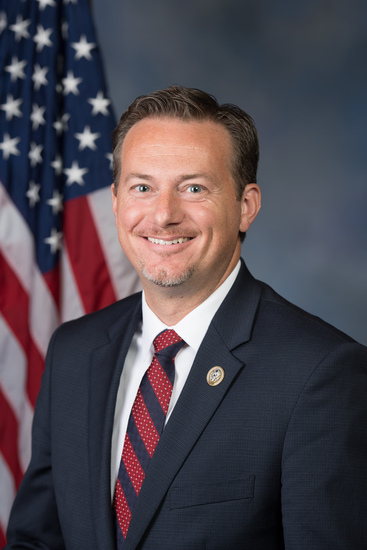
Rep. Michael Cloud
Sponsored bills
This resolution supports the preservation of the stepped-up basis tax rule that allows recipients of inherited assets such as land, equipment, or buildings to adjust the cost basis of the assets to reflect their fair market value. The resolution opposes any efforts to impose new taxes on family farms or small businesses and recognizes the importance of generational transfers of farm and family-owned businesses.
Maddy summaryH.J. Res. 26 is a congressional disapproval resolution blocking the District of Columbia Council's approval of its Revised Criminal Code Act of 2022 (D.C. Act 24-789). It directly affects the District of Columbia by preventing the new criminal code from taking effect, as Congress disapproved the Council's action under the Home Rule Act. The resolution formally rejects the Council's enactment of the code, which was transmitted to Congress on January 27, 2023. This procedural action stops the District from implementing the revised criminal code without further congressional action.
No Federal Funds for Abortion Travel Expenses Act of 2023 This bill prohibits the use of federal funds to support interstate travel to obtain an abortion.
Amplifying Processing of Livestock in the United States Act or the A-PLUS Act This bill directs the Department of Agriculture to revise its regulations to allow livestock market agencies (e.g., auction market owners) to hold an ownership interest in, finance, or participate in the management or operation of a meat packer with a cumulative slaughter capacity of (1) less than 2,000 animals per day or 700,000 animals per year for cattle and sheep, and (2) less than 10,000 animals per day or 3 million animals per year for hogs.
Protecting American Sovereignty Act This bill prohibits the federal government from implementing any obligations upon the United States that may be contained in a draft report by a World Health Organization (WHO) working group on strengthening the WHO's preparedness and response to health emergencies. This prohibition shall also apply to any related or successor reports and recommendations regarding pandemics.
Maddy summaryThis bill requires the U.S. State Department to officially designate four specific Mexican drug cartels (Gulf Cartel, Cartel Del Noreste, Cartel de Sinaloa, and Cartel de Jalisco Nueva Generacion) as foreign terrorist organizations under existing law. It mandates a 30-day report explaining why these groups meet the legal criteria for such designation, including justification if they don't. The report must be submitted to specified congressional committees and may lead to additional cartels being designated based on the findings. The bill also clarifies that this designation won't affect asylum eligibility for individuals fleeing these groups.
Maddy summaryHR 1346, the COVID-19 Origin Act of 2023, requires the Director of National Intelligence to declassify specific information related to the origin of the pandemic within 90 days of enactment. It mandates releasing details about potential links between the Wuhan Institute of Virology and COVID-19, including military connections, prior coronavirus research, and health records of researchers who fell ill in autumn 2019. The bill also requires the Director to submit an unclassified report to Congress containing this information, with only minimal redactions for security. This affects the Director of National Intelligence, who must act on the directive, and the public, who would gain access to the declassified materials.
Maddy summaryThe Unauthorized Spending Accountability Act of 2023 establishes a process for handling federal programs that have expired authorizations (unauthorized programs). It requires a 10% budget reduction in the first year after authorization expires, followed by 15% reductions in the second and third years. If a program remains unauthorized for three years, it must be terminated unless Congress reauthorizes it with a 3-year sunset provision. The bill creates a Spending and Accountability Commission to review direct spending programs and propose spending reductions that could prevent these budget cuts from taking effect.
Maddy summaryHR 1492, the CBO Show Your Work Act, requires the Congressional Budget Office (CBO) to publicly publish its fiscal models, data, and detailed methodologies used when estimating the costs and effects of legislation. Specifically, the bill mandates that the CBO make available all models, data preparation routines, and the specific assumptions and computations behind its cost estimates - enabling independent verification by non-CBO staff. This applies to all estimates prepared under the law, with limited exceptions for data protected by other statutes (requiring only descriptive statistics and access details for such data). The changes take effect six months after the bill becomes law. The bill directly affects the CBO’s internal processes and transparency practices, not the legislative content itself.