

Maddy summaryThe FOCA Act of 2023 requires federal agencies to stop mandating or banning contractor agreements with labor organizations (like union contracts) in construction project bids and contracts. It directly affects federal contractors, subcontractors, and agencies managing construction projects funded by the government. The bill prohibits favoring or penalizing contractors based on their labor affiliation status, aiming to promote fair competition and reduce costs. It also mandates updates to federal contracting rules within 60 days of enactment to implement these changes.
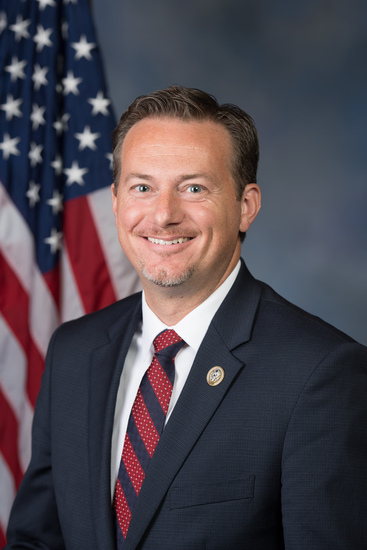
Rep. Michael Cloud
Sponsored bills
Maddy summaryThis bill modifies Social Security Number (SSN) requirements for claiming the Child Tax Credit and Earned Income Tax Credit. It specifies that qualifying SSNs must be issued to U.S. citizens (or under specific Social Security Act provisions) and issued before the tax return due date. The changes apply to tax years beginning after December 31, 2024, and update related tax code references to use "social security number" instead of "taxpayer identification number." These are technical adjustments to eligibility criteria, not new benefits or funding.
Maddy summaryHR 7207, the Preventing Racism in Medicare Act of 2024, prohibits the Medicare program from counting the development of anti-racism plans as qualifying "clinical practice improvement activities" under Medicare rules. The bill amends existing law to explicitly exclude such activities - defined by a 2021 Medicare rule - from meeting requirements for quality improvement programs. This directly affects Medicare providers and suppliers who previously might have used anti-racism planning to fulfill these quality improvement obligations. The change is a technical adjustment to Medicare payment policy, not a new program or benefit.
Maddy summaryThis bill removes a requirement for ambulatory surgical centers participating in Medicare to report the COVID-19 vaccination status of their healthcare workers. Specifically, it directs the Secretary of Health and Human Services to revise Medicare regulations (42 CFR §§ 416.300-416.330) within 45 days of enactment to eliminate this reporting mandate. The change directly affects ambulatory surgical centers that receive Medicare funding, removing a specific administrative burden related to employee vaccination data. The bill focuses solely on modifying existing reporting rules, with no new funding or program requirements.
Maddy summaryThis bill protects religious child welfare providers from losing government contracts or funding if they refuse to provide services conflicting with their sincerely held religious beliefs (e.g., certain foster care or adoption placements). It prohibits states and federal agencies from denying contracts, licenses, or renewals for this reason, and allows providers to sue for violations with recovery of damages and legal fees. States violating the law risk losing 15% of federal child welfare funding. The law applies to all federally funded child welfare services, including foster care, adoption support, and family preservation programs.
Maddy summaryHR 5107, the Pandemic Unemployment Fraud Recoupment Act, extends the statute of limitations for enforcing fraud related to pandemic unemployment benefits from 3 years to 10 years across multiple programs, including Pandemic Unemployment Assistance, Federal Pandemic Unemployment Compensation, and Lost Wages Assistance. It requires states to recover overpayments from individuals who knowingly received benefits they weren’t entitled to, through deductions from future unemployment benefits, while maintaining existing due process protections like hearings before repayment. States may waive repayment if the overpayment wasn’t the individual’s fault or if repayment would be unfair. The bill applies directly to individuals who received pandemic-era unemployment benefits through fraudulent means, ensuring states have a longer timeframe to address these cases under established fraud procedures.
Maddy summaryThis bill repeals the tax on Social Security benefits for seniors, making those benefits fully tax-free. It directly affects seniors who receive Social Security benefits and are currently subject to income tax on a portion of those payments. The key provision removes Section 86 of the tax code that previously included benefits in gross income, while a separate funding mechanism appropriates money to Social Security trust funds to replace the lost revenue. The bill ensures Social Security trust funds remain fully funded without requiring new tax increases.
Maddy summaryThis bill would require Medicare to cover FDA-approved blood tests that screen for multiple cancers simultaneously (like breast, lung, or colorectal cancer) for beneficiaries. It directly affects Medicare recipients aged 65+ who could access these new screenings once per year, without prior authorization. The key provision adds "multi-cancer early detection screening tests" to Medicare's covered services under Part B, defining them as blood tests analyzing cell-free DNA, while maintaining existing coverage for standard screenings like mammograms. The bill does not change current coverage for individual cancer screenings but ensures Medicare keeps pace with new medical technology.
Maddy summaryThe Emergency Care Improvement Act would permanently allow freestanding emergency centers (FECs) to receive Medicare and Medicaid reimbursement for emergency services. FECs are independently licensed facilities operating 24/7 with on-site physicians, providing emergency care equivalent to hospital-based emergency rooms. The bill sets payment rates for FECs equal to hospital outpatient department rates for higher-level emergency services, based on existing Medicare payment structures. This change would apply to over 110 FECs, mostly in Texas, which previously operated under a temporary pandemic waiver and demonstrated 21.8% cost savings to Medicare for similar care.
Maddy summaryThis bill repeals specific provisions from the Affordable Care Act and its 2010 amendment that restricted certain physician referrals to hospitals under Medicare. It directly affects hospitals and physicians who previously faced limitations on referring Medicare patients to facilities they owned or had financial ties with. The key mechanism restores the original rules that allowed such referrals without the prior restrictions, effectively undoing the 2010 changes. This is a procedural change to existing law, not a new policy.