

Teleabortion Prevention Act of 2021 This bill restricts the use of telehealth for chemical abortions (also known as medication abortions). Specifically, it requires a provider who dispenses or prescribes medication for a chemical abortion to physically examine the patient, be physically present at the location of the chemical abortion, and schedule a follow-up visit. The bill provides an exception for a chemical abortion that is necessary to save the life of a mother whose life is endangered by a physical disorder, illness, injury, or condition. The bill establishes criminal penalties—a fine, a prison term of up to two years, or both—for a provider who does not comply with the requirements. A patient who undergoes a chemical abortion may not be prosecuted.
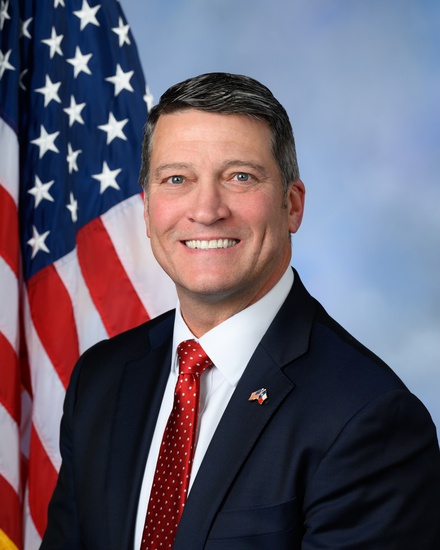
Rep. Ronny Jackson
Sponsored bills
Born-Alive Abortion Survivors Protection Act This bill establishes requirements for the degree of care a health care practitioner must provide in the case of a child born alive following an abortion or attempted abortion. Specifically, a health care practitioner who is present must (1) exercise the same degree of care as would reasonably be provided to any other child born alive at the same gestational age, and (2) ensure the child is immediately admitted to a hospital. Additionally, a health care practitioner or other employee who has knowledge of a failure to comply with the degree-of-care requirements must immediately report such failure to law enforcement. A health care practitioner who fails to provide the required degree of care, or a health care practitioner or other employee who fails to report such failure, is subject to criminal penalties—a fine, up to five years in prison, or both. An individual who intentionally kills or attempts to kill a child born alive is subject to prosecution for murder. The bill bars the criminal prosecution of a mother of a child born alive under this bill and allows her to bring a civil action against a health care practitioner or other employee for violations.
This resolution urges the U.S. Capitol Police Board to direct the Architect of the Capitol to remove the fencing installed around the perimeter of the U.S. Capitol complex in response to the attacks of January 6, 2021, and it recommends the end of the National Guard's mission in the District of Columbia in response to those attacks.
This resolution condemns the military coup that took place in Burma (Myanmar) on February 1, 2021. It also calls on the Burmese military to (1) release all those detained arbitrarily in the coup, (2) restore all forms of communications, and (3) return to power all members of the civilian government.
This resolution removes Representative Eric Swalwell from the House Permanent Select Committee on Intelligence.
This resolution honors the life and legacy of former Representative Ronald Wright and extends the condolences of the House of Representatives to his wife and family.
Medicare Multi-Cancer Early Detection Screening Coverage Act of 2021 This bill provides for Medicare coverage and payment for multi-cancer early detection screening tests that are approved by the Food and Drug Administration and that are used to screen for cancer across many cancer types.
Healthy Workplaces Act This bill allows tax credits for employer expenses for protecting employees from COVID-19 (i.e., coronavirus disease 2019). Specifically, the bill allows a credit against certain employment taxes equal to 50% of the sum of qualified employee protection expenses, workplace reconfiguration expenses, and education and training expenses paid by the employer during a calendar quarter. The bill also allows a 50% income tax credit for qualified workplace reconfiguration expenses incurred by an employer in 2020. The bill defines qualified workplace reconfiguration expenses to include amounts paid by an employer to evaluate, design, and reconfigure retail space and employee work areas for the primary purpose of preventing the spread of COVID-19. The evaluation, design, and reconfiguration must be completed before January 1, 2022.
Affordable Access to Rural Health Care Act This bill temporarily exempts newly constructed or purchased rural health clinics (RHCs) from Medicare payment limits. Specifically, the bill exempts an RHC from payment limits for its first year of services upon certification that a hospital had a binding written agreement with an outside unrelated party to construct or purchase the RHC before March 30, 2021. The Centers for Medicare & Medicaid Services must conduct a related compliance audit within 60 days of the bill's enactment.
Highway Formula Fairness Act This bill modifies the formula that the Department of Transportation uses to apportion federal highway funds among the states for the national highway performance program, the surface transportation block grant program, the highway safety improvement program, the congestion mitigation and air quality improvement program, the national highway freight program, and metropolitan transportation planning.