

Maddy summaryHR 6662, the Department of Defense and Department of Veterans Affairs Medical Credentialing Integration Act of 2025, requires the Defense and Veterans Affairs departments to create a single, unified system for medical provider credentialing and privileging. It directly affects military and VA medical staff (like doctors and nurses) by replacing separate, non-interoperable systems currently used by each department. Key provisions mandate a joint report on existing systems within 120 days, selection of one unified system by January 2027, and full implementation by January 2028, ensuring seamless sharing of provider credentials across both departments. This eliminates redundant credentialing processes and improves administrative efficiency for medical providers working across DoD and VA facilities.
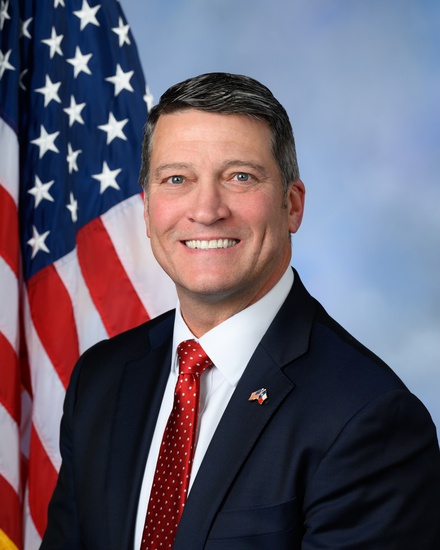
Rep. Ronny Jackson
Sponsored bills
Maddy summaryHR 7034 would remove the current $250,000 (single filers) and $500,000 (married couples) tax exclusion limit for capital gains when selling a primary residence. This change would allow all homeowners to exclude their full profit from federal income tax upon selling their main home, regardless of the sale price. The bill amends Section 121 of the Internal Revenue Code to eliminate the dollar caps and adjusts related provisions to reflect this change. It directly affects homeowners who sell their primary residence, making the tax exclusion fully unlimited for qualifying sales after the bill's enactment.
Maddy summaryThis bill requires state agencies administering the SNAP (food stamp) program to provide recipient-level data to the USDA Secretary upon request. It directly affects state SNAP agencies, which must submit this data within 30 days (or sooner for urgent cases) in secure electronic formats. Key provisions include mandatory data sharing for program oversight and integrity, strict privacy safeguards under the Privacy Act, and potential withholding of federal funds for non-compliance. The bill also clarifies that this does not limit the USDA's existing authority to access state data for program administration.
Maddy summaryThe Fertilizer Research Act of 2025 requires the U.S. Department of Agriculture to publish a detailed report on the U.S. fertilizer industry within one year of the bill's enactment. The report will analyze market trends, import data (including sources and companies), supply chain logistics, industry concentration, pricing patterns, regulatory impacts, and transparency of price reporting - without including confidential business information. This data aims to improve market transparency for agricultural producers and inform future policy discussions about fertilizer costs and competition.
Maddy summaryHR 5010, the Farm Credit Adjustment Act, amends the Farm Credit Act of 1971 to allow the Farm Credit Administration (FCA) to extend examination cycles for low-risk Farm Credit System institutions to a maximum of 24 months. This change directly affects rural banks, credit unions, and other Farm Credit System institutions deemed low-risk by the FCA. The key provision removes a previous restriction ("in no event") and gives the FCA discretion to conduct examinations every 24 months instead of more frequently for these institutions. The amendment takes effect on October 1, 2026.
Maddy summaryHRES 987 is a symbolic House resolution denouncing Venezuela's Nicolás Maduro as an "authoritarian, despotic, and murderous regime" and commending former President Trump for ordering a January 3, 2026, operation to arrest Maduro. It references prior congressional efforts to address Maduro's alleged human rights abuses and election interference. The resolution expresses support for the operation described as targeting Maduro's "brutal narcoterrorism and crimes against humanity." As a non-binding resolution, it does not create new policy but serves as a formal statement of congressional position.
Maddy summaryThis bill clarifies and expands the definition of "public charge" for immigration purposes, affecting non-citizens applying for visas, admission, or adjustment of status. It defines a public charge as someone receiving certain government benefits (including SNAP, Medicaid, housing assistance, and income support programs) for more than 12 months within any 36-month period. The determination considers factors like age, health, assets, education, and family status in a holistic assessment, while exempting refugees, asylees, and military dependents. The bill requires the government to publish a comprehensive list of covered benefits within 180 days of enactment.
Maddy summaryHR 3492, the Protect Children’s Innocence Act, makes it a federal crime to perform genital or bodily mutilation or chemical castration on minors under 18, except for specific medical reasons. The bill broadly defines prohibited procedures to include gender transition-related surgeries (like hysterectomies or mastectomies) and medical treatments such as puberty blockers or cross-sex hormones administered to minors. It criminalizes these acts when they occur across state lines, involve payments, or use interstate commerce, while explicitly banning religious tradition as a defense. Exceptions include medically necessary procedures for health emergencies, childbirth, or conditions certified by a physician.
Miracle on Ice Congressional Gold Medal Act This act provides for the award of Congressional Gold Medals to the members of the 1980 U.S. Olympic men's ice hockey team in recognition of the team's achievement at the 1980 Winter Olympic Games.
Maddy summaryHR 6665 prohibits the Nuclear Regulatory Commission (NRC) from issuing licenses for private facilities to store spent nuclear fuel or high-level radioactive waste, except at sites attached to operating nuclear power plants or federally owned storage sites. This bill directly affects private companies seeking to operate interim storage facilities and the NRC, which would no longer issue such licenses. Existing licenses for private interim storage would be canceled upon the bill's enactment. The law does not restrict long-term disposal at federally managed repositories, as defined under the Nuclear Waste Policy Act.