

Raise the Wage Act of 2021 This bill increases the federal minimum wage for regular employees over a 5-year period, for tipped employees, and for newly hired employees who are less than 20 years old. The bill sets forth a schedule of annual increases in the federal minimum wage for individuals with disabilities. The Department of Labor shall no longer issue special certificates for the payment of subminimum wages to such individuals after the final wage increase under this bill for such individuals takes effect. Labor shall provide, upon request, technical assistance and information to employers to (1) help them transition their practices to comply with wage increases and other requirements under this bill for individuals with disabilities, and (2) ensure continuing employment opportunities for such individuals. The bill eliminates the separate minimum wage requirements for tipped, newly hired, and disabled employees. After a specified period, these employees shall be paid the same minimum wage as regular employees. Labor must publish any increase in the minimum wage in the Federal Register and on its website 60 days before it takes effect.
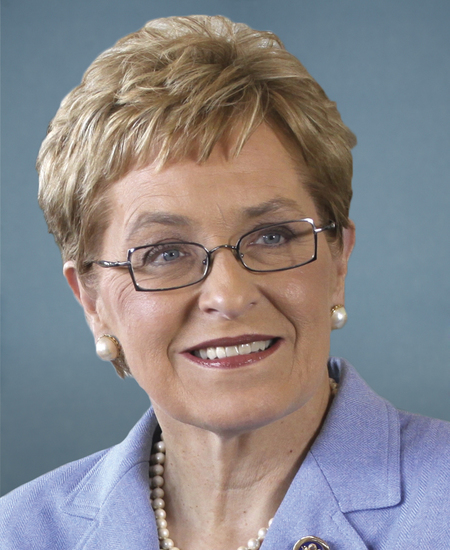
Rep. Marcy Kaptur
Sponsored bills
Health Care Fairness for Military Families Act of 2021 This bill modifies the extension of dependent coverage under TRICARE by allowing a dependent under the age of 26 to be covered without an additional premium. Additionally, the bill authorizes such coverage of dependents without a premium regardless of whether they are eligible to enroll in an employer sponsored plan.
American Food for American Schools Act of 20 21 This bill requires school food authorities (SFAs) to request a waiver from the Department of Agriculture (USDA) to purchase foreign commodities or products for the National School Lunch Program (NSLP). SFAs may purchase foreign commodities or products without a waiver if the commodities or products are not produced or available domestically. Under current law, Buy American provisions require SFAs to purchase, to the maximum extent practicable, domestic commodities or products for the NSLP. There are limited exceptions which permit the purchase of foreign products in circumstances when using domestic products is truly not practicable. If an SFA uses an exception, there is no requirement to request a waiver to purchase a foreign product or commodity, but the SFA must keep documentation justifying the exception. USDA may not provide a waiver for an SFA to purchase foreign commodities or products unless (1) the commodities or products are not produced domestically in sufficient amounts or of satisfactory quality, (2) the domestic commodities or products would be significantly higher in price than foreign commodities or products, and (3) the SFA agrees to make the waiver publicly available on its website and email a notification of the waiver to parents or guardians of students who will be served the foreign commodity or product purchased pursuant to the waiver.
This concurrent resolution authorizes the use of the rotunda of the Capitol to honor, upon death, the last surviving Medal of Honor recipient for acts performed during World War II, at the election of the individual or their next of kin.
Access Technology Affordability Act of 2021 This bill allows a refundable tax credit equal to the amounts paid for qualified access technology for use by a blind individual who is the taxpayer, the taxpayer's spouse, or a dependent of the taxpayer. Qualified access technology is hardware, software, or other information technology with the primary function of converting or adapting information that is visually represented into forms or formats useable by blind individuals. The credit is limited to (1) costs that are not compensated by insurance or otherwise, and (2) an aggregate amount of $2,000 per blind individual in any period of three consecutive taxable years. The credit must be adjusted for inflation after 2021 and terminates after 2026.
Emergency Pension Plan Relief Act of 2021 This bill modifies the funding rules and provides financial assistance for certain pension plans that are underfunded or insolvent. First, the bill expands the authority of, and provides funding for, the Pension Benefit Guaranty Corporation (PBGC) to provide special partition assistance to a multiemployer pension plan that is insolvent or at risk of insolvency. The bill expands eligibility for partition assistance, provides funding for a plan to reach a projected funded ratio of 80% over a 30-year period, and does not require a plan to repay such assistance. The bill further permits a multiemployer pension plan to elect to retain its funding zone status from the previous year for either (1) the first plan year beginning during the period from March 1, 2020, through February 28, 2021; or (2) the next succeeding plan year, as designated by the plan sponsor. A plan may also extend by five years the funding improvement or rehabilitation period if the plan is designated as in endangered or critical status for a plan year beginning in 2020 or 2021. A plan in critical and declining status may not suspend payment of plan benefits. Additionally, the bill adjusts the minimum funding standards for a multiemployer pension plan to account for investment losses and other losses related to the COVID-19 (i.e., coronavirus disease 2019) pandemic and modifies the PBGC guarantee formula to increase the maximum potential benefits under a multiemployer pension plan. Finally, the bill makes changes with respect to single employer pension plans, including revising the amortization rules and extending and modifying the pension funding stabilization percentages.
Excluding Pandemic Unemployment Compensation from Income Act This bill excludes from gross income, for income tax purposes, unemployment compensation paid under provisions of the Coronavirus Aid, Relief, and Economic Security Act or the CARES Act relating to the COVID-19 (i.e., coronavirus disease 2019) pandemic. It also disregards such compensation for purposes of determining eligibility for federally-assisted programs.
This resolution expresses the sense of the House of Representatives that Congress should ensure that the U.S. Postal Service is not privatized and remains an independent establishment of the federal government.
SAFE Workers Act or the Secure And Fair Elections for Workers Act This bill requires the National Labor Relations Board (NLRB) to provide employees with the ability to vote remotely by telephone or the internet in union representation elections during the COVID-19 (i.e., coronavirus disease 2019) public health emergency. The bill further permits the NLRB's use of appropriations to issue directives or regulations providing for electronic voting methods.
Officer Eugene Goodman Congressional Gold Medal Act This bill directs the Speaker of the House of Representatives and the President pro tempore of the Senate to arrange for the presentation of a Congressional Gold Medal to U.S. Capitol Police Officer Eugene Goodman for his actions to protect the Senate chamber during the security breach at the U.S. Capitol on January 6, 2021.