

Preventing Future Pandemics Act of 2021 This bill establishes measures to address global public health risks posed by wildlife markets, which are commercial markets that sell or slaughter wildlife for human consumption as food or medicine in communities where alternative nutritional or protein sources are available. Specifically, the bill prohibits importing, exporting, purchasing, or selling live wild animals in the United States for human consumption as food or medicine. The Department of the Interior must hire, train, and deploy at least 50 new U.S. Fish and Wildlife Service law enforcement attachés around the world, and the U.S. Agency for International Development must increase specified activities to address the threats and causes of zoonotic (animal-to-human transmission) disease outbreaks. Additionally, the United States must work with other United Nations member states to urge a global ban on commercial wildlife markets and enforcement of laws to end wildlife trafficking. Further, the President may impose sanctions against a foreign country or foreign nationals that the Department of State has determined are taking certain actions that enable or facilitate commercial wildlife markets. Among other reports required by the bill, the National Academies of Sciences, Engineering, and Medicine must conduct a study and submit a report that includes an evaluation of (1) the impact that consumption of terrestrial wildlife as food or medicine has on the transmission of novel viral and other pathogens, (2) the role of consuming terrestrial wildlife as food or medicine in the transmission of microbes from animals to humans, and (3) the conditions at live wildlife markets that lead to this transmission.
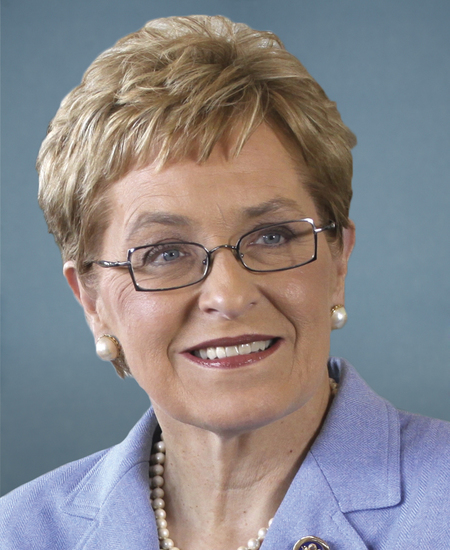
Rep. Marcy Kaptur
Sponsored bills
Build America's Libraries Act This bill establishes and provides funds through FY2024 for the Build America's Libraries Fund, from which the Institute of Museum and Library Services (IMLS) must allocate funding to states and, through them, need-based grants to libraries to make long-term improvements to library facilities. The IMLS must also award grants to Indian tribes and organizations that primarily serve and represent Native Hawaiians. Specifically, the bill requires each state that receives an allocation, and each library that receives a grant, to carry out certain activities to improve library facilities. These activities include constructing and renovating library facilities, investing in infrastructure projects to improve internet access and connectivity, improving indoor air quality, and making facilities accessible to individuals with disabilities. The bill also outlines administrative and oversight provisions, including by requiring library projects to use iron and steel products that are produced in the United States.
Berta Caceres Human Rights in Honduras Act This bill prohibits U.S. assistance to the police or military of Honduras. The Department of the Treasury shall instruct U.S. representatives of multilateral development banks to vote against providing loans to the Honduran police or military. The prohibition shall be lifted if the Department of State certifies to Congress that various conditions have been met, including that the Honduran government has (1) pursued all legal avenues to reach verdicts in specified crimes, such as the killings of indigenous land-rights activist Berta Caceres and of 100 small-farmer activists in the Aguan Valley; (2) investigated and prosecuted members of the military and police who have violated human rights; and (3) taken effective steps to establish the rule of law.
Alzheimer's Caregiver Support Act This bill authorizes grants to expand training and support services for families and caregivers of individuals living with Alzheimer's disease or a related dementia. The Department of Health and Human Services may award these grants to community organizations and health care and social service providers.
This bill requires the Joint Committee on the Library to obtain, and the Architect of the Capitol to permanently install in the U.S. Capitol or on the U.S. Capitol Grounds, a monument honoring Associate Justice of the Supreme Court Ruth Bader Ginsburg.
The COVID-19 Hospital and Health Provider Loan Conversion Act of 2021 This bill establishes and otherwise modifies requirements for the Medicare Accelerated and Advance Payment Program during the public health emergency relating to COVID-19 (i.e., coronavirus disease 2019). The program provides Medicare payments in advance to eligible providers experiencing claims or cash flow disruptions, such as during national emergencies; the program was specifically expanded in response to COVID-19 to encompass more types of providers, subject to certain recoupment and repayment provisions. The bill requires the Centers for Medicare & Medicaid Services to waive recoupment and repayment for providers who meet specified requirements. Among other criteria, providers must not have engaged in surprise billing practices with respect to COVID-19 patients. Providers must still repay any amounts not used for COVID-19 expenses; the bill caps the interest rate on such repayments at 2% upon a demonstration of hardship. The bill also requires private health insurers to treat out-of-network COVID-19 services as in-network for purposes of payment and cost-sharing.
Black History is American History Act This bill requires entities (e.g., institutions of higher education, libraries, and museums), in order to be eligible for certain grants administered by the Department of Education (ED), to include Black history in their teaching of American history. It also requires Black history to be included in tests administered by the National Assessment of Educational Progress (NAEP). Specifically, the bill mandates the inclusion of Black history as a required component of American history for such entities to be eligible for American History and Civics Academies' competitive grants. These grants support the establishment of (1) Presidential Academies for Teachers of American History and Civics, which offer workshops to teachers of American history and civics to strengthen their knowledge and prepare them to teach in these subjects; and (2) Congressional Academies for Students of American History and Civics, which support high school students in developing an understanding of these subjects. (Currently, Black history is not a required component of American history for either academy.) In addition, ED must give priority to grant applicants that align their activities with programs and resources of the Smithsonian Institution's National Museum of African American History and Culture. The bill also requires the inclusion of Black history in tests administered by the NAEP, which measures student academic achievement in various subjects.
This bill provides for the presentation of a Congressional Gold Medal to the Freedom Riders, in recognition of their contribution to civil rights by fighting for equality in interstate travel.
American Innovation and R&D Competitiveness Act of 2021 This bill eliminates the five-year amortization requirement for research and experimental expenditures scheduled to begin in 2022, thus allowing continued expensing of such expenditures in the taxable years in which they are incurred.
Living Donor Protection Act of 2021 This bill prohibits certain insurance carriers from discriminating against, and provides other protections for, living organ donors. Specifically, carriers may not deny, cancel, or otherwise impose conditions on policies for life insurance, disability insurance, or long-term care insurance based on an individual's status as a living organ donor. The bill also expressly specifies that recovery from organ-donation surgery constitutes a serious health condition that entitles eligible employees to job-protected medical leave. In addition, the Department of Health and Human Services must update educational materials on live organ donation to include information about the benefits of live organ donation and about access to insurance for living organ donors.