

This concurrent resolution declares that Congress should not impose any new performance fee, tax, royalty, or other charge relating to the public performance of sound recordings on a local radio station for broadcasting sound recordings over the air, or on any business for such public performance of sound recordings.
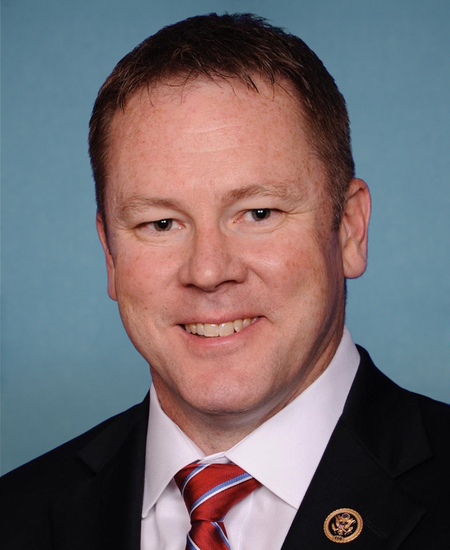
Rep. Warren Davidson
Sponsored bills
Maddy summaryHRES 785 is a symbolic resolution designating November 8, 2021, as "National First-Generation College Celebration Day." It urges all Americans to celebrate this day, recognize the contributions of first-generation college students (those whose parents did not earn bachelor's degrees), and honor the Higher Education Act of 1965. The resolution highlights existing federal programs like TRIO and Pell Grants that support underrepresented students but does not create new laws or funding. As a non-binding resolution, it has no direct policy impact but aims to raise awareness about first-generation students' challenges and achievements.
Honoring Our Promises through Expedition for Afghan SIVs Act of 2021 or the HOPE for Afghan SIVs Act of 2021 This bill authorizes the Department of State and the Department of Homeland Security (DHS) to postpone the medical exam requirement for qualifying citizens or nationals of Afghanistan seeking entry into the United States as special immigrants. Specifically, this bill applies to an existing program that provides special immigrant status to an individual (or the spouse or child of such an individual) who (1) faithfully performed sensitive and trusted duties for the U.S. government or the International Security Assistance Force in Afghanistan on or after October 7, 2001, and (2) has experienced or is experiencing an ongoing serious threat due to the performance of those duties. Under this bill, the State Department and DHS may jointly issue a blanket waiver of any requirement for such individuals to undergo a medical exam before admission into the United States. DHS shall ensure, to the greatest extent practicable, that individuals admitted under such a waiver undergo medical exams no later than 30 days after admission into the United States. Such an individual shall be admitted as a conditional permanent resident. DHS shall remove the conditions once the individual receives and passes a medical examination.
Fiscal State of the Nation Resolution This concurrent resolution requires the congressional budget committees to conduct an annual joint hearing to receive a presentation from the Comptroller General regarding (1) the Government Accountability Office's audit of the financial statement of the executive branch, and (2) the financial position and condition of the federal government.
Capital Gains Inflation Relief Act of 2021 This bill allows the adjusted basis of certain assets (including any common stock in a C corporation, any digital asset, and tangible property used in a trade or business) to be indexed for inflation for the purpose of determining the gain or loss of a taxpayer (other than a corporation) who has held the asset for more than three years. The bill sets forth rules for applying the inflation adjustment to short sales; regulated investment companies; real estate investment trusts; other pass-through entities, including partnerships, S corporations, and common trust funds; dispositions between related persons; and improvements to property or contributions of capital. The Internal Revenue Service may disallow an adjustment if any person transfers cash, debt, or any other property to another person for the principal purpose of securing or increasing the adjustment allowed by this bill.
National Patient ID Repeal Act This bill repeals the requirement that the Department of Health and Human Services adopt a standard unique health identifier for each individual, employer, health plan, and health care provider. The provision has not been implemented to date because language included in annual appropriations acts has prohibited the use of federal funds for developing a unique identifier. However, some appropriations bills introduced in recent years have not included this funding restriction.
This bill prohibits the use of federal funds to require a member of the Armed Forces to receive a COVID-19 vaccination. The bill also prohibits adverse action (e.g., punishment) being taken against a member of the Armed Forces because the member refuses to receive a COVID-19 vaccination.
Drain the Swamp Act of 2021 This bill repeals the requirement that all offices attached to the seat of the federal government be exercised in the District of Columbia, except as otherwise expressly provided by law. Each executive agency, by September 30, 2022, must submit a plan for the relocation of its headquarters outside of the Washington metropolitan area. Such plan shall identify a location for a new headquarters; maximize any potential cost savings associated with the relocation; provide that, upon implementation of the plan, no more than 10% of agency employees are based in the Washington metropolitan area; and consider any potential national security implications of the relocation. Each agency shall implement the plan by September 30, 2026.
Educational Opportunity and Success Act of 2021 This bill reauthorizes through FY2027 and otherwise revises TRIO programs. (These outreach and student-services programs identify and provide services to students from disadvantaged backgrounds.) Among other revisions to the programs, the bill prohibits the Department of Education (ED) from rejecting TRIO grant applications based on certain errors; requires ED to provide additional technical assistance to interested grant applicants; revises the outcome criteria for measuring the quality and effectiveness of the programs, including those programs specifically designed for veterans; allows program administrators to use a student's most recent Free Application for Federal Student Aid to determine TRIO program eligibility; and increases the maximum stipend for students participating in the Upward Bound Program or the Ronald E. McNair Postbaccalaureate Achievement Program.
Drug-Free Communities Pandemic Relief Act This bill authorizes the Drug-Free Communities Support Program, subject to certain limitations, to waive matching funds requirements applicable to certain grants for reducing substance use among youth. Before waiving these requirements, the program must determine that a grantee is unable to raise funds because of the COVID-19 emergency. Currently, the Office of National Drug Control Policy administers this program, and community coalitions that receive the grants must match a specified percentage of the federal award amount with nonfederal funds, including in-kind contributions.