

Maddy summaryHRES 1114 is a non-binding House resolution expressing support for recognizing "National Police Week" as a way to honor law enforcement officers across the United States. The resolution acknowledges the service and sacrifices of law enforcement officers, particularly those who have died in the line of duty, and specifically references 619 officers who died in 2021 as listed in the resolution. This resolution does not create new laws or allocate funds but serves as a symbolic gesture to encourage public recognition of law enforcement personnel. It calls for Americans to observe National Police Week by honoring officers and raising awareness about their essential role in community safety. The resolution was introduced by multiple members of Congress and referred to the Committee on the Judiciary.
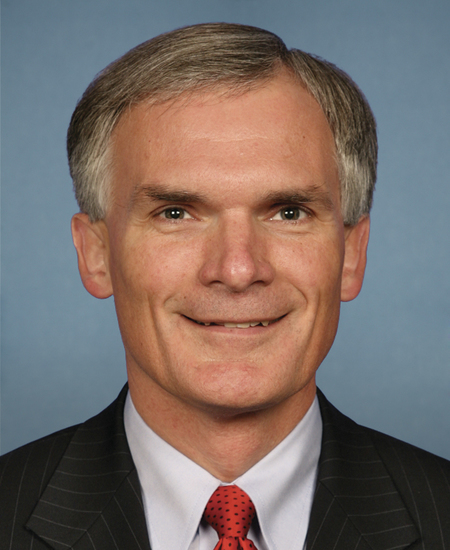
Rep. Robert E. Latta
Sponsored bills
Protect Pregnancy Care Centers Act of 2022 This bill directs the Inspectors General of the Department of Justice and the Department of Homeland Security to report to Congress on domestic violent extremism against pregnancy centers. Such report shall include criteria for opening, managing, and closing investigations related to domestic violent extremism; information sharing relating to domestic violent extremism within and between the federal government, state, local, tribal, territorial, and foreign governments, specified congressional committees, nongovernmental organizations, and the private sector; all incidents of domestic violent extremism against pregnancy centers from May 1, 2022, through the date of this bill's enactment; and a recommendation as to criteria to be utilized in establishing a potential program to make grants to pregnancy centers for purposes of enabling grantees to prevent, prepare for, protect against, and respond to domestic violent extremism, and a report on current federal programs and federal funding streams available to pregnancy centers for such purposes.
Protecting Pain-Capable Unborn Children from Late-Term Abortions Act This bill establishes a new criminal offense for performing or attempting to perform an abortion if the probable gestational age of the fetus is 15 weeks or more. A violator is subject to criminal penalties—a fine, a prison term of up to five years, or both. The bill provides exceptions for an abortion (1) that is necessary to save the life of the pregnant woman, or (2) when the pregnancy is the result of rape or incest. A physician who performs or attempts to perform an abortion under an exception must comply with specified requirements. A woman who undergoes a prohibited abortion may not be prosecuted for violating or conspiring to violate the provisions of this bill.
American Confidence in Elections Act or the ACE Act This bill addresses election administration and security, campaign finance, and other related provisions. Among other provisions, the bill reduces certain election assistance payments for states and local jurisdictions that allow noncitizens to vote in state and local elections, establishes certain requirements related to election and political mail, prohibits foreign nationals from making contributions or donations in connection with state or local ballot initiatives or referenda, repeals certain limits on coordinated party expenditures and aggregate contributions by individuals, terminates the Presidential Election Campaign Fund and requires remaining funds to be transferred to the 10-Year Pediatric Research Initiative Fund, and prohibits the use of federal funds to establish a Disinformation Governance Board.
Unborn Protection Act This bill creates new federal crimes related to the performance of an abortion on an unborn child based on the results of a laboratory developed prenatal test. The term laboratory developed prenatal test means a type of in vitro diagnostic test that is designed, developed, manufactured, validated, or performed within a single laboratory and is not cleared or approved by the Food and Drug Administration It subjects a violator to criminal penalties—a fine, a prison term of up to five years, or both. It also authorizes civil remedies, including damages and injunctive relief. A woman who undergoes such an abortion may not be prosecuted or held civilly liable.
Never Yielding Europe's Territory (NYET) Act of 2022 This bill addresses Russia's actions against Ukraine and other countries in the region. The bill authorizes and expedites the provision of security assistance, including by (1) prioritizing delivering excess defense articles to Ukraine, (2) authorizing the Department of State to waive certain costs for defense articles leased to Ukraine, and (3) authorizing additional Foreign Military Financing for programs in Europe. The bill also provides funding for (1) Foreign Military Financing assistance to Ukraine, (2) the Global Engagement Center to counter foreign-sponsored propaganda and disinformation, (3) the Countering Russian Influence Fund to support Ukraine and other countries in response to Russia's aggression, and (4) International Military Education and Training assistance for Ukraine. Furthermore, the bill imposes sanctions, including on (1) senior Russian military officials responsible for planning or executing military operations that violated Ukraine's sovereignty or territorial integrity, and (2) foreign individuals or entities that acted on behalf of Russia's government to destabilize Ukraine or disrupt Ukraine's critical infrastructure. The bill also addresses additional matters, including (1) prohibiting the National Aeronautics and Space Administration from sponsoring visas for Russian nationals affiliated with ROSCOSMOS, the entity that implements Russia's space program; (2) authorizing Radio Free Europe/Radio Liberty to explore opening new bureaus to reach audiences on Russia's periphery; and (3) providing for expedited approval of natural gas exports to qualifying nations, including NATO members, whereas currently expedited approval is only available for exports to countries that are in a free trade agreement relating to natural gas with the United States.
Protecting Parental Rights Act This bill establishes a new federal criminal offense for administering a COVID-19 vaccine to a minor without the prior consent of a custodial parent or legal guardian of the minor. A violation is subject to a fine, a prison term of up to one year, or both.
Stopping Traffickers and Their Accomplices Act of 2022 This bill requires an abortion provider to notify the National Human Trafficking Hotline if the provider has a reasonable suspicion that the patient is a victim of trafficking. It also requires each abortion provider to complete annual training on how to identify and respond appropriately to individuals who are at risk of or who have experienced trafficking. The bill establishes penalties for violations.
Prenatal Nondiscrimination Act of 2022 or the PRENDA Act of 2022 This bill creates new federal crimes related to the performance of sex-selection abortions (i.e., abortions based on the sex or gender of an unborn child). It subjects a violator to criminal penalties—a fine, a prison term of up to five years, or both. It also authorizes civil remedies, including damages and injunctive relief. A woman who undergoes a sex-selection abortion may not be prosecuted or held civilly liable.
Halt All Lethal Trafficking of Fentanyl Act or the HALT Fentanyl Act This bill places fentanyl-related substances as a class into schedule I of the Controlled Substances Act. A schedule I controlled substance is a drug, substance, or chemical that has a high potential for abuse; has no currently accepted medical value; and is subject to regulatory controls and administrative, civil, and criminal penalties under the Controlled Substances Act. Additionally, the bill establishes a new, alternative registration process for schedule I research that is funded by the Department of Health and Human Services or the Department of Veterans Affairs or that is conducted under an investigative new drug exemption from the Food and Drug Administration. The bill also makes several other changes to registration requirements for conducting research with controlled substances, including permitting a single registration for related research sites in certain circumstances, waiving the requirement for a new inspection in certain situations, and allowing a registered researcher to perform certain manufacturing activities with small quantities of a substance without obtaining a manufacturing registration.