

Maddy summaryHR 6753, the Campus Housing Affordability Act, removes a prohibition that previously barred federal housing assistance from being provided to students. It directly affects eligible students enrolled in higher education institutions who live in campus housing and qualify for tenant-based housing assistance under the U.S. Housing Act of 1937. The bill adds a new provision (Section 8(o)(23)) allowing the Secretary to waive income requirements for these students, ensuring federal housing aid does not count as income when determining eligibility for other federal financial aid, work-study programs, service allowances, or child support obligations. This change streamlines access to housing support without reducing other student financial benefits.
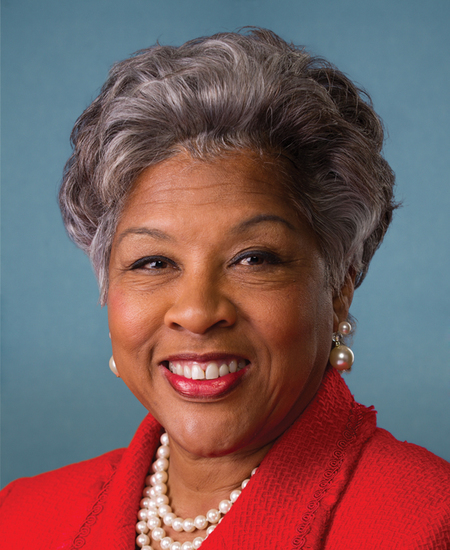
Rep. Joyce Beatty
Sponsored bills
Maddy summaryThis bill establishes a Diversity and Inclusion Administrator at the Department of Labor to increase African American participation in apprenticeships. It requires all new and renewing registered apprenticeship programs to submit plans boosting African American enrollment and creates competitive grants for programs targeting underserved communities in fields like construction, healthcare, and tech. The grants fund outreach, mentoring, and support services to help African American youth access and complete apprenticeships. The bill directly affects African American young people and apprenticeship programs nationwide, with $2 million authorized for fiscal year 2026.
Maddy summaryHR 6726 amends housing counseling programs under the 1968 Housing and Urban Development Act to improve oversight and effectiveness. It requires counseling organizations to serve diverse geographic areas (urban and rural) and mandates regular performance reviews by HUD, including evaluating counselors based on borrower default rates for covered loans. The bill also requires HUD to provide foreclosure mitigation counseling to borrowers 30+ days delinquent on FHA, VA, USDA, or similar loans, with costs covered by the Mutual Mortgage Insurance Fund if eligibility rules are met. These changes directly affect HUD-funded counseling agencies, mortgage counselors, and borrowers with specific loan types facing delinquency. The reforms focus on accountability, quality control, and expanding access to foreclosure prevention services.
Maddy summaryThe Protect America's Workforce Act cancels an executive order issued on March 27, 2025, that excluded certain groups from federal labor-management relations programs, making it legally unenforceable. It also ensures that all collective bargaining agreements between federal agencies and labor unions, which were active as of March 26, 2025, remain fully effective until their agreed terms expire. This directly affects federal agencies, labor unions, and the employees covered by these agreements. The bill prevents federal funds from being used to implement the canceled executive order while preserving existing labor agreements.
Maddy summaryThe Keeping All Students Safe Act prohibits the use of unlawful seclusion and restraint in schools receiving federal funding, including physical restraint that restricts breathing or blood flow, chemical restraint not prescribed for medical treatment, and mechanical restraint. The bill requires schools to use less restrictive interventions first, mandates that staff using physical restraint be trained and certified through State-approved programs, and requires immediate parent notification after any restraint incident. States must develop plans to monitor compliance, collect and report data on restraint incidents (disaggregated by race, disability status, and school type), and implement positive behavioral interventions. The bill provides $40 million annually for five years to support states in implementing these requirements and improving school climate through evidence-based approaches.
Maddy summaryThis concurrent resolution (HCONRES 65) is a symbolic congressional commendment of state and local governments that have affirmed reproductive rights as human rights. It recognizes efforts by jurisdictions like Carrboro, North Carolina; Austin, Texas; and Fulton County, Georgia, which passed resolutions or proclamations declaring abortion access a human right and condemning criminalization of pregnancy outcomes. The resolution urges states to repeal restrictive abortion laws and protect access to reproductive care, but it does not create new legal requirements or fund programs. As a procedural resolution, it has no binding effect on federal or state law.
Maddy summaryThis bill authorizes $250 million over five years to fund grants for states, school districts, and eligible Tribal schools to expand computer science education. It requires grantees to provide computer science courses for all high school students within five years, create early access from pre-K through middle school, and implement plans to close equity gaps for underrepresented groups (including minority students, girls, and low-income youth). Grant funds must cover teacher training, high-quality learning materials, and targeted support for underrepresented students, with strict limits on equipment spending (max 15%). Grantees must report annually on student participation data disaggregated by race, gender, and socioeconomic status.
Maddy summaryHR 6579, the Justice for Breonna Taylor Act, requires federal, state, and local law enforcement officers to provide notice of their authority and purpose before entering a premises with a warrant. This applies to all officers serving warrants, including those at the federal level and state/local agencies receiving Department of Justice funding. The law mandates this notice requirement starting in the first fiscal year after enactment, directly affecting law enforcement agencies that receive federal funding for policing. It changes the process for executing warrants by eliminating the ability to conduct no-knock entries without first informing occupants.
Maddy summaryThe Expanding Cybersecurity Workforce Act of 2025 establishes a new program under CISA to promote cybersecurity careers to underrepresented groups, including racial and ethnic minorities, veterans, formerly incarcerated individuals, people with disabilities, older adults (40+), and those from low-income or nontraditional educational backgrounds (like community colleges or HBCUs). The program requires CISA to tailor outreach to regional needs, partner with schools, unions, and community organizations, and report annually on workforce impact. It authorizes $20 million annually for fiscal years 2026-2031 to support these efforts, aiming to diversify the cybersecurity workforce through targeted recruitment and training.
Right to Read Act of 2025 This bill expands access to school libraries and literacy skills support for elementary and secondary school students. It also outlines certain constitutional rights and liability protections related to school libraries. Specifically, the bill reauthorizes through FY2030 (1) the Comprehensive Literacy State Development Program, which provides grants to ensure high-quality instruction and effective strategies in reading and writing for children through 12th grade; and (2) the Innovative Approaches to Literacy Program, which provides grants to support the development of literacy skills in low-income communities. Additionally, the bill allows Supporting Effective Instruction State Grants to be used to assist local educational agencies (LEAs) and schools in recruiting, hiring, and retaining state-certified school librarians. Further, the bill authorizes states and LEAs to use Student Support and Academic Enrichment grants for programs and activities that promote the development of digital literacy and information literacy skills. The Department of Education (ED) must direct the National Center for Education Statistics to biennially collect data on school libraries. ED must require an assurance from each state and LEA receiving certain funds confirming that it will (1) protect the First Amendment rights of students in school libraries, and (2) provide equal protection in the conduct of school libraries in compliance with the requirements of the Fourteenth Amendment and nondiscrimination laws. The bill also provides liability protection to teachers, school librarians, school leaders, paraprofessionals, and other staff for actions that conform with state or local policies regarding the right to read.