

Critical Mineral Consistency Act of 2025 This bill modifies the Energy Act of 2020 to expand the definition of critical minerals to include critical materials designated by the Department of Energy (DOE). Under current law, DOE's critical materials list contains certain materials that are essential for energy, including those on the critical minerals list of the U.S. Geological Survey (USGS). The USGS's list, which contains certain minerals that are essential to the nation's economic or national security, is not required to include the materials on DOE's list. Currently, both lists include minerals with a high risk of supply chain disruptions, and both DOE and USGS must conduct a variety of efforts to ensure a secure and reliable supply chain of the minerals. By expanding the definition of critical minerals , this bill requires the USGS to include on its list the materials on DOE's list. Within 45 days of DOE adding a mineral, element, substance, or material to its critical materials list, the USGS must update its list to include such mineral, element, substance, or material.
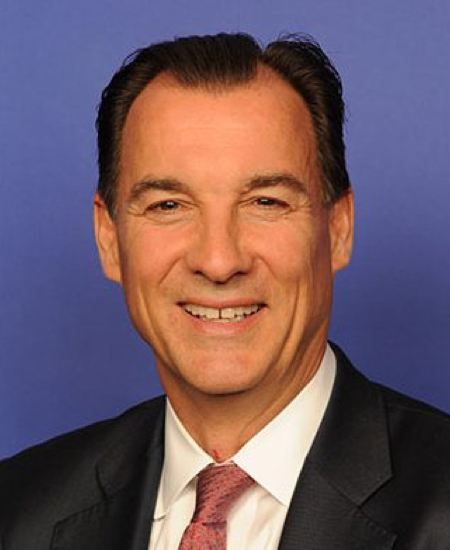
Rep. Thomas R. Suozzi
Sponsored bills
Maddy summaryHRES 1097 is a procedural resolution requesting federal agencies to provide specific documents to the House of Representatives. It directs the Treasury and Homeland Security Secretaries to share records about how they implement an existing agreement (the "Memorandum of Understanding") for sharing taxpayer information related to non-tax criminal enforcement. The resolution specifically asks for documents concerning access to IRS systems containing taxpayer data, policies for handling such information, and any violations of privacy rules. This request does not create new law but seeks transparency about current agency practices involving sensitive taxpayer information.
Maddy summaryThe Railway Safety Act of 2026 establishes new safety requirements for trains transporting hazardous materials, including speed limits, enhanced reporting, and stricter tank car standards. It mandates that high-hazard trains carrying flammable liquids or toxic materials be limited to 40 mph in urban areas, while requiring railroads to provide real-time information to emergency responders. The bill also increases penalties for safety violations, requires more frequent inspections of rail equipment, and creates a new emergency response assistance program to help communities affected by hazardous materials incidents. Additionally, it authorizes funding for research into safer tank cars and defect detection systems, and requires the Federal Railroad Administration to improve its safety workforce management.
Maddy summaryHR 7736, the RELIEF Act, requires U.S. Customs and Border Protection to refund tariffs collected under the International Emergency Economic Powers Act (IEEPA) on imports entered on or after January 1, 2025. It directly affects importers of record by mandating automatic refunds within 90 days of the bill's enactment, without requiring them to submit applications or protests. The bill directs Customs to use existing data to calculate and disburse refunds for all affected tariff collections, including entries involving goods withdrawn from warehouse for consumption. This policy change eliminates the need for importers to seek refunds through separate processes, streamlining the recovery of overpaid duties.
Maddy summaryHRES 1082 is a symbolic resolution recognizing 250 years of Polish-American friendship and affirming U.S. support for Poland’s democracy, sovereignty, prosperity, and security. It specifically calls for continued U.S. military stationing in Poland to support defense coordination and training with Polish forces, and expresses gratitude for Poland’s historical and ongoing partnership, including recent support for Ukraine. The resolution highlights key milestones like Poland’s NATO membership, defense investments, and refugee assistance for Ukrainians. As a non-binding resolution, it does not change laws but formally strengthens diplomatic recognition of the alliance.
Maddy summaryHRES 1078 is a procedural resolution requesting the President and Health and Human Services (HHS) Secretary to provide specific documents to the House of Representatives. It seeks records related to the December 2025 "Defend the Spend" freeze on child care funding, including communications about the freeze, payment delays, social media posts alleging fraud, and related legal analyses. The resolution specifically targets documents concerning the freeze's impact on States, Tribes, and Territories receiving child care funds under federal programs. The request requires these documents to be submitted within 14 days of the resolution's adoption. This is a congressional oversight measure, not a policy change, focused on transparency around an existing funding freeze.
Maddy summaryThis bill updates administrative procedures for the Public Safety Officers' Benefits Program to speed up claim processing and expand disability coverage. It requires the Bureau of Justice Assistance to notify claimants about missing information within 90 days and issue interim payments if claims aren't resolved within 270 days, while also mandating annual audits of backlogged claims. The legislation adds benefits for permanent partial disabilities that prevent officers from working in their previous capacity and creates a faster approval process for claims supported by World Trade Center health certifications.
Maddy summaryHR 7615, the RELIEF Act, requires the U.S. Customs and Border Protection Commissioner to refund all tariffs collected under emergency economic powers laws (specifically the International Emergency Economic Powers Act) for imports entered on or after January 1, 2025. It mandates these refunds be processed automatically within 90 days of the bill's enactment, without importers needing to file applications or protests. The refund applies to all importers of record for goods subject to these tariffs, covering entries including withdrawals from warehouses for consumption. This directly affects businesses importing goods subject to those specific tariffs by returning funds collected under the emergency authority.
Maddy summaryThis bill directs U.S. agencies to support Iranian people's access to uncensored information and hold Iranian officials accountable for human rights abuses. It requires the State Department and FCC to report on technologies (like satellite networks and mesh systems) that could bypass internet restrictions in Iran, and authorizes $2 million annually to develop such tools. The bill also establishes a new "Iran Kleptocracy Initiative" at FinCEN to track corruption, freeze assets of Iranian regime officials and state-owned businesses, and coordinate with international partners. These measures apply to U.S. policy toward Iran but do not alter Iran's domestic laws; they focus on U.S. sanctions, technology development, and anti-corruption efforts targeting the Iranian regime.
Maddy summaryHR 7602, the State of Men’s Health Act, requires the Government Accountability Office (GAO) to study U.S. men’s health disparities and submit a report to Congress within one year of enactment. It also mandates the Department of Health and Human Services (HHS) to establish an Office of Men’s Health within 18 months to coordinate existing federal programs focused on preventive care for men, including screenings for prostate cancer, mental health, and cardiovascular issues. The bill does not authorize new funding; all activities must use existing appropriations. This legislation directly affects all men in the United States by aiming to improve health outcomes through better coordination of current federal health initiatives.