

Maddy summaryThe Veterans Entrepreneurship Act of 2026 establishes a three-year pilot program to provide grants to eligible veterans for starting or acquiring small businesses, franchises, or other qualifying enterprises. To receive funding, veterans must complete approved entrepreneurship training and submit a business plan that is reviewed and approved by an advisor before any money is disbursed. Grants are distributed in monthly installments over up to 12 months, contingent on the veteran meeting specific milestones outlined in their approved business plan. The program is limited to 250 recipients and requires geographic diversity among applicants, with a final report due two years after the program begins to assess its effectiveness.
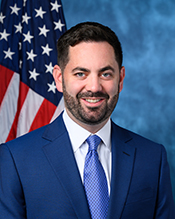
Rep. Michael Lawler
Sponsored bills
Maddy summaryThe Wildfire Research Coordination Act of 2026 requires the Secretary of Defense to create a formal agreement with the Secretaries of Agriculture and Interior to coordinate wildfire research efforts. This agreement, to be established within 180 days, will align specific research priorities like fire modeling and post-fire recovery across the Department of Defense, the Forest Service, and the Department of the Interior. The bill also mandates that the Secretary of Defense submit a report to Congress within one year detailing the steps taken to implement this new coordination framework.
Maddy summaryThe Recycling Infrastructure and Data Accountability Act directs the Environmental Protection Agency to study the feasibility of creating a national database to track recycling facilities, material flows, and program performance. This study will identify regions with limited access to recycling services, catalog major waste and recycling facilities, and analyze economic barriers that hinder the development of new processing centers. If the EPA determines the project is viable, it must establish and maintain a publicly accessible online database within a year of submitting its final report to Congress. The bill aims to improve transparency and planning for recycling infrastructure without mandating specific construction projects or funding allocations.
Maddy summaryThe Wildfire Responder Protection Act updates federal regulations to expand the list of wildfire workers who receive specific employment protections. By amending an existing statute, the bill adds roles such as fuels specialists, burn bosses, and prescribed fire crew members to the categories of employees covered under these rules. It also broadens the scope of protected activities to include planned ignition and fuels reduction efforts alongside traditional fire suppression. These changes ensure that a wider range of personnel engaged in wildfire management receive the same legal safeguards as those currently protected.
Maddy summaryThis resolution commemorates the 61st anniversary of the Medicare program, which was enacted in 1965 to provide health insurance for seniors and individuals with disabilities. It acknowledges the program's role in covering approximately 70 million Americans and highlights its growth from 19 million beneficiaries in 1966 to its current scale. The text honors the contributions of healthcare providers, caregivers, and government personnel who maintain the system while recognizing the program's impact on healthcare access and financial security.
Maddy summaryThis bill designates the United States Postal Service facility at 114 John Street in New York, New York, as the "Jack Greenberg Post Office." The legislation requires that all official government records, maps, and documents referring to this location use the new name. This change is intended to honor Jack Greenberg, a prominent civil rights attorney, by permanently associating his name with the building.
Maddy summaryThe Investing in State Energy Act of 2026 requires federal agencies to distribute funds and guidance for energy conservation programs within 30 to 60 days of receiving state plans. It specifically affects States, Indian Tribes, and other direct recipients by mandating faster payment schedules and earlier publication of funding allocations. The bill also authorizes an additional $500 million in funding for these programs over five years, starting in fiscal year 2027. These changes aim to streamline how federal energy assistance is delivered to local governments and tribes.
Maddy summaryThis bill prohibits the United States from providing any voluntary or assessed funding to the United Nations Relief and Works Agency for Palestine Refugees in the Near East. The restriction applies directly to the U.S. government's financial contributions to the agency, effectively cutting off official U.S. support. However, the law allows for humanitarian aid to individuals who receive help from UNRWA if that aid is delivered through other organizations that do not promote violence, terrorism, or antisemitism. Ultimately, the legislation mandates a complete halt to direct U.S. funding for UNRWA while permitting indirect assistance under specific conditions.
Maddy summaryThe Stop EU Overreach Act directs the United States Trade Representative to initiate a formal investigation within 30 days of enactment to determine if specific European Union environmental and sustainability regulations unfairly burden American commerce. These targeted measures include rules on corporate sustainability due diligence, reporting, deforestation traceability, and carbon border adjustments that apply to US companies based on their operations or supply chains outside the EU. If the investigation concludes that these foreign practices are unreasonable or discriminatory, the USTR is authorized to take retaliatory actions such as imposing duties on imports from EU member states or suspending trade agreement benefits. The bill includes a sunset provision that terminates its requirements for any specific EU measure once the USTR certifies that the European Union has repealed the rule or entered into a binding agreement to exempt US persons from its extraterritorial obligations.
Maddy summaryThe STRATA Act of 2026 establishes a new program within the Department of State to foster international partnerships focused on advancing critical minerals technologies, aiming to strengthen U.S. supply chains and national security. This initiative allows the Secretary of State to form alliances with allied and partner nations, universities, and private companies while explicitly prohibiting collaborations with designated countries of concern such as China and Russia. Key provisions include the creation of International Centers of Excellence for research and training, the development of a digital platform to connect stakeholders with funding opportunities, and the establishment of clear guidelines for intellectual property and data security within these partnerships. The program authorizes the use of specific funding sources to support joint projects in extraction, recycling, and manufacturing, with a requirement that all activities conclude within ten years of the bill's enactment.