

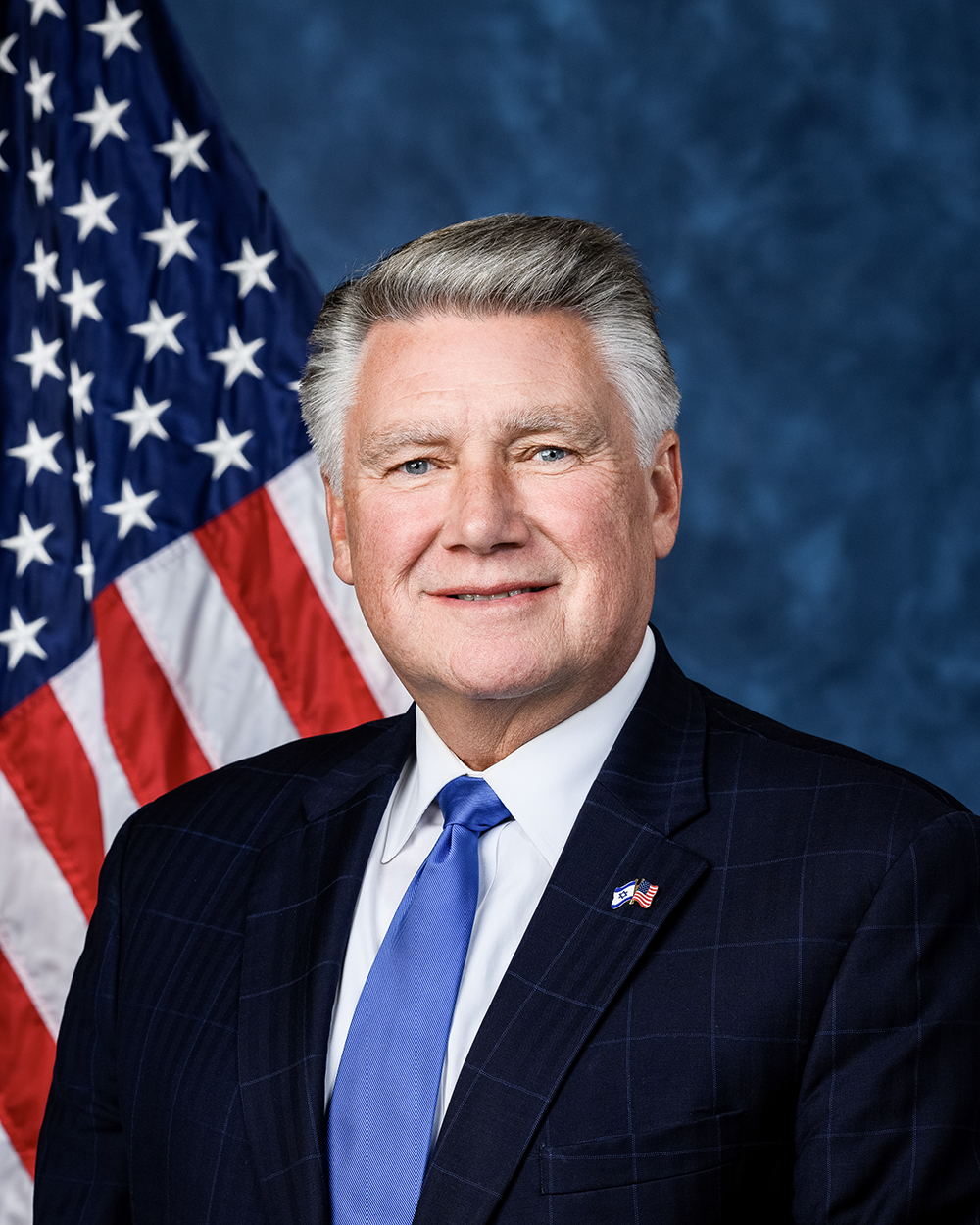
Photo of Mark Harris
R United States House · District 8 · North Carolina On the 2026 ballot

Rep. Mark Harris

Compare
Total votes
650
all sessions
Attendance
100%
of floor votes
Higher than 97% of chamber peers
With party
92%
of cast votes
Lower than 90% of chamber peers
Bipartisan score
4%
crosses aisle rarely
Higher than 89% of chamber peers
Sponsored
229
bills & resolutions
Near the chamber average
Committees
10
assignments
229 bills and resolutions

Sponsored bills

Total
229
Primary
17
Co-sponsor
212
This page
229
matching current filters
Co-sponsor HR 1137
In committee · Texas House · Co-sponsor
No Kill Switches in Cars Act

Maddy summaryHR 1137, the "No Kill Switches in Cars Act," repeals Section 24220 of the Infrastructure Investment and Jobs Act (Public Law 117-58), which previously required vehicle manufacturers to implement advanced impaired driving technology. This bill directly affects car manufacturers by removing a mandate to integrate specific safety technology designed to detect driver impairment. The key provision is the repeal itself, eliminating the requirement without creating new obligations or altering existing vehicle safety standards.

In committee Feb 7, 2025 1 co-sponsor
Co-sponsor HR 1089
In committee · Texas House · Co-sponsor
BOWSER Act

Maddy summaryHR 1089, the BOWSER Act, would repeal the District of Columbia Home Rule Act (Public Law 93-198) one year after the bill's enactment. This action would eliminate the District's existing self-governing authority, directly affecting Washington, D.C. residents and its local government. The key provision is the outright repeal of the 1973 law that established the District's home rule structure, shifting governance control to Congress.

In committee Feb 6, 2025 1 co-sponsor
Co-sponsor HR 71
In committee · Texas House · Co-sponsor
Veterans Health Care Freedom Act

Maddy summaryHR 71, the Veterans Health Care Freedom Act, allows eligible veterans enrolled in VA healthcare to choose from a broader network of providers, including non-VA facilities, without geographic restrictions. The bill creates a 3-year pilot program in four diverse locations (rural and urban) where veterans can select primary care and specialty providers within a defined "covered care system" (VA facilities and approved community providers), with VA coordinating care through a primary provider. After the pilot, the law permanently requires the VA to offer this same choice of providers to all enrolled veterans, removing current barriers that limited access to non-VA care outside a veteran’s local VA network. The program uses existing VA funding and mandates regular reports to Congress on implementation and results.

In committee Feb 6, 2025 1 co-sponsor
Co-sponsor HR 1023
In committee · Texas House · Co-sponsor
RIFA Act

Maddy summaryThe RIFA Act (HR 1023) requires private institutions of higher education with over $6 billion in assets or $250 million in "investments of concern" to annually report on investments tied to foreign adversaries. Institutions must disclose the value, sales, and capital gains of these investments (defined as holdings in designated foreign countries or entities deemed security threats) by July 31 each year, including designating a compliance officer. The Department of Education will maintain a public database of all reports and enforce compliance through fines (50-200% of investment values) or loss of federal funding eligibility for repeated violations. This law targets transparency around foreign investment exposure at large private universities, not public institutions or smaller colleges.

In committee Feb 5, 2025 1 co-sponsor
Co-sponsor HR 987
In committee · Texas House · Co-sponsor
Fair Access to Banking Act

Fair Access to Banking Act This bill places restrictions on certain banks, credit unions, and payment card networks if they refuse to do business with a person who complies with the law. Restrictions include prohibiting the use of electronic funds transfer systems and lending programs, termination of an institution's depository insurance, and specified civil penalties. Banks and other specified financial institutions are allowed to deny financial services to a person only if the denial is justified by a documented failure of that person to meet quantitative, impartial, risk-based standards established in advance by the institution. This justification may not be based upon reputational risks to the institution. The bill establishes the right for a person to bring a civil action for a violation of this bill.

In committee Feb 5, 2025 1 co-sponsor
Co-sponsor HR 925
In committee · Texas House · Co-sponsor
Dismantle DEI Act of 2025

Maddy summaryHR 925, the "Dismantle DEI Act of 2025," would eliminate diversity, equity, and inclusion (DEI) programs across federal government operations. The bill requires federal agencies to close DEI offices, rescind related executive orders, and prohibit the use of federal funds for DEI training, offices, or initiatives. It defines "prohibited diversity, equity, or inclusion practice" as any activity that discriminates based on race, ethnicity, religion, biological sex, or national origin, or requires employees to complete training asserting that certain groups are inherently superior or inferior. The legislation also prohibits requiring employees to sign statements about race, ethnicity, or gender, and establishes private lawsuits for violations with potential damages of $1,000 per violation per day. This bill would directly affect federal agencies, contractors, grantees, and advisory committees receiving federal funding.

In committee Feb 4, 2025 1 co-sponsor
Primary HR 938
In committee · Texas House · Lead sponsor
No Contracts with Foreign Adversaries Act

Maddy summaryThe No Contracts with Foreign Adversaries Act prohibits U.S. colleges and universities from entering contracts with foreign countries or entities designated as national security threats (e.g., those identified under specific security laws). Institutions may seek a one-year waiver if a contract supports their educational mission and U.S. security, requiring submission of the full contract text, certification by a designated compliance officer, and approval from the Education Secretary after consulting national security agencies. Violations could trigger fines up to 20% of federal funds or temporary loss of eligibility for federal student aid programs. Existing contracts with such entities must be reviewed and waived within 30 days of the law's enactment.

In committee Feb 4, 2025 0 co-sponsors
Co-sponsor HR 895
In committee · Texas House · Co-sponsor
Ensuring Justice for Victims of Partial-Birth Abortion Act

Maddy summaryHR 895 requires the Attorney General to investigate whether the 2022 discovery of five baby remains in Washington, DC, violated the existing Partial-Birth Abortion Ban Act of 2003, with a report due within six months. It mandates that healthcare workers must immediately report suspected violations of the ban to law enforcement and requires annual reports from the Attorney General detailing enforcement efforts, violations, and prosecutions over the past decade. The bill also directs the GAO to review enforcement actions from 2004-2024 and submit recommendations. This legislation focuses on strengthening enforcement of the existing 2003 ban, directly affecting healthcare providers, law enforcement, and the Department of Justice.

In committee Jan 31, 2025 1 co-sponsor
Co-sponsor HR 849
In committee · Texas House · Co-sponsor
No Regulation Through Litigation Act of 2025

Maddy summaryHR 849, the No Regulation Through Litigation Act of 2025, prevents federal agencies from using settlement agreements to create new regulations or non-binding guidance documents. It prohibits including attorney fees or litigation costs in settlements that result in such rules, ensuring agencies cannot bypass standard rulemaking processes through court settlements. The bill applies broadly to agency regulations but excludes military/foreign affairs regulations, internal agency policies, and procurement rules.

In committee Jan 31, 2025 1 co-sponsor
Co-sponsor HR 885
In committee · Texas House · Co-sponsor
Drug Cartel Terrorist Designation Act

Drug Cartel Terrorist Designation Act This bill directs the Department of State to designate four specified drug cartels as foreign terrorist organizations. (Among other things, such a designation allows the Department of the Treasury to require U.S. financial institutions to block transactions involving the organization.) The four specified cartels in the bill are the Gulf Cartel, the Cartel Del Noreste, the Cartel de Sinaloa, and the Cartel de Jalisco Nueva Generacion. The bill also requires the State Department to submit a detailed report on those four cartels and any other cartels it may identify. Based on this report, the State Department must designate as a foreign terrorist organization any such identified cartel (or faction thereof) that meets certain criteria for designation as a foreign terrorist organization. The bill specifies that it may not be construed to expand eligibility for asylum.

In committee Jan 31, 2025 1 co-sponsor
Showing 181 to 190 of 229 bills
Previous 1 18 19 20 23 Next