Let States Cut Taxes Act This bill removes a prohibition on states and territories using COVID-19 (i.e., coronavirus disease 2019) relief funding under the American Rescue Plan Act of 2021 to offset a reduction in revenue resulting from a reduction in taxes or a delay in the imposition of a tax or tax increase.
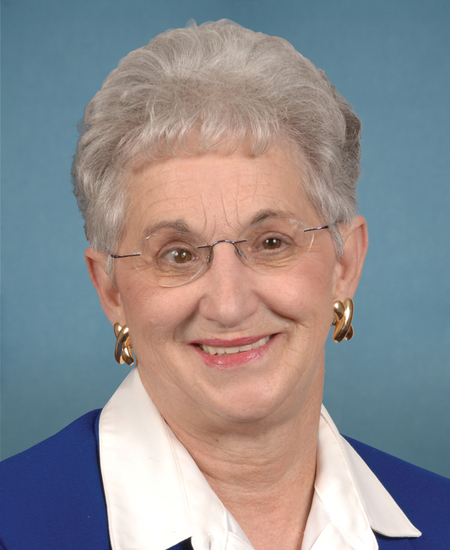
Rep. Virginia Foxx
Sponsored bills
Unauthorized Spending Accountability Act of 2021 This bill establishes a three-year budgetary level reduction schedule for unauthorized programs funded through the annual appropriations process. Under the bill, a budgetary level is an allocation provided to the congressional appropriations committees under Section 302(a) of the Congressional Budget Act of 1974 by a congressional budget resolution or a deeming resolution. The schedule applies to programs included in the Congressional Budget Office's annual report listing programs that are funded through the appropriations process and have an authorization of appropriations that has either expired or will expire during the year. For the first year after a program's authorization has expired, the bill requires the budgetary level to be reduced by 10% of the funds appropriated for the program in the expiring fiscal year. The bill then requires reductions of 15% in the second and third years before terminating the program at the end of the third unauthorized year. Programs that are reauthorized during the three-year period are exempt from the budgetary level reductions if the reauthorization contains a sunset provision limiting the authorization of appropriations period to no more than three years. The bill establishes the Spending and Accountability Commission to review all mandatory spending programs and submit to Congress a legislative proposal to establish an authorization cycle for discretionary spending programs. The commission may recommend legislation to replace the budgetary level reductions required by this bill with reductions in mandatory spending. The commission's reauthorization schedule must limit reauthorizations to three years, include the budgetary level reductions established by this bill, and establish a mechanism for replacing the budgetary level reductions with reductions to mandatory spending programs. The House of Representatives must consider the commission's proposal using specified expedited legislative procedures.
Enhancing Administrative Reviews for Broadband Deployment Act This bill directs the Department of the Interior and the Department of Agriculture (USDA) to report to Congress on communications use authorizations (i.e., authorizations to modify or locate communications facilities on public lands). Specifically, Interior and USDA must (1) provide an assessment on programmatic or administrative barriers to reviewing communications use authorizations, (2) provide an assessment of whether there are rules or regulations that could be revised to improve the efficiency of reviewing communications use authorizations, (3) describe the process for prioritizing the review of communications use authorizations, and (4) provide a plan to ensure adequate staffing to review communications use authorizations in a timely manner.
Federal Broadband Deployment in Unserved Areas Act This bill establishes measures to facilitate the sharing of broadband availability data among federal agencies to support the deployment of broadband in unserved areas. Specifically, the bill requires the Federal Communications Commission (FCC) to share certain broadband availability data (i.e., broadband maps) with the federal agencies responsible for overseeing public land, including National Forest Service land. The bill also establishes a working group to facilitate the preparation and interoperability of information technology systems for the provision and receipt of specified broadband information collected by the FCC. Lastly, the bill requires a preliminary assessment of any potential barriers to such information sharing and a follow-up report assessing (1) the effectiveness of a user's ability to locate broadband infrastructure on public land, and (2) the prioritization of the review of applications for a communications use authorization in unserved areas.
Stronger Child Abuse Prevention and Treatment Act This bill reauthorizes through FY2027 and revises the Child Abuse Prevention and Treatment Act and the Child Abuse Prevention and Treatment and Adoption Reform Act of 1978 to expand services for preventing and treating child abuse. Specifically, the bill establishes requirements concerning collecting and exchanging data about child abuse and neglect. For instance, the bill requires the Department of Health and Human Services (HHS) to (1) establish uniform national standards for tracking and reporting child fatalities and near fatalities resulting from maltreatment, and (2) develop an electronic interstate data exchange system that allows states to share information from their child abuse and neglect registries with other states. The bill also addresses child abuse and neglect related to families impacted by substance use disorders, racial bias in the child protective services system, and child sexual abuse. Further, the bill revises the community-based grants program to emphasize access to effective services for diverse populations and to promote the development of statewide strategies to scale up family strengthening services. Finally, the bill requires HHS to examine unregulated custody transfers and make recommendations for preventing, identifying, and responding to such transfers.

This resolution provides amounts for the expenses of the House Committee on Education and Labor for the 117th Congress.
Developing Responsible Individuals for a Vibrant Economy Act or the DRIVE-SAFE Act This bill directs the Department of Transportation to promulgate regulations to implement an apprenticeship program for licensed commercial motor vehicle drivers under the age of 21. Under the program, an apprentice must complete two probationary periods that total 400 hours of on-duty time, of which at least 240 hours must be driving time in a commercial motor vehicle. Additionally, the apprentice must be accompanied in the cab of the commercial motor vehicle by an experienced driver. Further, the bill requires all commercial motor vehicles used in the program for training to be equipped with safety technology such as active braking collision mitigation systems and video event capturing systems. An employer shall not knowingly allow, require, permit, or authorize a driver under the age of 21 to operate a commercial motor vehicle unless the driver is participating in, or has completed, an apprenticeship program that meets the requirements set forth in this bill.
Death Tax Repeal Act This bill repeals the estate and generation-skipping transfer taxes. It also makes conforming amendments related to the gift tax.
This joint resolution proposes an amendment to the Constitution to require that the Supreme Court consist of nine Justices.
This resolution honors Officers Brian Sicknick and Howard Liebengood of the U.S. Capitol Police, and it commends the bravery and service demonstrated by officers of the U.S. Capitol Police, the Metropolitan Police Department of the District of Columbia, and the other law enforcement agencies and protective entities that assisted in responding to the January 6, 2021, attack on the U.S. Capitol.