

Workflex in the 21st Century Act This bill establishes a voluntary option under which employers who provide flexible workplace arrangement plans that include a combination of paid leave and flexible work options are exempt from certain state and local laws regarding employee benefits. A flexible workplace arrangement plan must provide all employees with a minimum amount of paid leave per year that ranges from 12 to 20 days, depending on the size of the employer and the tenure of the employee. The plan must also provide employees that meet certain service requirements with at least one of the following flexible work options: a biweekly work program, a compressed work schedule, a remote work program, a job sharing program, flexible scheduling, or predictable scheduling. The bill also specifies various requirements for paid leave and the flexible work options.
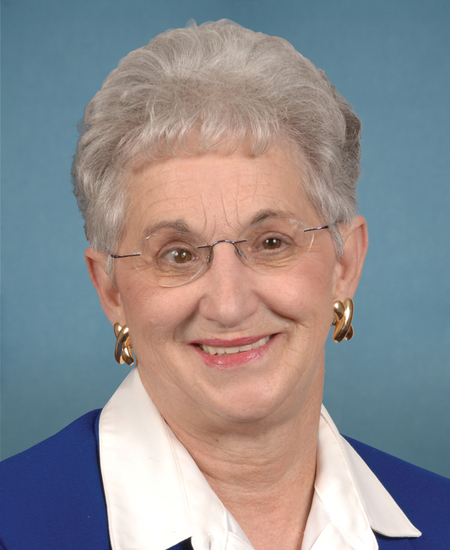
Rep. Virginia Foxx
Sponsored bills
Reopening to address Every COmplete Record request for Devoted Servicemembers Act of 2021 or the RECORDS Act of 2021 This bill directs the Office of the Archivist of the United States to take specified steps to address record request backlogs. Specifically, the office must take actions to ensure that (1) the number of individuals employed by the National Personnel Records Center is equal to or exceeds the number of such individuals employed on March 2, 2020, and (2) the percentage of such individuals regularly reporting to work in person is equal to or exceeds the percentage of such individuals regularly reporting to work in person on that date. The office shall submit to specified congressional committees a report that provides a comprehensive plan to address the record request backlog of the National Personnel Records Center and improve the efficiency and responsiveness of operations at the center, identifies measurable goals with respect to the comprehensive plan and metrics for tracking progress toward such goals, and describes strategies to prevent future record request backlogs.
Trillion Trees Act This bills establishes a variety of requirements and incentives to plant trees and conduct other land management practices for the purposes of capturing and storing carbon in domestic and international trees and forests. Additionally, the bill provides incentives to research or develop other carbon sequestration tools. Specifically, the bill directs the Department of Agriculture (USDA) to set targets to increase forest carbon stock through January 1, 2100, for the purposes of sequestering and storing carbon in U.S. forests. It also establishes and provides funding for the Trillion Trees Challenge Fund to provide grants to nonfederal entities for activities related to reforestation efforts on public or private lands. In addition, it raises the cap on the Reforestation Trust Fund to enhance forest health in the National Forest System and requires the USDA to establish a Tree City USA Grant Program. The bill also allows the U.S. Agency for International Development to enter into an agreement with a nonprofit organization to establish an International Forest Foundation to promote reforestation and prevent deforestation. Additionally, it establishes requirements and incentives to address seedling shortages and support nurseries. Finally, the bill provides market incentives to research or develop other carbon sequestration tools relating to biochar, sustainable building practices, biochemical and bioplastic products, and biomass energy.
This bill expands tax-exempt governmental pension plans to include plans maintained by a tax-exempt public safety agency all of whose employees are emergency response providers performing firefighting services or out-of-hospital emergency medical services.
This resolution calls on the people of the United States to observe Memorial Day to honor the men and women who died in the pursuit of freedom and peace.
This bill moves portions of four counties encompassing the Fort Bragg Military Reservation and Camp Mackall from the Middle District to the Eastern District of North Carolina.
Save Local Business Act This bill provides that a person may be considered a joint employer in relation to an employee under federal labor law only if such person directly, actually, and immediately (and not in a limited and routine manner) exercises significant control over the essential terms and conditions of employment. Such control may by demonstrated by hiring and discharging employees, determining individual employee rates of pay and benefits, day-to-day supervision of employees, assigning individual work schedules, positions, and tasks, and administering employee discipline.
Yes In My Backyard Act This bill requires certain Community Development Block Grant program recipients to submit to the Department of Housing and Urban Development information regarding their implementation of certain land-use policies, such as policies for expanding high-density single-family and multifamily zoning.
Fight Radicalization of Elementary Education (FREE) Act This bill prohibits the federal government from conditioning or incentivizing financial support upon the adoption of specific instructional content, academic standards and assessments, curricula, or programs of instruction related to the priorities in the Department of Education's proposed rule titled Proposed Priorities-American History and Civics Education , published on April 19, 2021, or related to critical race theory.
Protect Equality And Civics Education (PEACE) Act This bill prohibits the use of FY2021 federal education funding for the priorities noticed in the Department of Education's proposed rule titled Proposed Priorities-American History and Civics Education , published on April 19, 2021, or for a priority or requirement related to the teaching of critical race theory under a grant, contract, or cooperative agreement.