

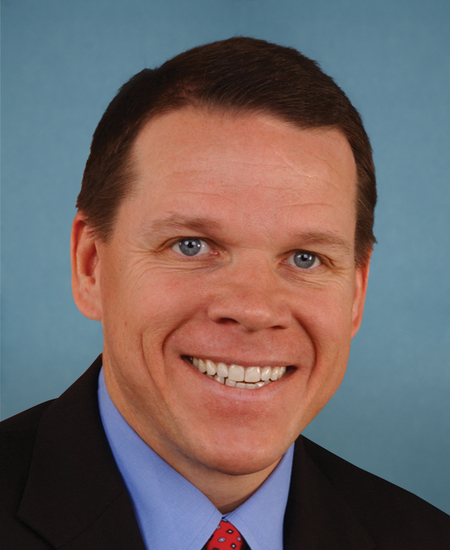
Photo of Sam Graves
R United States House · District 6 · Missouri

Rep. Sam Graves

Compare
Total votes
2,818
all sessions
Attendance
97%
81 missed
Lower than 85% of chamber peers
With party
96%
of cast votes
Higher than 90% of chamber peers
Bipartisan score
2%
crosses aisle rarely
Lower than 91% of chamber peers
Sponsored
373
bills & resolutions
Lower than 93% of chamber peers
Committees
3
assignments
373 bills and resolutions

Sponsored bills

Total
373
Primary
48
Co-sponsor
325
This page
373
matching current filters
Primary HRES 84
In committee · Texas House · Lead sponsor
Providing amounts for the expenses of the Committee on Transportation and Infrastructure in the One Hundred Nineteenth Congress.

Maddy summaryHRES 84 is a procedural resolution allocating funding for the House Committee on Transportation and Infrastructure during the 119th Congress. It authorizes $23,290,035 total for committee expenses, including staff salaries, split between $11,102,513 for 2025 and $12,187,522 for 2026. The funds cover operational costs and must be spent per House Administration Committee regulations, with payments approved via committee-signed vouchers. This resolution directly affects the committee's ability to operate but does not change transportation policy or affect the public.

In committee Jan 31, 2025 0 co-sponsors
Co-sponsor HR 886
In committee · Texas House · Co-sponsor
Beat Bad Bureaucrats Act

Maddy summaryHR 886, the "Beat Bad Bureaucrats Act," prevents the Small Business Administration (SBA) from withholding Social Security payments to repay certain business loans when identity theft is confirmed. It specifically protects victims of identity theft who fraudulently obtained SBA loans under Sections 7(a) or 7(b) of the Small Business Act (including pandemic-era loans). The law requires the SBA to update its regulations within 30 days to include clear instructions for reporting identity theft through its public website. This policy change directly affects individuals who report fraud via SBA's designated process, blocking garnishment of their Social Security benefits for those specific loans.

In committee Jan 31, 2025 1 co-sponsor
Co-sponsor HRES 70
In committee · Texas House · Co-sponsor
Expressing the sense of the House of Representatives that Congress should take all appropriate measures to ensure that the United States Postal Service remains an independent establishment of the Federal Government and is not subject to privatization.

Maddy summaryThis resolution expresses the House of Representatives' position that Congress should take steps to prevent the privatization of the United States Postal Service (USPS), ensuring it remains a federal independent agency. It highlights USPS’s constitutional role, self-sustaining nature (relying on service revenue, not taxpayer funds), and critical functions - serving 168 million addresses daily, supporting rural communities, and underpinning e-commerce. The resolution opposes privatization, noting it would raise prices, reduce services, and harm the $1.9 trillion mailing industry. As a non-binding resolution, it reflects the House’s stance but does not create new law or policy.

In committee Jan 28, 2025 1 co-sponsor
Co-sponsor HR 722
In committee · Texas House · Co-sponsor
Life at Conception Act

Life at Conception Act This bill declares that the right to life guaranteed by the Constitution is vested in each human being at all stages of life, including the moment of fertilization, cloning, or other moment at which an individual comes into being. Nothing in this bill shall be construed to authorize the prosecution of any woman for the death of her unborn child.

In committee Jan 24, 2025 1 co-sponsor
Co-sponsor HR 21
Passed · Texas House · Co-sponsor
Born-Alive Abortion Survivors Protection Act

Maddy summaryHR 21, the Born-Alive Abortion Survivors Protection Act, requires medical staff at abortion facilities to provide the same immediate care and hospital admission to any infant born alive during an abortion as they would for any newborn. It mandates reporting failures to provide this care to law enforcement and imposes penalties of up to 5 years in prison for violations, with harsher penalties for intentional killing. The bill also allows women who undergo abortions to sue for civil damages, including triple the abortion cost, and provides for attorney fees. It defines "abortion" to exclude procedures performed after viability to preserve a live birth. This law directly affects healthcare providers at abortion facilities and creates new federal legal obligations for them.

Passed Jan 24, 2025 1 co-sponsor
Co-sponsor HR 703
In committee · Texas House · Co-sponsor
Main Street Tax Certainty Act

Maddy summaryHR 703, the Main Street Tax Certainty Act, makes a key tax deduction permanent for small business owners. It removes the temporary sunset provision (subsection (i)) from Section 199A of the tax code, ensuring the qualified business income deduction remains available for eligible small businesses. This change directly affects pass-through business owners (like S-corps, partnerships, and sole proprietorships) who currently qualify for this deduction. The permanent change takes effect for tax years starting after December 31, 2025.

In committee Jan 23, 2025 1 co-sponsor
Co-sponsor HR 539
In committee · Texas House · Co-sponsor
Chiropractic Medicare Coverage Modernization Act of 2025

Chiropractic Medicare Coverage Modernization Act of 2025 This bill expands Medicare coverage of chiropractic services to include all services provided by chiropractors, rather than only subluxation corrections through manual manipulation of the spine.

In committee Jan 16, 2025 1 co-sponsor
Co-sponsor HR 516
In committee · Texas House · Co-sponsor
To amend the Internal Revenue Code of 1986 to modify the railroad track maintenance credit.

This bill increases the annual limit on the tax credit for qualified railroad track maintenance expenses (also referred to as the short line railroad tax credit) and expands eligibility for claiming the credit. Under current law, the tax credit is limited each tax year to $3,500 multiplied by the sum of the number of miles of railroad track owned or leased by the taxpayer (miles owned or leased) and the number of railroad track miles assigned to the taxpayer by a Class II or III railroad (miles assigned). This bill increases the annual limit to $6,100 multiplied by the sum of miles owned or leased and miles assigned. The $6,100 amount used in the calculation of the tax credit limit is adjusted for inflation for tax years beginning after 2025. The bill also expands eligibility for the tax credit to include gross expenses for maintaining railroad tracks owned or leased as of January 1, 2024. Under current law, the tax credit is limited to gross expenses for maintaining railroad tracks owned or leased as of January 1, 2015.

In committee Jan 16, 2025 1 co-sponsor
Primary HR 431
In committee · Texas House · Lead sponsor
Pony Up Act

Maddy summaryHR 431, the "Pony Up Act," requires the United States Postal Service (USPS) to reimburse citizens for fees or penalties incurred due to late delivery of their bills or payment notices. If a bill notice is delivered late (defined as USPS receiving mail more than 12 days before the due date but delivering it less than 6 days before the due date), USPS must pay the full amount of late fees charged to the citizen. Citizens can apply for reimbursement online, by mail, or in person at post offices, with appeals available to a Judicial Officer if denied. The bill also mandates annual USPS reports to Congress on mail delivery delays, including data on different mail classes and presorting effects. This directly affects citizens who face late fees due to USPS delivery errors.

In committee Jan 15, 2025 0 co-sponsors
Co-sponsor HR 404
In committee · Texas House · Co-sponsor
Hearing Protection Act

Maddy summaryHR 404, the "Hearing Protection Act," reclassifies firearm silencers (devices that reduce gunfire noise) as firearms for federal tax and regulatory purposes. It imposes a 10% federal tax on silencers, requires the destruction of all existing federal silencer registration records within one year, and preempts state laws that tax or regulate silencers. The bill clarifies that silencers are treated as firearms under federal law, including for licensing and marking requirements, and defines "firearm silencer" to include specific components. Note: The bill’s title is misleading - it addresses firearm silencer regulation, not hearing protection for people.

In committee Jan 15, 2025 1 co-sponsor
Showing 101 to 110 of 373 bills
Previous 1 10 11 12 38 Next