

Maddy summaryThe Laken Riley Act (HR 7511) would require federal authorities to detain non-citizens charged with or convicted of burglary, theft, larceny, or shoplifting offenses. It also creates new legal standing for state attorneys general to sue federal immigration officials in federal court if they believe immigration enforcement decisions (like releasing aliens or granting parole) cause financial harm exceeding $100 to the state or its residents. The bill amends immigration laws to expand detention requirements for certain property crimes and allows states to seek court orders to enforce immigration policies. It does not create new criminal penalties but modifies existing immigration enforcement procedures. The bill’s findings and political language about the Laken Riley case are not part of its policy provisions.
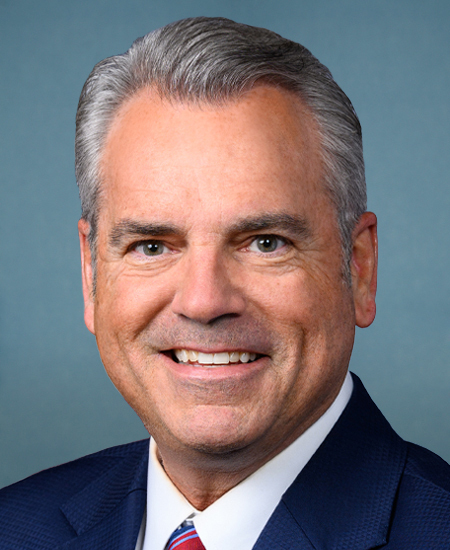
Rep. Mark Alford
Sponsored bills
Maddy summaryHRES 1067 is a non-binding resolution recognizing the 175th anniversary of Laclede County, Missouri, and the city of Lebanon, Missouri, which were both organized on February 24, 1849. It acknowledges the historical significance of these communities to Missouri without creating new laws, funding, or obligations. The resolution formally honors the counties' founding dates and their role in Missouri's history. This is a symbolic gesture with no direct impact on residents or policy.
Maddy summaryThis resolution (HRES 1055) is a symbolic gesture by the U.S. House of Representatives to congratulate the Kansas City Chiefs football team for winning Super Bowl LVIII on February 11, 2024. It acknowledges their victory over the San Francisco 49ers, their status as the first NFL repeat champion in 19 years, and key player achievements like Patrick Mahomes' third Super Bowl MVP award. As a ceremonial resolution, it has no legal effect or policy impact - it simply offers formal recognition of the team's athletic accomplishment. The resolution does not affect any individuals, policies, or government actions.
Maddy summaryThe Farm to Fly Act of 2023 amends USDA programs to include sustainable aviation fuel (SAF) as a qualifying product for financial assistance, directly affecting farmers, biorefineries, and agricultural producers. It defines SAF as liquid fuel meeting strict environmental standards - requiring at least a 50% reduction in lifecycle greenhouse gas emissions compared to jet fuel and excluding sources like palm oil or petroleum. The bill mandates the Secretary of Agriculture to lead a cross-agency initiative focused on advancing SAF development, leveraging agricultural resources, and fostering public-private partnerships to expand the domestic SAF market. This aims to support rural economic growth, strengthen U.S. energy security, and align with national clean energy goals in aviation.
Maddy summaryThis bill requires the Small Business Administration's Office of Rural Affairs to submit annual reports on its rural business activities. The initial report must detail how the office promotes financial assistance, tracks statistics, and conducts outreach events, while annual reports must be submitted alongside the SBA's budget justification. It also mandates a separate report on the SBA's collaboration with the Department of Agriculture regarding rural business efforts. All reporting requirements will use existing SBA funding without new appropriations.
Maddy summaryThis bill directs the Secretary of State to actively use U.S. diplomatic resources, including the voice and influence of U.S. diplomats and officials at the International Boundary and Water Commission, to advance efforts ensuring Mexico complies with the 1944 water treaty. It requires U.S. officials to work toward establishing reliable water delivery agreements under the treaty for the Colorado, Tijuana, and Rio Grande rivers. The key mechanism is mandating diplomatic engagement to address Mexico's compliance with treaty obligations, aiming to secure predictable water flows for U.S. users. The bill affects U.S. diplomatic operations and water management coordination with Mexico, focusing on treaty implementation rather than new water infrastructure.
Maddy summaryHR 7455, the Sunset Act of 2024, requires federal agencies to automatically expire significant rules after 10 years unless Congress passes a new law extending them. Agencies must submit reports 180 days before expiration, and Congress can extend rules via joint resolution within 3 legislative days of receiving the report. The bill also mandates annual reviews of 10% of active agency rules for 9 years, with rules not extended by Congress after the 10-year period expiring. It applies to all major agency rules (e.g., environmental or safety regulations) and includes limited presidential exemptions for emergencies, but does not affect existing rules already in effect.
Maddy summaryThe Uyghur Policy Act of 2023 establishes a U.S. Special Coordinator for Uyghur Issues within the State Department to coordinate policy and advocate for the protection of Uyghur cultural, religious, and linguistic identity in Xinjiang. It authorizes $250,000 annually for Uyghur human rights advocates to speak at public diplomacy events in Muslim-majority countries and mandates Uyghur language training for U.S. diplomats. The bill also directs the U.S. government to support United Nations monitoring of Xinjiang human rights issues and oppose efforts to block discussions of Xinjiang at the UN. These provisions focus on diplomatic advocacy and information-sharing, not direct sanctions or enforcement actions against China.
Maddy summaryHR 7450, the Protecting Privacy in Purchases Act, prohibits payment card networks and covered entities (like payment processors) from requiring or assigning merchant category codes that specifically identify firearms retailers as different from general stores or sporting goods retailers. This directly affects firearms retailers and payment networks by preventing them from using business classification codes that could flag firearm sales. The bill establishes an enforcement process where the Attorney General investigates complaints, issues remediation notices, and can seek court injunctions for non-compliance, while preempting state or local laws on this issue. It does not create private lawsuits for individuals.
Maddy summaryHR 7129, the "Put America on Commission Act of 2024," creates an Office of Whistleblower Awards within the Small Business Administration (SBA) to incentivize reporting of fraud in pandemic relief loans. It directly affects whistleblowers who provide original information about financial misconduct by SBA loan recipients and the recipients themselves who face penalties. The bill establishes a Whistleblower Award Fund, paying 10% (U.S. entities) or 15% (foreign entities) of recovered funds from convictions or settlements related to "COVID loan actions" (defined as fraud cases under CARES Act provisions). It includes anti-retaliation protections for whistleblowers and requires annual reports to Congress on award distributions. The program sunset provisions end its authority once all related cases are resolved.