Maddy summaryHR 1301, the Death Tax Repeal Act, would eliminate the federal estate tax and generation-skipping transfer tax for estates of individuals dying on or after its enactment date. It directly affects individuals inheriting significant assets, as it removes taxes on estates exceeding $10 million (adjusted for inflation) and repeals taxes on large transfers between generations. The bill modifies the gift tax by establishing a $10 million lifetime exemption with annual inflation adjustments, replacing previous tax brackets. It applies to estates, gifts, and transfers occurring on or after the bill's effective date.
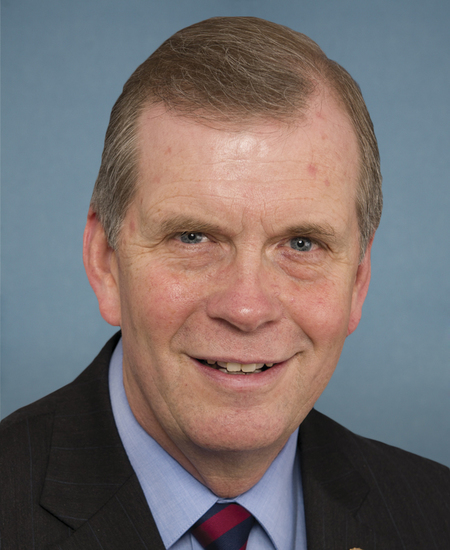
Rep. Tim Walberg
Sponsored bills
United States-Israel Defense Partnership Act of 2025 This bill requires or authorizes certain actions to increase defense-related cooperation between the United States and Israel. Specifically, the bill requires the Department of Defense (DOD) to establish a cooperative program, with the concurrence of Israel's Ministry of Defense (MOD), to develop and deploy advanced technologies for countering unmanned systems that threaten the United States and Israel; establish in Israel an office of the Defense Innovation Unit (an organization that focuses on rapidly fielding and scaling commercial technology across the U.S. military); and seek to engage Israel's MOD on the ascension of Israel into the national technology and industrial base (currently defined in law as the persons and organizations engaged in research, development, production, integration, services, or information technology activities conducted within the United States, the United Kingdom, Australia, New Zealand, and Canada). The bill authorizes DOD, upon request of Israel's MOD, to jointly conduct research, development, test, and evaluation (RDT&E) of emerging technologies such as artificial intelligence and robotics to meet defense challenges. Additionally, the bill extends the authority for DOD to (1) carry out RDT&E on a joint basis with Israel to establish anti-tunnel and counter unmanned aerial systems capabilities through 2028, and (2) transfer defense articles intended for use as reserve stocks for Israel through January 1, 2029.

Maddy summaryThis bill creates two separate "lock-box" accounts: one for Social Security surplus funds and one for Medicare Part A surplus funds. Starting after fiscal year 2025, any surplus in these trust funds (defined as tax revenues minus benefits paid) must be transferred to these dedicated accounts instead of being invested in U.S. Treasury securities. The funds in these accounts cannot be invested by the trust fund managers. The bill also establishes a bipartisan commission to study potential alternative investment options for these trust funds, with a report due by October 2025. This directly affects how Social Security and Medicare Part A trust fund surpluses are handled and protected.
Maddy summaryThe HALT Fentanyl Act (HR 27) creates a new category of Schedule I controlled substances for "fentanyl-related substances" defined by specific chemical modifications to fentanyl. This law directly affects researchers, medical professionals, and law enforcement by expanding the legal definition of fentanyl-related substances to include many structurally similar compounds. Key provisions include streamlined registration processes for research on these substances, allowing researchers to conduct studies with expedited procedures if related to FDA-approved drug development or government-funded research. The bill requires the Attorney General to issue implementing rules within six months and includes penalties for violations involving these substances.
Maddy summaryThis is a procedural resolution (HRES 117) appointing Mr. Guest as Chair of the House Committee on Ethics, dated February 6, 2025. It does not create new policy or affect constituents; it simply formalizes a routine leadership appointment within the House of Representatives. The resolution names Mr. Guest as Chair of the Committee on Ethics, a standing committee responsible for overseeing ethical conduct among lawmakers. This action is part of standard House committee staffing procedures and does not involve policy changes or public impact.
Fair Access to Banking Act This bill places restrictions on certain banks, credit unions, and payment card networks if they refuse to do business with a person who complies with the law. Restrictions include prohibiting the use of electronic funds transfer systems and lending programs, termination of an institution's depository insurance, and specified civil penalties. Banks and other specified financial institutions are allowed to deny financial services to a person only if the denial is justified by a documented failure of that person to meet quantitative, impartial, risk-based standards established in advance by the institution. This justification may not be based upon reputational risks to the institution. The bill establishes the right for a person to bring a civil action for a violation of this bill.
Maddy summaryHR 833 creates a federal tax credit for individuals and corporations that contribute to scholarship granting organizations (SGOs) providing scholarships for elementary and secondary education. The credit allows taxpayers to deduct up to 10% of their adjusted gross income or $5,000 (whichever is less) for contributions to SGOs serving students from households with income up to 300% of the area median income. The bill establishes a $10 billion annual cap on the tax credit program, requires SGOs to verify student eligibility and maintain separate accounts, and prohibits government control over SGOs or private schools. It ensures scholarships can be used at public, private, or religious schools without discrimination based on religious character. The tax credit would be available for contributions made after December 31, 2025, with annual volume cap increases based on usage.
Sustainable Cardiopulmonary Rehabilitation Services in the Home Act This bill permanently allows services relating to cardiac rehabilitation programs, intensive cardiac rehabilitation programs, and pulmonary rehabilitation programs to be furnished via telehealth at a beneficiary's home under Medicare.
Maddy summaryHR 817, the Educational Choice for Children Act of 2025, creates a new tax credit allowing individuals to claim up to 10% of their adjusted gross income (capped at $5,000) for charitable contributions to scholarship granting organizations. These organizations provide education scholarships to eligible students from households with income not exceeding 300% of the area median gross income, covering qualified expenses like tuition, curriculum materials, and educational therapies. The bill establishes strict requirements for scholarship organizations, including verifying household income, conducting annual audits, and distributing scholarships to multiple students without government control. It also prohibits government entities from mandating or controlling scholarship organizations or excluding private or religious schools from receiving scholarship funds, while exempting scholarship amounts from taxable income for recipients. The tax credit is limited to $5 billion annually for 2025-2028, allocated on a first-come, first-serve basis.
Maddy summaryHR 21, the Born-Alive Abortion Survivors Protection Act, requires medical staff at abortion facilities to provide the same immediate care and hospital admission to any infant born alive during an abortion as they would for any newborn. It mandates reporting failures to provide this care to law enforcement and imposes penalties of up to 5 years in prison for violations, with harsher penalties for intentional killing. The bill also allows women who undergo abortions to sue for civil damages, including triple the abortion cost, and provides for attorney fees. It defines "abortion" to exclude procedures performed after viability to preserve a live birth. This law directly affects healthcare providers at abortion facilities and creates new federal legal obligations for them.