Maddy summaryHRES 386 is a symbolic resolution introduced in the U.S. House of Representatives that expresses support for recognizing "National Police Week" each year. The resolution acknowledges law enforcement officers' sacrifices, particularly during the pandemic, and encourages the public to honor their service. As a non-binding statement, this resolution does not create new law or change policy but serves as a formal expression of support for law enforcement officers across the United States.
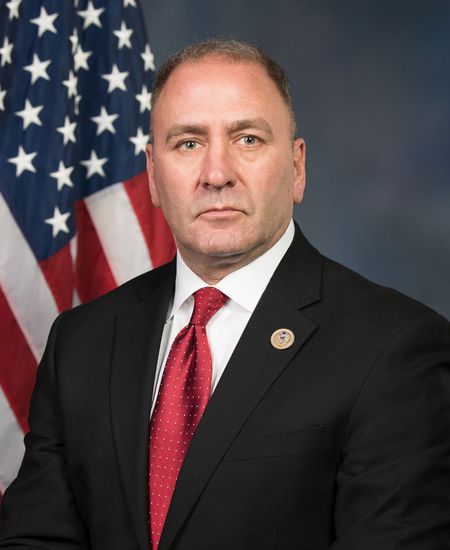
Rep. Clay Higgins
Sponsored bills
This bill prohibits military departments from taking any adverse action against a member of the Armed Forces based solely on the member's refusal to receive a COVID-19 vaccination or to disclose whether they have received such vaccination.
Energy Security and Lightering Independence Act of 2021 This bill authorizes an alien crewman to obtain a permit to land in the United States for up to 180 days if, during this period, the crewman will perform ship-to-ship liquid cargo transfer operations involving a vessel engaged in foreign trade. Currently, an alien crewman may obtain a permit to land for up to 29 days. Under this bill, an alien passing in transit through the United States to board a vessel to perform the above-described liquid cargo transfer operations may qualify as a nonimmigrant in transit. (A qualifying nonimmigrant in transit may obtain a transit visa.)
Keeping Our COVID-19 Heroes Employed Act This bill exempts essential workers from COVID-19 vaccination requirements imposed by the federal government and contractors, public entities that received federal COVID-19 relief funds, and private entities that received any federal funds. An essential worker is an individual who was deemed to be essential or exempted from response measures during the COVID-19 pandemic by a state, tribe, or territory.
Maddy summaryHRES 754 is a non-binding resolution expressing the House of Representatives' opposition to proposed "punitive natural gas taxes" on U.S. businesses, families, and workers. It cites claims that such taxes would raise average energy bills by 17%, reduce GDP by $9 billion, and eliminate 90,000 jobs, while disproportionately harming low-income households. The resolution argues that opposing these taxes supports U.S. energy security, national security, and continued leadership in reducing emissions through domestic natural gas production. As a procedural resolution, it does not create law but formally states the House's position against this policy approach.
National Flood Insurance Program Reauthorization and Reform Act of 2021 This bill generally revises the National Flood Insurance Program (NFIP) and reauthorizes the program through FY2026. The bill addresses NFIP coverage, cost, and availability, including by generally prohibiting the Federal Emergency Management Agency (FEMA) from raising certain premiums, surcharges, and fees more than 9% a year for five years; revising flood insurance coverage limits; establishing a means-tested program to provide financial assistance to low income households through policy discounts; and revising standards and certification requirements for flood insurance rate maps. The bill also revises administrative provisions of the NFIP, including by allowing for the continuous operation of the NFIP during a lapse in appropriations, and prohibiting the Department of the Treasury from charging FEMA interest for NFIP debt for five years. The bill sets forth requirements for Write Your Own companies related to reimbursements, agent commissions, and penalties for underpayment of claims. (A Write Your Own company writes and services federal standard flood insurance policies in its own name.) The bill establishes state or tribal government revolving funds for flood mitigation activities and also provides for loans, grants, and other incentives regarding mitigation.

This bill prohibits the use of federal funds to require a member of the Armed Forces to receive a COVID-19 vaccination. The bill also prohibits adverse action (e.g., punishment) being taken against a member of the Armed Forces because the member refuses to receive a COVID-19 vaccination.
Pay Our Correctional Officers Fairly Act This bill provides increased locality pay rates to certain Bureau of Prisons employees whose duty stations are located in the pay locality designated as Rest of U.S. The Rest of U.S. GS (general schedule) locality is the default locality area that applies to GS employees in any city that does not fall within another specified GS locality. Such an employee shall not be subject to this bill if his or her official work site is not located within 100 miles of any pay locality other than Rest of U.S .
State, Local, Tribal, and Territorial Fiscal Recovery, Infrastructure, and Disaster Relief Flexibility Act This bill allows states, tribes, territories, and localities to use certain COVID-19 relief funds for new categories of spending, including for natural disasters and infrastructure projects. It also makes changes to expenditure deadlines and other aspects of this funding. Specifically, recipients may use funds for emergency relief from natural disasters and associated negative economic impacts of natural disasters. In addition, recipients may use a portion of their COVID-19 relief funds for designated infrastructure projects, such as nationally significant freight and highway projects. Furthermore, the bill allows recipients to expend COVID-19 relief funds on these types of infrastructure projects until September 30, 2026. Under current law, recipients must expend the funds by December 31, 2024. Other changes in the bill include (1) modifying eligibility and allocation requirements for funding set aside for counties and Indian tribes that are near public lands, (2) allowing Indian tribes an additional year to expend their COVID-19 relief funds, and (3) establishing a process for government entities to decline COVID-19 relief funds and requiring any declined funds to be used to reduce the federal deficit.
CBP Donations Acceptance Program Reauthorization Act This bill extends through December 31, 2026, the authority of U.S. Customs and Border Protection (CBP) to enter into an agreement with any entity to accept donations of real and personal property for certain activities at ports of entry. Further, the bill allows CBP to accept donations at leased land ports of entry.