

Farmers Undertake Environmental Land Stewardship Act or the FUELS Act This bill increases thresholds for requiring a farm to have a plan to address oil spills. Currently, regulations require a farm to have an oil spill control and prevention plan that is certified by a professional engineer if the farm's aboveground oil storage capacity is above a certain threshold or if the farm has a reportable oil discharge history. A farm with lower aboveground storage capacity and no reportable history is either allowed to self-certify its plan or not required to have a plan at all, depending on the farm's storage capacity. Under the bill, the Environmental Protection Agency must require a farm to have a professionally certified plan if the farm has an aggregate aboveground oil storage capacity of 40,000 gallons or more, whereas the current threshold is 20,000 gallons. The bill also raises the aggregate capacity thresholds at which a farm with no reportable oil discharge history may self-certify its plan or is not required to have a plan. The bill also limits when a farm's aboveground oil storage containers on separate parcels shall count toward the farm's oil storage capacity for the purposes of these thresholds.
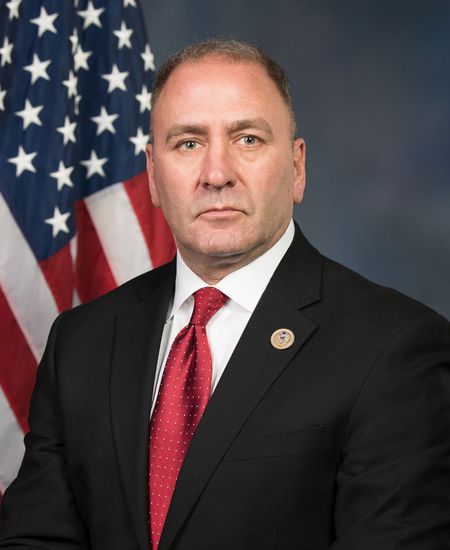
Rep. Clay Higgins
Sponsored bills
This resolution supports reopening the U.S. Capitol Building and House Office Buildings to visitors under the public visitation policies that were in place before the COVID-19 pandemic.
Readable Legislation Act of 2022 This bill requires every bill or joint resolution that amends an existing section of an act to set forth the entire section, showing proposed changes to that section by appropriate typographical device. This eliminates the current practice of revising or amending a section of an act by mere reference to it.
This resolution requests the President and directs the Department of Homeland Security (DHS) to transmit to the House of Representatives, no later than 14 days after the date of the adoption of this resolution, copies of certain documents and other materials, both classified and unclassified, in the possession of the President or DHS as of the date of adoption of this resolution that refer or relate to certain aspects on border policy, particularly along the southwestern border.
This bill requires the Food and Drug Administration (FDA) to report to Congress on barriers to the domestic manufacturing of imported active pharmaceutical ingredients, finished drug products, and devices that are critical to public health. The report must recommend strategies to overcome such barriers. The FDA may, to the extent appropriate, implement the strategies.
Stop Funding Our Adversaries Act of 2022 This bill prohibits federal agencies from conducting or supporting, either directly or indirectly, research that will be conducted by China's government, the Chinese Communist Party, or any agent, instrumentality, or entity belonging to or controlled by either entity.
Health Care for Burn Pit Veterans Act This bill updates policies and procedures related to Department of Veterans Affairs (VA) health care and benefits for veterans who have been exposed to toxic substances. Specifically, the bill extends the eligibility period for VA hospital care, medical services, and nursing home care for combat veterans who served after September 11, 2001, and were exposed to toxic substances, radiation, or other conditions, including those who did not enroll to receive VA care during the eligibility period. The VA must incorporate into its existing health care screening a screening to help determine potential exposures to toxic substances during military service. Among other requirements, the VA must also provide annual training to health care and benefits personnel with respect to veterans who were exposed to toxic substances; analyze total and respiratory disease mortality in veterans who served in specified locations on specified dates; conduct an epidemiological study on the health trends of veterans who served in the Armed Forces after September 11, 2001; conduct a study to determine trends in the rates of the incidence of cancer in veterans; publish a list of VA resources for veterans who were exposed to toxic substances, families and caregivers of such veterans, and survivors of such veterans who are receiving death benefits; and report on the data quality of the Individual Longitudinal Exposure Record and its usefulness in supporting veterans in receiving VA health care and benefits.
Close Biden's Open Border Act This bill provides $15 billion for the Department of Homeland Security to construct a border wall along the southern border of the United States. It also imposes a two-year moratorium on funding for U.S. contributions to the United Nations (U.N.). During the two-year period, funds may not be authorized or otherwise made available for contributions to the U.N.
Port Cranes for America Act This bill requires the U.S. Maritime Administration to provide grants to eligible applicants for the procurement of container cranes with a lifting capacity in excess of 50 tons for use at ports located in the United States. The funds may be used to procure such a crane, including to pay for any manufacturing costs associated with the procurement, provided that the entity manufacturing the crane is not associated with a country that is a nonmarket economy, fails to protect intellectual property rights, and violates foreign trade agreements. For cranes in use before this bill's enactment, funds may also be used to replace any software from such a country.
Port Crane Security and Inspection Act of 2022 This bill limits the operation at U.S. ports of foreign cranes. Foreign cranes are those (1) manufactured by companies that are subject to the control or influence of a country designated as a foreign adversary, and (2) using software or other technology that connects to ports' cyber infrastructure. Foreign cranes that are contracted for on or after the date of the bill's enactment may not operate at a U.S. port. The bill also prohibits, effective five years after the date of the bill's enactment, foreign cranes at U.S. ports if the cranes use software or other technology manufactured by a company affiliated with a foreign adversary and connect to a port's cyber infrastructure. Additionally, the Cybersecurity and Infrastructure Security Agency (CISA) must (1) inspect foreign cranes before they are placed into operation for potential security vulnerabilities, and (2) assess the threat posed by security vulnerabilities on existing or newly constructed foreign cranes. CISA must also report to Congress about critical and high-risk security vulnerabilities posed by foreign cranes at U.S. ports.