

Safeguard American Voter Eligibility Act or the SAVE America Act This bill requires individuals to provide documentary proof of U.S. citizenship when registering to vote, and requires photo identification to vote, in federal elections. Specifically, the bill prohibits states from accepting and processing an application to register to vote in a federal election unless the applicant presents documentary proof of U.S. citizenship. The bill specifies what documents are considered acceptable proof of U.S. citizenship, such as identification that complies with the REAL ID Act of 2005 that indicates U.S. citizenship. Further, the bill (1) prohibits states from registering an individual to vote in a federal election unless, at the time the individual applies to register to vote, the individual provides documentary proof of U.S. citizenship; and (2) requires states to establish an alternative process to demonstrate U.S. citizenship. Each state must take affirmative steps on an ongoing basis to ensure that only U.S. citizens are registered to vote, which shall include establishing a program to identify individuals who are not U.S. citizens using information supplied by certain sources. Additionally, states must remove noncitizens from their official lists of eligible voters. The bill (1) provides for a private right of action for certain violations, and (2) establishes criminal penalties for certain offenses. Individuals voting in federal elections must present an eligible photo identification document. An individual who votes by absentee ballot must submit a copy of their identification document with both the request for, and the submission of, the absentee ballot.
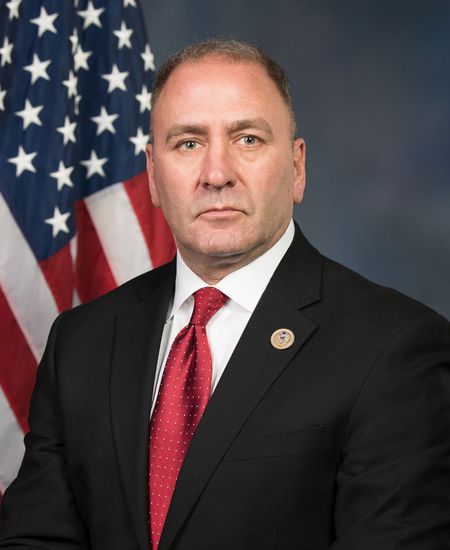
Rep. Clay Higgins
Sponsored bills
Maddy summaryThis bill would revoke the tax-exempt status of nonprofit organizations (like charities or health groups) that provide or fund abortions, except in specific cases. It directly affects organizations currently classified under Section 501(c)(3) of the tax code, such as some healthcare providers or advocacy groups. Key provisions define "abortion" as intentionally terminating a pregnancy (excluding cases where the mother’s life is at risk, or the pregnancy resulted from rape or incest), and deny tax exemption to groups meeting this definition. The change would take effect for tax years starting after the bill’s enactment date.
Maddy summaryHR 5183 (District of Columbia Home Rule Improvement Act of 2025) modifies the process for Congress to review District of Columbia laws and mayoral actions. It extends the congressional review period from 30 to 60 days, allows disapproval of specific provisions within a law (not just entire laws), and prohibits the Council from resubmitting laws substantially identical to those previously disapproved by Congress. The bill also requires annual congressional hearings where DC's leadership reports on the District's condition and needs. These changes aim to clarify and streamline the home rule review process for DC legislation and executive actions.
Maddy summaryHR 1295, the Reorganizing Government Act of 2025, amends federal law to streamline executive branch operations. It requires all executive departments (like the Departments of Defense or Education) to eliminate unnecessary programs, reduce federal employee numbers, and cut burdensome regulations that increase compliance costs. The bill updates deadlines for reorganization plans from 1984 to 2026 and explicitly mandates that all government operations must serve the public interest. These changes apply broadly across the federal government, focusing on efficiency and cost reduction.
Maddy summaryHR 7235, the "Protecting Motherhood Act," requires all federal agencies to stop using the term "birthing person" in official documents and instead use specific terms like "female," "mother," "pregnant woman," or "woman." It directly affects federal agencies that produce regulations, forms, or communications, mandating the use of these defined terms when referring to individuals based on biological sex. The bill provides detailed definitions for terms like "female" (based on biological sex at conception) and "pregnant woman" (an adult human female carrying a child). The law takes effect 30 days after enactment. This is a procedural change focused solely on terminology in government documents, with no direct impact on healthcare access or services.
Maddy summaryHR 6662, the Department of Defense and Department of Veterans Affairs Medical Credentialing Integration Act of 2025, requires the Defense and Veterans Affairs departments to create a single, unified system for medical provider credentialing and privileging. It directly affects military and VA medical staff (like doctors and nurses) by replacing separate, non-interoperable systems currently used by each department. Key provisions mandate a joint report on existing systems within 120 days, selection of one unified system by January 2027, and full implementation by January 2028, ensuring seamless sharing of provider credentials across both departments. This eliminates redundant credentialing processes and improves administrative efficiency for medical providers working across DoD and VA facilities.
Maddy summaryHR 909, the Crime Victims Fund Stabilization Act of 2025, modifies how funds from the False Claims Act are deposited into the Crime Victims Fund. It specifies that from 2025 through 2029, certain False Claims Act proceeds (specifically those for qui tam plaintiff payments and government damage reimbursements) cannot be deposited into the fund. This change directly affects the composition of the Crime Victims Fund by excluding these specific revenue streams during the specified period. The bill does not create new benefits or alter victim services; it only adjusts fund allocation rules for existing False Claims Act revenues.
Maddy summaryHR 6972 (Reporting Accountability and Abuse Prevention Act of 2026) requires health centers receiving federal funds under Title X (which supports family planning services) to comply with all state and local laws requiring reporting of child abuse, sexual abuse, intimate partner violence, and human trafficking. It mandates that these centers create written compliance plans, provide annual training for staff on reporting obligations and safety protocols, screen minors for potential abuse when presenting with STIs or pregnancy, and document all reports. Centers must maintain detailed records of minor patients and reports, and allow federal officials to review these records. Failure to comply can result in corrective action, repayment of funds, or a 36-month ban on future Title X funding for repeat violations.
Maddy summaryThis bill, the "Ending Improper Payments to Deceased People Act," requires the Social Security Administration to share death records with the federal Do Not Pay system, which prevents government agencies from sending payments to deceased individuals. It mandates this coordination through a cooperative arrangement between agencies, meeting specific legal requirements to ensure data sharing. The change aims to stop improper payments that sometimes occur due to delays in updating death records across federal systems. The new requirements must be implemented by December 28, 2026.
Maddy summaryHR 6908, the Blue Envelope Awareness Act, creates a new program to help people with speech, hearing, or developmental disabilities communicate more effectively with police during traffic stops. The bill directs federal Byrne grant funds to support "blue envelope programs," which provide individuals with blue envelopes containing disability documentation to show officers and train law enforcement on interacting with these individuals. It amends existing law to define "blue envelope program" and add this funding authorization to the Omnibus Crime Control and Safe Streets Act. The bill directly affects people with disabilities who interact with police and law enforcement agencies receiving Byrne grants.