

Maddy summaryThe Federal Information Security Modernization Act of 2024 modernizes federal cybersecurity by requiring agencies to implement continuous security risk assessments, adopt zero trust architecture, and conduct regular penetration testing. It establishes new requirements for agencies to report major incidents to Congress within 72 hours and notify affected individuals within 45 days of discovering a breach. The bill creates a new Federal Chief Information Security Officer position to oversee agency cybersecurity efforts and coordinates with the National Cyber Director. It also mandates improved information sharing between agencies and the Cybersecurity and Infrastructure Security Agency (CISA), along with enhanced vulnerability disclosure processes for contractors and awardees.
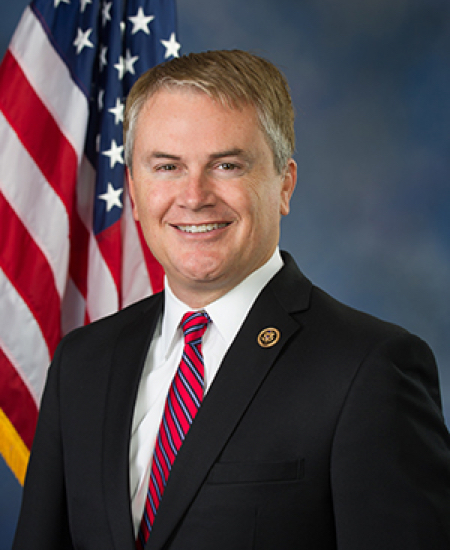
Rep. James Comer
Sponsored bills
Maddy summaryHR 7867, the REG Budgeting Act of 2024, establishes annual budget limits on "unfunded regulatory costs" that federal agencies can impose on state/local governments or businesses through new rules. The Office of Management and Budget (OMB) must set these limits by September 30 each year, requiring agencies to seek congressional approval before finalizing rules that exceed their allocated limit. Agencies must also submit detailed justifications and report on cost overruns to Congress and publish notices with specific cost impact statements. This bill directly affects all federal agencies issuing regulations with cost implications for external entities, adding new transparency and approval steps to the rulemaking process.
Maddy summaryThis bill establishes federal governance requirements for artificial intelligence systems used by government agencies. It requires agencies to create detailed AI governance charters for high-risk systems, including information about development, training data, and how the system is used. Agencies must provide plain language notifications to individuals affected by AI-driven decisions and maintain public inventories of AI systems through a Federal AI System Inventory. The bill creates a new oversight role within the Office of Management and Budget and mandates regular evaluations of agency AI governance practices. These requirements apply to all federal agencies and their contractors using AI systems that make decisions affecting individuals.
Maddy summaryThe White Oak Resilience Act establishes a voluntary coalition of federal agencies, states, private groups, and landowners to coordinate nationwide efforts restoring white oak forests. It creates a "White Oak Restoration Initiative Coalition" to address policy barriers, recommend improvements, and coordinate cross-boundary projects, while directing the USDA and Interior Departments to conduct assessments and launch 5 pilot restoration projects on federal lands. The bill also creates a dedicated fund through the National Forest Foundation to support white oak reforestation, nursery expansion, and seedling research, and requires a national strategy to address tree seedling shortages affecting restoration. This primarily affects federal land managers, private forest landowners, and tree nurseries by streamlining existing resources to improve white oak regeneration and resilience.
Maddy summaryHR 4428, the Guidance Clarity Act, requires federal agencies to include a specific statement on all guidance documents they issue. This statement must clearly state that the document has no legal force, does not bind the public or the agency, and is only for clarifying existing laws or policies. Agencies must display this statement prominently on the first page of such guidance, effective 30 days after the Office of Management and Budget issues implementing instructions. The bill directly affects federal agencies and the public receiving these documents, ensuring transparency about the non-binding nature of agency guidance.
Maddy summaryThe FOCA Act of 2023 requires federal agencies to stop mandating or banning contractor agreements with labor organizations (like union contracts) in construction project bids and contracts. It directly affects federal contractors, subcontractors, and agencies managing construction projects funded by the government. The bill prohibits favoring or penalizing contractors based on their labor affiliation status, aiming to promote fair competition and reduce costs. It also mandates updates to federal contracting rules within 60 days of enactment to implement these changes.
Maddy summaryHR 9812, the Health Care Workforce Investment Act, aims to address national shortages of healthcare professionals by providing federal grants to states. States must create "Workforce Improvement Plans" through State Health Care Workforce Councils, which will establish investment funds to support healthcare training programs (including high school vocational programs) and offer scholarships to students. These scholarships require recipients to work in healthcare for one year per scholarship year in the state where they trained, with a focus on underserved areas. The bill mandates reporting on program outcomes, scholarship use, and workforce metrics to ensure funds target areas with the greatest healthcare workforce needs.
Maddy summaryThe Pharmacists Fight Back Act (HR 9096) sets new rules for Pharmacy Benefits Managers (PBMs) working with federal health care programs like Medicare Part D and Medicaid. It requires PBMs to reimburse in-network pharmacies at a rate covering the drug's actual cost plus a small fee (capped at $25), and to reduce patient cost-sharing by at least 80% of rebates received from drug manufacturers. The bill bans PBMs from steering patients to specific pharmacies, charging patients more than pharmacies are paid, or using rebates to lower pharmacy payments after claims are processed. It also mandates public reporting of drug pricing data to improve transparency, ensuring patients and pharmacies receive fairer treatment under federal health programs.
Maddy summaryHR 5713, the Homeland Security Fentanyl Enforcement Act, authorizes Homeland Security Investigations (HSI) agents and designated state/local officers to enforce drug laws related to fentanyl trafficking under the Controlled Substances Act for five years. It requires the Government Accountability Office (GAO) to review and report on coordination between the Drug Enforcement Administration (DEA) and HSI in drug investigations within 18 months, including whether investigations followed established coordination policies. The bill mandates the Homeland Security Secretary and Attorney General to address any coordination failures found in the GAO report, prioritizing existing interagency task forces. This bill focuses on improving interagency coordination to combat fentanyl smuggling by transnational criminal organizations, without altering DEA's core authorities or creating new drug penalties.
Maddy summaryThe Preserving Access to Home Health Act of 2023 repeals a 2018 payment adjustment for Medicare home health agencies, restoring prior payment rates for 2024 and subsequent years. It requires the Medicare Payment Advisory Commission (MedPAC) to analyze how home health agencies' financial performance affects access to care, including reviewing spending and utilization data across Medicare, Medicaid, and other payers. Starting in 2025, the bill mandates home health agencies to report detailed data on visit volumes and payments by payer source (Medicare, Medicaid, private insurers) through updated cost reports. This data will help MedPAC assess payment policy impacts on access to home health services for Medicare beneficiaries.