

Maddy summaryThis bill would add pharmacist services to Medicare Part B coverage for beneficiaries, specifically covering pharmacist-led testing and treatment for illnesses like flu, COVID-19, or strep throat during public health emergencies. It defines covered services as those performed under state law, often requiring collaboration with a physician, and sets payment at 80% of the lesser of the actual charge or 85% of physician payment rates. Pharmacists would be prohibited from balance billing for these services, ensuring Medicare beneficiaries pay only their standard copayment. The changes would take effect January 1, 2026.
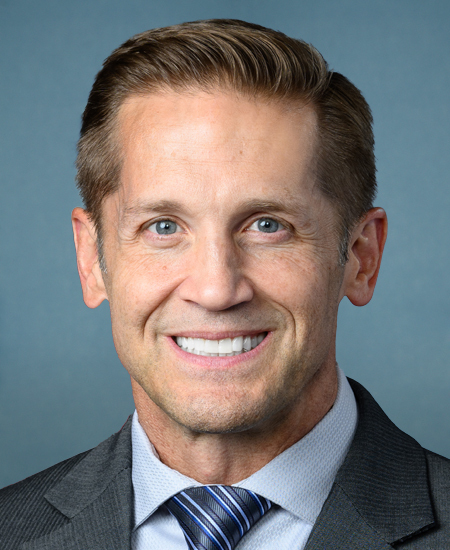
Rep. Richard McCormick
Sponsored bills
Maddy summaryThis bill authorizes the U.S. Mint to produce commemorative $5 gold and $1 silver coins marking the 25th anniversary of the September 11, 2001, terrorist attacks. The coins must feature designs honoring victims and first responders (including the inscription "Never Forget") and will be sold only during 2027-2028. All surcharges ($35 per gold coin, $10 per silver coin) collected from sales will fund the National September 11 Memorial and Museum at the World Trade Center, with no net cost to the federal government. The coins are legal tender but primarily intended for collectors, not circulation.
Maddy summaryThe Smithsonian American Women’s History Museum Act authorizes the creation of a new Smithsonian museum dedicated to women’s history, to be located within the National Mall Reserve in Washington, D.C. If the site is managed by another federal agency, the bill requires that agency to transfer the land after notifying Congress and relevant committees. The museum must ensure exhibits and programs accurately represent diverse women’s experiences by consulting a broad range of experts and community voices. The Smithsonian will submit biennial reports to Congress detailing how the museum meets these representation standards.
Maddy summaryThe Biotechnology Workforce Alignment Act of 2026 directs the National Science Foundation to align its research funding with workforce development efforts in key biotechnology fields such as biomanufacturing, synthetic biology, and bioinformatics. To achieve this, the bill requires the NSF Director to create a workforce framework, support educational pathways with multiple entry points, and foster partnerships between universities, federal labs, and private industry. The legislation also mandates the development of metrics to identify career gaps and barriers to entry, along with a requirement to submit biennial reports to Congress assessing these efforts and the U.S. position in global biotechnology leadership.
Maddy summaryThe Federal Biotechnology Workforce Assessment Act directs the Office of Personnel Management to evaluate the current and future staffing needs for biotechnology roles across various federal agencies. This assessment requires detailed analysis of position requirements, necessary security clearances, and potential funding gaps, while also examining how well existing job classifications track these specialized roles. The report will explore strategies to address workforce challenges, such as training current employees, sharing staff between agencies, and creating pools of prequalified outside experts. Ultimately, the findings will be submitted to congressional oversight committees to inform decisions on how federal agencies can better develop their biotechnology capabilities.
Maddy summaryHR 5625, the Cashless Bail Reporting Act, requires the Attorney General to publish and regularly update a public list of all states and local governments that allow cashless bail (release without requiring money bonds). This list must be available within 30 days of the bill's enactment and updated quarterly. The bill does not change existing bail laws but increases transparency by making it easier for the public to see where cashless bail is used. It directly affects individuals seeking information about bail practices in different jurisdictions. The key mechanism is a mandatory, publicly accessible database maintained by the federal government.
Maddy summaryThe Stop Gang Violence Act requires the Federal Bureau of Investigation to include information on suspected gang-related offenses in its existing reports to the National Gang Intelligence Center. This change directly affects the FBI and federal law enforcement agencies by expanding the data they must collect and share regarding gang activities. The bill does not create new crimes or alter penalties but instead mandates a specific reporting procedure to improve the tracking of gang involvement in criminal cases.
Maddy summaryThe IGNITE HBCU Excellence Act authorizes federal grants to Historically Black Colleges and Universities (HBCUs) to fund long-term improvements to their campus facilities and infrastructure. These grants are awarded competitively to eligible HBCUs based on criteria such as the age of their facilities, deferred maintenance needs, financial capacity, and student enrollment levels. Recipients may use the funds to construct or renovate buildings, upgrade technology and broadband systems, improve safety measures, and develop workforce training hubs, while being prohibited from using the money for routine maintenance or athletic facilities. The legislation also includes provisions for reporting on project outcomes and requires institutions to create comprehensive master plans that involve consultation with diverse campus and community stakeholders.
Maddy summaryThis bill requires the Department of Defense to review and eventually ban contracts with retailers that use payment processing systems from specific countries deemed a national security risk, such as China, Russia, Iran, and North Korea. Effective January 1, 2027, the Defense Department will be prohibited from entering into agreements for payment equipment or services if those tools rely on technology developed, owned, or controlled by entities in these nations. The law defines covered systems broadly to include hardware, software, and firmware linked to these countries, aiming to prevent potential foreign access to sensitive military financial data. Retailers wishing to continue working with the Department of Defense must replace their payment processing infrastructure with systems that do not involve these restricted technologies.
Maddy summaryThe Critical Mineral and Extraction Tax Parity Act expands a federal tax credit for advanced manufacturing to include eleven new critical minerals, such as boron, copper, and uranium, while also adding specific rules for phosphate. It allows companies that extract ore in the United States to claim these credits for the extraction costs themselves, provided they certify that the ore is refined into a qualifying mineral and sold to an unrelated buyer. Additionally, the bill removes a previous penalty that reduced tax credit amounts for metallurgical coal, ensuring these materials receive the same financial support as other critical minerals. These changes are designed to encourage domestic production and processing of essential raw materials and will take effect for minerals produced and sold after December 31, 2025.