

Maddy summaryHR 6627, the "Improving the Enlisted to Officer Judge Advocate Program Act," modifies eligibility rules for enlisted service members seeking to become military lawyers (judge advocates). It increases the maximum years of service required for eligibility from 8 to 10 years for members receiving military funding for law school under specific provisions. The bill also updates technical references to align with the new funding structure. This directly affects enlisted personnel in the military legal career path who plan to attend law school using service-funded educational benefits. The change aims to provide more flexibility in career progression for those pursuing law degrees through military programs.
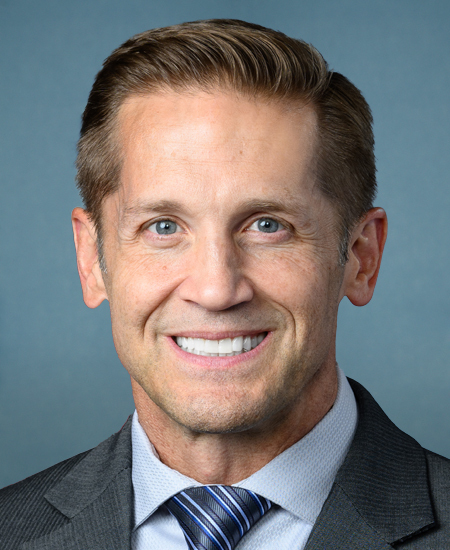
Rep. Richard McCormick
Sponsored bills
Maddy summaryThe SHIELD Act of 2025 withholds federal funding from states or local governments that arrest, detain, or prosecute federal officers for lawful immigration enforcement actions. It directly affects jurisdictions (like cities or counties) that interfere with federal immigration enforcement, such as by blocking ICE operations. The law requires the Attorney General and DHS to determine violations, then blocks all federal grants and contracts for the affected jurisdiction during the fiscal year. Funding withheld is reallocated to compliant jurisdictions, and restoration requires written assurances that interference will stop.
Maddy summaryHR 6559, the Thiokol Memorial Gold Medal Act, authorizes the posthumous award of a Congressional Gold Medal to 30 workers who died in a 1971 industrial explosion at the Thiokol plant in Woodbine, Georgia. The bill specifically recognizes these employees - many African American women - who were manufacturing military supplies during the Vietnam War. The medal, designed by the Treasury Secretary, will be displayed at the Thiokol Memorial Museum, with bronze duplicates sold to offset costs. This is a commemorative measure, not a policy change, building on prior Georgia state honors for the workers' sacrifice.
Maddy summaryThis bill establishes the President’s Council on Sports, Fitness, and Nutrition to advise the President on reestablishing the Presidential Fitness Test as the primary assessment tool for a Presidential Fitness Award in U.S. schools. The Council, appointed by the President, would develop school-based fitness programs, promote physical activity through community partnerships, and address childhood obesity as a national security concern. It directs the Secretary of Health and Human Services to fund the Council and its initiatives, with the Council terminating two years after enactment unless extended. The bill specifically aims to impact K-12 schools by integrating the fitness test into physical education programs.
Maddy summaryThis bill directs the American Battle Monuments Commission to correct historical errors by identifying Jewish World War I and II veterans buried overseas under incorrect Christian markers (Latin crosses) and replacing them with appropriate markers. It establishes a 10-year program to contact families of affected veterans, with the Commission funding the effort at $500,000 annually through nonprofit contracts. The program specifically targets veterans buried in foreign U.S. military cemeteries with markers indicating non-Jewish faith, addressing a documented mistake affecting approximately 900 Jewish servicemembers. This directly affects Jewish veterans' families by honoring their heritage and correcting past burial inaccuracies.
Maddy summaryHRES 930 is a symbolic resolution designating December 8, 2025, as "Jimmy Lai Day" to honor Jimmy Lai's advocacy for free press, religious freedom, and democracy in Hong Kong. It calls on the People's Republic of China and Hong Kong authorities to release Jimmy Lai and other Hong Kong prodemocracy advocates detained under Hong Kong's National Security Law. The resolution does not create new laws or policies but expresses congressional support for Lai's work and condemns the imprisonment of those advocating for Hong Kong's freedoms. It directly affects U.S. diplomatic messaging toward China, not Hong Kong's legal system or residents.
Maddy summaryHRES 925 is a non-binding resolution condemning the Iranian government's ongoing persecution of the Baha'i religious minority. It directly affects Baha'is in Iran, who face systemic discrimination, imprisonment, denial of education and employment, and violence due to their faith. The resolution calls on Iran to immediately release Baha'i prisoners, end hate propaganda targeting them, and reverse policies banning their access to education and jobs. It also urges the U.S. President and Secretary of State to demand Iran's compliance and use existing sanctions authorities against officials responsible for human rights abuses against Baha'is.
Maddy summaryThe Global Child Thrive Reauthorization Act of 2025 extends the authorization period for the Global Child Thrive program - which provides U.S. foreign assistance to support orphans and vulnerable children globally - from 2025 to 2030. It requires the Secretary of State to appoint a Special Advisor for Assistance to Orphans and Vulnerable Children within 90 days of enactment. The bill also extends the time period for issuing implementing directives under the Foreign Assistance Act. This legislation ensures continued U.S. funding and coordination for international child welfare programs.
Maddy summaryHR 5021, the American Decade of Sports Act, requires the U.S. Department of State to create a formal 5-year strategy (updated every 5 years) for using major international sporting events hosted in the U.S. between 2024 and 2034 - including the 2026 World Cup and 2028 Olympics - to strengthen diplomatic ties and promote U.S. soft power. It mandates renaming the State Department’s sports diplomacy division as the Office of Sports Diplomacy, adding at least 3 dedicated staff members, and coordinating with host cities, sports leagues, and visa agencies to streamline international visitor access. The strategy must detail diplomatic goals, partnerships with local communities and the sports industry, and plans for cultural exchange, while requiring annual progress reports to Congress until 2034. This bill directly affects the State Department, host cities, international athletes, and diplomatic engagement efforts.
Maddy summaryThis bill requires U.S. agencies maintaining federal sanctions lists to notify each other within 30 days when an individual or entity is added to one list, then review whether they should be added to other lists within 90 days. It applies to six specific sanctions lists, including Treasury’s blocked persons list, Commerce’s Entity List, and Defense’s military end-user list. Agencies must report to Congress within one year on how they implemented the coordination process and whether it led to additional sanctions. The goal is to prevent gaps where sanctioned parties could evade restrictions by operating outside a single list’s scope.