

Maddy summaryThis bill names the Department of Veterans Affairs multispecialty clinic at 1263 Cobb Parkway NW in Marietta, Georgia, as the "Colonel Michael H. Boyce Department of Veterans Affairs Multispecialty Clinic." It is a ceremonial resolution with no policy changes or funding impacts - it solely updates the facility's official designation in government records. The clinic itself remains unchanged, and the bill does not alter services, funding, or operations for veterans.
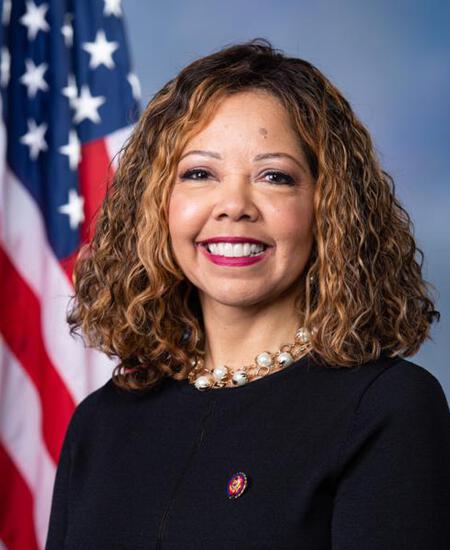
Rep. Lucy McBath
Sponsored bills
Maddy summaryThe Health Claim Denial Transparency Act requires group health plans to include detailed data in their annual reports, specifically detailing the number of claims submitted, approved, denied, and appealed. This reporting covers various claim types, including prescription drugs, mental health services, cancer treatments, and those processed using artificial intelligence, while also specifying the reasons for denials such as lack of prior authorization or medical necessity. The law applies to plans with fewer than 100 participants and includes an exception for small plans that handle very few specific types of claims to avoid excessive administrative burdens. By mandating this disclosure, the bill aims to increase visibility into how health plans process and reject medical benefit requests.
Maddy summaryThis bill requires Medicare Advantage plans to implement electronic pre-approval systems for medical services by 2028 and meet transparency reporting standards starting in 2027. Plans must publicly report data on approval/denial rates, appeal outcomes, response times, and technology use for pre-approval requests, including details on how denials relate to clinical criteria. It establishes a 24-hour response timeframe for certain requests and mandates annual reviews of pre-approval requirements based on data and input from seniors and providers. The law directly affects Medicare Advantage plans, seniors enrolled in these plans, and healthcare providers who submit pre-approval requests. These changes aim to make the pre-approval process faster, more transparent, and more accountable for seniors seeking covered medical services.
Maddy summaryThis resolution expresses support for designating July 10th as Journeyman Lineworkers Recognition Day to honor the workers who maintain the nation's electrical grid. The bill specifically recognizes the dangerous conditions these employees face, such as working at heights near live power lines and responding to disasters like hurricanes and wildfires. It also commemorates Henry Miller, the first president of the International Brotherhood of Electrical Workers, who died on July 10, 1896, while performing his duties. Ultimately, the measure encourages the public to observe this day with reflection on the contributions of lineworkers.
Maddy summaryThe Extreme Temperatures Injustice in Prisons Act of 2026 requires the Bureau of Prisons to upgrade heating, ventilation, and air conditioning systems in all correctional facilities and install temperature monitoring devices in every occupied space. The bill mandates the creation of written standards to prevent heat and cold stress, provides free cooling and heating supplies to inmates during dangerous weather, and establishes specific protective rules for medically vulnerable populations. Additionally, the legislation requires regular reports to Congress on system costs and temperature-related illnesses, while authorizing funding through fiscal year 2031 to support these safety improvements.
Maddy summaryThis bill redesignates the Ocmulgee Mounds National Historical Park as the Ocmulgee Mounds National Park within the National Park System. It establishes specific protections for traditional cultural and religious sites, ensuring access for tribes with ancestral connections to the area, and requires the park manager to consult with Indian tribes on management issues. The legislation also authorizes fishing on park waters under state and federal laws while allowing the Secretary to create safety zones where fishing is restricted. Additionally, the bill mandates that approximately 134 acres of land held by the Muscogee (Creek) Nation be placed into federal trust for the tribe, provided the land is not used for gambling.
Maddy summaryThis bill expands access to medical care for energy workers already covered under the Energy Employees Occupational Illness Compensation Program. It adds a new provision allowing nurse practitioners and physician assistants (within their state practice scope and federal guidelines) to prescribe, recommend, or order medical services for these workers. The change specifically modifies existing rules to include these healthcare providers in the process of authorizing treatments, without creating new benefits or changing eligibility. It directly affects energy workers with occupational illnesses covered by the current compensation program.
Maddy summaryThis bill redesignates the existing National Parks and Public Land Legacy Restoration Fund as the America's Legacy Restoration Fund to address deferred maintenance on federal lands. It directs revenue from recreation fees and a portion of energy development income into the fund, which must be used primarily for repairing critical infrastructure like roads, trails, and buildings managed by agencies such as the National Park Service and the Forest Service. The legislation establishes strict rules requiring that most funds go toward non-transportation projects, mandates transparency through public dashboards tracking project status, and sets aside a small percentage for matching private donations. Additionally, the bill increases entrance fees for foreign visitors to ensure they contribute to the fund, while prohibiting the use of these specific funds for land acquisition or employee bonuses.
Maddy summaryThe Pell Grant Preservation and Expansion Act of 2026 aims to increase financial aid for college students by raising the maximum Pell Grant amount to $15,000 by the 2031-2032 award year and ensuring the program is fully funded through mandatory spending rather than annual appropriations. The bill also expands eligibility for students who receive means-tested government benefits by automatically assigning them a lower financial need score, while simultaneously allowing Dreamer students - undocumented immigrants who meet specific criteria such as graduating high school or serving in the military - to qualify for federal aid. Additional provisions restore the total number of semesters a student can receive Pell Grants from 12 to 18 and adjust the rules for satisfactory academic progress to reduce penalties for students who struggle to meet grade requirements. Finally, the legislation restores Pell Grant eligibility for some students who previously received outside scholarships and sets the law's effective date for July 1, 2026.
Maddy summaryThe Latonya Reeves Freedom Act of 2026 strengthens the Americans with Disabilities Act to ensure individuals with long-term service and support needs have a federally protected right to live in their communities rather than institutions. It requires states and insurance providers to offer community-based services that allow people to maintain independence, control their own care, and access affordable, integrated housing. The bill mandates that public entities and insurers create enforceable transition plans to move people out of institutions, conduct self-evaluations to identify barriers, and establish clear grievance procedures for resolving complaints. Enforcement is handled by the Department of Justice, which can investigate violations, while individuals may also file civil lawsuits to seek damages or court orders preventing institutionalization.