

Maddy summaryHR 4655 establishes a grant program to fund joint U.S.-Israel research on post-traumatic stress disorder (PTSD). It directs the Secretary of Defense to award grants to U.S. academic institutions or nonprofits partnering with Israeli organizations to develop new PTSD treatments and diagnostics. The program requires research projects to address specific PTSD needs identified by the Department of Defense and mandates joint agreements between U.S. and Israeli entities. Grants must be used for collaborative research, with reports submitted to Congress within 180 days of project completion, and the program terminates 7 years after the first grant is awarded.
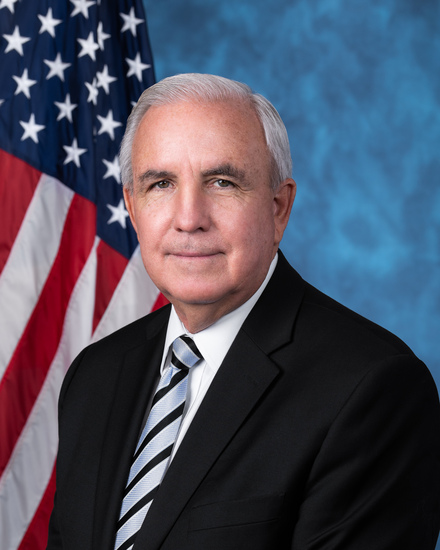
Rep. Carlos A. Gimenez
Sponsored bills
Maddy summaryHR 4606, the Ally’s Act, requires private health insurance plans (including employer-sponsored plans and individual coverage) to cover hearing implants and related services. It directly affects people with hearing loss who need cochlear implants, bone conduction devices, or external sound processors, as determined by a physician or audiologist. The bill mandates coverage for devices, maintenance, repairs, upgrades every 5 years, hearing assessments, surgery, and rehabilitation - without separate cost-sharing or stricter limits than other medical services. Insurers cannot deny coverage if a provider deems the service medically necessary. The law applies to all applicable health plans and takes effect for plan years beginning January 1, 2026.
Maddy summaryThe Defending American Property Abroad Act of 2025 protects U.S. property interests in Western Hemisphere countries with U.S. free trade agreements. It requires the Secretary of Homeland Security to identify and list ports, harbors, or marine terminals where a foreign government has nationalized, expropriated, or seized U.S.-owned land (since January 2024) through actions like contract repudiation or forced control. Once listed, the President must prohibit vessels using these sites from importing goods, docking passenger vessels, or conducting maintenance in the United States. This directly affects U.S. persons (citizens or businesses) with property in designated locations.
Maddy summaryThis bill (HR 4558) renames a specific street segment in Washington, D.C., between 16th Street Northwest and Fuller Street Northwest, and between 16th Street Northwest and Euclid Street Northwest, to "Oswaldo Payá Way." It also redesignates the address 2630 16th Street Northwest as 2630 Oswaldo Payá Way. The bill requires the District of Columbia to install two new street signs matching the city's standard Metro station sign design at the intersections. This is a purely ceremonial designation with no policy changes or new requirements for citizens or government agencies.
Maddy summaryHR 4361, the STOP China Act, prohibits the use of federal transportation funds to purchase vehicles or related infrastructure (like charging stations for buses) from companies linked to China. Specifically, it bans federal funding for "covered vehicles" made by entities owned or controlled by China (as defined by the bill), including those using Chinese-made electric powertrains. The U.S. Trade Representative must publish and update a public list of these banned entities within 30 days of the bill’s enactment, with updates every 90 days initially and annually thereafter. Exceptions apply only for vehicle safety testing, inspections, or research. The bill directly affects federal transportation projects and contractors receiving federal funds, requiring them to avoid procurement from listed Chinese-connected companies.
Maddy summaryThis bill (HR 4372) requires the Department of Defense to shorten reporting timelines for cost overruns on major defense acquisition programs, cutting the deadline from "when a report is submitted" to 30 days after the report is issued. It adds new rules for designating "end items" costing over $500 million each as separate subprograms for reporting, mandates including full life-cycle operations/support costs in reports, and creates stricter termination rules for programs with repeated cost breaches. Specifically, programs exceeding cost thresholds twice must be terminated within 90 days of reassessment, and all breach reports must be posted publicly on a DoD website. The bill directly affects DoD acquisition programs over $500 million, aiming to improve transparency and congressional oversight of defense spending.
Maddy summaryHR 4382 authorizes the U.S. Mint to produce commemorative coins for the 2028 Los Angeles Olympics/Paralympics and 2034 Salt Lake City Winter Olympics/Paralympics. It specifies gold, silver, and half-dollar coin designs with defined mintage limits (e.g., up to 100,000 $5 gold coins for each event), all bearing inscriptions like "2028" or "2034" and standard coin features. A surcharge ($5-$50 per coin) is added to sales, with all funds directed to the respective Olympic committees to support event hosting and legacy programs like youth sports. The bill ensures no net cost to the government by requiring surcharge revenues to cover all design, production, and marketing expenses before funds are disbursed.
Maddy summaryHR 4333, the Qualified to Serve Act, changes medical standards for joining the U.S. military. It prohibits disqualifying applicants solely based on a medical condition diagnosed before age 13 that required no treatment in the past five years, provided a current medical evaluation confirms fitness for service and the military determines it won't impact readiness. The bill establishes a uniform review process for medical disqualifications and allows waivers for national security reasons. It also requires the Secretary of Defense to annually report to Congress on disqualifications, approved waivers, and updates to medical standards. This directly affects potential recruits with qualifying childhood medical histories who previously faced disqualification.
Maddy summaryHRES 564 is a non-binding House resolution calling on the U.S. government to prioritize the return of Ukrainian children abducted by Russia before any peace agreement is finalized. It cites 19,546 confirmed reports of unlawful child deportations to Russia or occupied territories as of April 2025, noting only 1,274 have been returned. The resolution condemns Russia's actions as violations of the Geneva Convention and Genocide Convention, including forced adoptions and Russification policies. It urges that all abducted children be returned prior to concluding peace talks, emphasizing this as a necessary condition for a just resolution to the war. The resolution does not create new law but expresses congressional position on a key issue in U.S. diplomatic efforts.
Maddy summaryThis bill clarifies the Holocaust Expropriated Art Recovery Act of 2016 by preventing courts from dismissing claims based on time-related defenses (like laches or adverse possession) or other non-merits arguments (such as the act of state doctrine or forum non-conveniens). It specifically bars these defenses for claims seeking recovery of art looted by Nazis during World War II, ensuring cases are resolved on their merits. The bill applies to all pending cases and new claims filed after enactment, regardless of the victim's nationality. It strengthens the original law's purpose of enabling victims' heirs to pursue rightful recovery without procedural barriers.