

Maddy summaryThis bill creates a tax credit for cable, satellite, and internet-based video distributors (like streaming services) that carry content from independent video producers. Distributors can claim a credit equal to the lesser of their actual license fees paid for carrying independent programming or $0.10 per average monthly subscriber, with a maximum of $0.30 per subscriber. It also requires the Federal Communications Commission to submit biennial reports to Congress on how many independent programmers are being carried and for how long, to help assess the program's effectiveness. The credit applies to agreements where distributors carry independent content to at least 40% of their subscribers, targeting small, non-corporate video producers who aren't owned by major networks or distributors.
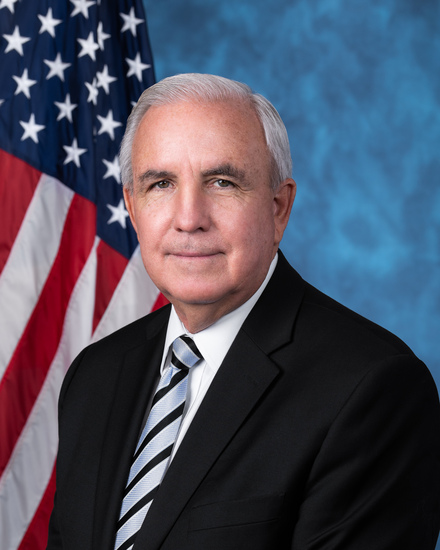
Rep. Carlos A. Gimenez
Sponsored bills
Maddy summaryThe Air America Act of 2025 authorizes one-time payments of $40,000 to individuals who worked for Air America or its affiliated companies for at least five years during 1950-1976, or to their surviving spouses, children, or dependents. Additional payments of $8,000 per full year beyond five years are allowed. The program is capped at $60 million total funding, with claims required within two years of final regulations. Payments are a single lump sum with no ongoing benefits, and the bill explicitly states it does not create new entitlements beyond this one-time award.
Maddy summaryThis bill amends the tax code to permanently establish a 7-year depreciation period for motorsports entertainment complexes, replacing a temporary provision. It directly affects businesses operating these facilities by allowing them to deduct the cost of qualifying assets over seven years instead of a shorter period. The key change is removing a temporary rule (subparagraph D) from the tax code, making the longer recovery period permanent for these specific properties. The bill focuses solely on clarifying and extending this tax treatment without additional policy changes.
Homes for Every Local Protector, Educator, and Responder Act of 2025 or the HELPER Act of 2025 This bill establishes a program administered by the Department of Housing and Urban Development to provide mortgage assistance to law enforcement officers, elementary and secondary school teachers, firefighters, or other first responders. Specifically, these individuals may be eligible for a first-time mortgage on a primary family residence with no down payment. Instead, the mortgage is subject to a one-time, up-front mortgage insurance premium.
Maddy summaryHR 2050, the Homeland Heroes Pay Act, ensures that U.S. Customs and Border Protection (CBP) agents and Immigration and Customs Enforcement (ICE) officers continue receiving pay during federal budget gaps. It directly affects CBP agents working at Southwest, Northern, and maritime border ports (preventing terrorism, drug trafficking, and illegal entry) and ICE officers handling immigration enforcement (detaining/removing individuals) and criminal investigations (drug trafficking, human smuggling). The bill automatically funds their salaries and expenses using existing Treasury money if discretionary appropriations lapse after the bill passes. This prevents pay interruptions for these frontline personnel during budget shutdowns while they perform critical border security and enforcement duties.
Maddy summaryThis bill ensures Coast Guard personnel and contractors continue receiving pay during Coast Guard-specific funding gaps. If the Coast Guard's annual appropriations bill isn't enacted before the fiscal year begins (without a continuing resolution), the bill automatically provides funds for military members (including reservists on active duty), civilian employees supporting operations, and qualifying contractors. It prevents furloughs for these groups during such gaps without requiring new legislation. The bill applies only to Coast Guard-specific funding lapses, not general government shutdowns.
Maddy summaryHR 2080, the "Crucial Communism Teaching Act," requires high schools to teach students about communism's historical and current impacts. The bill mandates that students learn communism caused over 100 million deaths globally, understand its dangers, and recognize that 1.5 billion people "still suffer under communism." It directs the Victims of Communism Memorial Foundation to develop a high school curriculum and oral history resources ("Portraits in Patriotism") featuring victim stories, with specific focus on modern examples like Xinjiang human rights abuses and China's actions in Hong Kong and Taiwan. The curriculum must be integrated into social studies, government, history, and economics classes, and updated to cover both historical and current communist regimes.
Maddy summaryHR 1166 prohibits the Department of Homeland Security (DHS) from using funds to buy batteries produced by specific Chinese companies, including CATL, BYD, and others listed in the bill, starting October 1, 2027. It directly affects DHS procurement for all its agencies, such as U.S. Customs and Border Protection, Immigration and Customs Enforcement, and the Transportation Security Administration. The bill defines "produced by" to include entities assembling final products or supplying most components of the batteries. DHS may waive the ban for national security reasons or research, but must report on cost and mission impacts within 180 days of enactment.
Maddy summaryHRES 205 is a resolution condemning Cuba's labor export program for medical personnel, which the U.S. State Department identifies as involving forced labor and human trafficking. It cites a 2024 State Department report stating Cuba profits $6-8 billion annually by withholding workers' wages, confiscating passports, and restricting their movements. The resolution urges foreign governments to pay Cuban medical workers directly (bypassing Cuba) and calls for U.S. visa restrictions against officials from Cuba, Brazil, and other nations involved in the program. It does not create new law but expresses the House's position based on U.S. government findings.
Maddy summaryThis bill amends the Clean Air Act to update the definition of fossil fuel, explicitly including "fuel for ocean-going vessels" alongside home heating oil and jet fuel. It directly affects the shipping industry by requiring the Environmental Protection Agency (EPA) to issue regulations within one year of enactment to implement this updated definition. The key mechanism is changing the statutory definition to ensure ocean vessel fuels are covered under existing fossil fuel regulations, potentially influencing future clean fuel standards for ships. The EPA must also submit a report to Congress on implementation within one year of finalizing these regulations.