

Maddy summaryThe Undersea Cable Protection Act of 2025 prohibits the National Marine Sanctuaries Act from requiring additional authorizations for undersea fiber optic cables that already have federal or state permits. It directly affects cable operators who have obtained licenses, leases, or permits from any federal or state agency for cable installation or maintenance in national marine sanctuaries. The bill prevents the Secretary from blocking or demanding new permits for these cables once they have valid existing authorization. This simplifies regulatory processes by eliminating redundant federal oversight for cables already approved by other agencies.
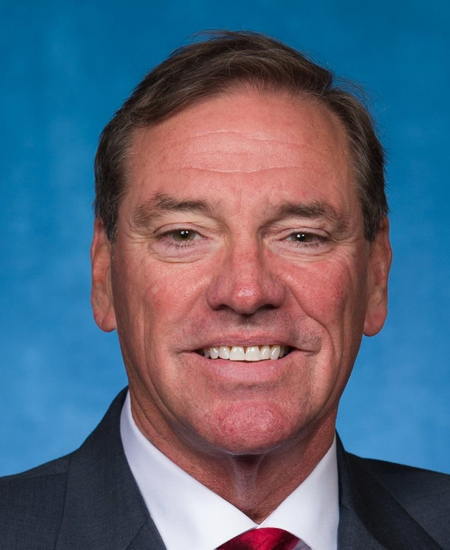
Rep. Neal P. Dunn
Sponsored bills
Maddy summaryThe REPAIR Act requires motor vehicle manufacturers to provide car owners and independent repair shops with full access to vehicle data and repair information, prohibiting technological or legal barriers that restrict this access. It mandates that manufacturers share vehicle-generated data, critical repair information, and tools on equal terms with dealers and authorized service providers, without requiring consumers to use specific brands of parts or tools. The law establishes an advisory committee to monitor implementation and ensure fair competition in vehicle repair, while giving the Federal Trade Commission authority to enforce these requirements as unfair or deceptive practices. This legislation directly affects car owners, independent repair facilities, aftermarket parts manufacturers, and motor vehicle manufacturers by shifting control of repair information and data from manufacturers to consumers.
Maddy summaryThis bill modifies tax credit rules to help businesses recover after disasters. It allows businesses operating in designated disaster areas to treat certain unused tax credits (carryforwards) as transferrable credits against current tax liability, rather than letting them expire. Specifically, it applies to taxpayers making eligible expenditures for business operations in areas with a major disaster declaration after December 31, 2023, or a state-declared disaster meeting specific criteria. The change affects businesses in affected zones by providing immediate tax relief for qualifying expenses incurred within two years of the disaster declaration. It does not involve energy policy or new funding, but adjusts existing tax credit rules for disaster recovery.
Maddy summaryThis bill prevents state or local governments from banning or restricting energy connections (like installation, modification, or access) based on the type or source of energy, such as electricity, natural gas, or renewable fuels. It directly affects consumers choosing energy providers and energy companies seeking to offer services. The key provision prohibits local laws, regulations, or policies that limit energy services sold in interstate commerce, covering all energy types listed in the bill’s definitions. It does not create new programs but limits regulatory authority at the state or local level. The law aims to ensure open access to diverse energy sources without source-based restrictions.
Maddy summaryThis bill requires Medicare plans (including Medicare Advantage and prescription drug plans) to base coverage decisions on medical necessity and evidence-based standards. It mandates that plans seek input from practicing physicians when creating or changing coverage rules, post all preauthorization requirements online in plain language, and publicly share statistics on approvals and denials. The bill also requires that adverse coverage decisions be made by licensed, board-certified physicians and prohibits denying coverage solely due to lack of evidence-based standards when none exist for a service. These changes aim to reduce unnecessary delays in care for Medicare beneficiaries by increasing transparency and clinical input in coverage decisions.
Maddy summaryHR 7235, the "Protecting Motherhood Act," requires all federal agencies to stop using the term "birthing person" in official documents and instead use specific terms like "female," "mother," "pregnant woman," or "woman." It directly affects federal agencies that produce regulations, forms, or communications, mandating the use of these defined terms when referring to individuals based on biological sex. The bill provides detailed definitions for terms like "female" (based on biological sex at conception) and "pregnant woman" (an adult human female carrying a child). The law takes effect 30 days after enactment. This is a procedural change focused solely on terminology in government documents, with no direct impact on healthcare access or services.
Maddy summaryHR 7208, the PROTECT the Grid Act, requires the U.S. Commerce Department to assess national security risks posed by foreign adversary-controlled applications managing high-wattage smart home devices (like electric vehicle chargers or smart appliances exceeding 500 watts). The bill mandates a report to Congress within 270 days, evaluating how such devices - potentially controlled by entities under foreign adversaries like China - could be exploited to manipulate grid demand and cause blackouts. Key provisions include analyzing deployment levels of these devices, vulnerabilities in foreign-controlled apps, and recommending security measures such as certification requirements or restrictions on federal procurement. The report will inform future actions to prevent grid instability without imposing immediate bans or altering existing laws.
Maddy summaryThis bill authorizes Congress to award Frank Siller a Congressional Gold Medal in recognition of his founding of the Tunnel to Towers Foundation. The foundation supports first responders, military families, and veterans through programs like mortgage assistance, veteran housing, and homelessness support. The medal would be designed and struck by the U.S. Mint, with bronze duplicates sold to cover costs. It is a purely commemorative honor with no policy or funding changes beyond the medal production and sales. The bill directly affects Frank Siller as the recipient of this symbolic tribute.
Maddy summaryThe SAFE KIDS Act would void surrogacy contracts between U.S. surrogates and foreign nationals from designated "foreign entities of concern" (nations listed under 10 U.S.C. §4872(f)(2)), except for married couples where at least one prospective parent is a U.S. citizen or lawful permanent resident. It prohibits surrogacy brokers from facilitating such contracts, imposing fines or up to one year in prison for knowingly arranging these agreements. If a contract is voided, custody decisions for the child would be determined by state courts based solely on the child’s best interests, disregarding the invalid agreement. The bill aims to address what Congress identifies as a national security threat involving exploitation of U.S. surrogacy laws and potential human trafficking.
Maddy summaryThe AI OVERWATCH Act requires U.S. exporters to obtain a license for sending certain high-performance integrated circuits (defined by specific technical specifications like processing power or bandwidth) to countries designated as "concerns," including China, Russia, Iran, and North Korea. Before approving such licenses, the Commerce Department must submit detailed certifications to Congress, including assurances the export won’t support military/intelligence capabilities of the recipient country and won’t harm U.S. semiconductor availability or AI leadership. The bill also creates an exemption for U.S. companies meeting strict security and ownership standards ("trusted United States persons") to export these chips to non-target countries without a license. Additionally, it mandates a national security strategy assessing how such exports affect U.S. AI competitiveness, particularly regarding China’s semiconductor production and capabilities.