

Maddy summaryThe LEASH Act of 2026 requires law enforcement agencies seeking federal Byrne Justice Assistance Grants to report data on felony animal cruelty convictions, including the names of those convicted. To qualify for these grants, local governments must submit information on such crimes to the Attorney General and join a specific category of jurisdictions that provide this data. The bill also mandates the creation of a publicly accessible database by the Attorney General to store and periodically update these animal cruelty records. These changes directly affect law enforcement agencies and local governments that apply for federal crime prevention funding.
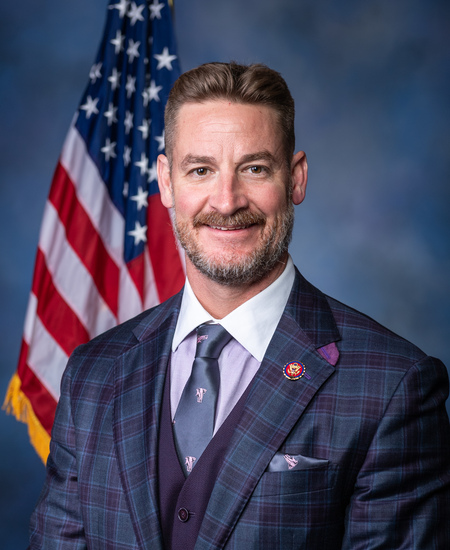
Rep. W. Gregory Steube
Sponsored bills
Medal of Sacrifice Act of 2025 This act directs the President to issue a medal of sacrifice for eligible law enforcement officers and first responders who are killed in the line of duty. The act also directs the President to establish a commission on the medal of sacrifice and appoint its members. The act sets forth responsibilities of the commission, including to advise on the design of the medal and determine how the medal will be presented. Under the act, eligible law enforcement officers and first responders include federal, state, local, tribal, or territorial law enforcement officers or first responders who are not subject to an official act of wrongdoing (e.g., a determination that the officer or first responder acted outside the scope of their duties or in a manner that was not in accordance with official policies or procedures). A law enforcement officer or first responder who is subject to an official act of wrongdoing is generally not eligible for the medal of sacrifice. However, in the case of such an officer or first responder, the act requires the commission to investigate the circumstances surrounding the officer or first responder's cause of death and issue a final determination on their eligibility.
Maddy summaryH.Res. 1320 is a non-binding resolution that calls on all Americans to honor military personnel who died while serving in the pursuit of freedom and peace on Memorial Day 2026. The bill does not create new laws or change any policies; instead, it serves as a formal expression of gratitude and remembrance from the House of Representatives. Because it is a commemorative resolution rather than a procedural or funding measure, it has no direct legal effect on individuals or government operations.
Maddy summaryHRES 1314, the America 250 Commemorative Flag Act, designates a special flag featuring the number 250 within the circle of stars as an official United States flag for the 250th anniversary of the Declaration of Independence. This resolution authorizes the America 250 flag to be flown alongside the national flag and POW/MIA flags at all government buildings, embassies, and official U.S. locations worldwide during the commemoration year. The bill serves as a ceremonial measure to honor the nation's history and the sacrifices made by patriots, without altering any existing laws or policies.
Maddy summaryThe Semiconductor Superiority Act expands the advanced manufacturing investment credit to include semiconductor facilities located in outer space, specifically low-Earth orbit. This provision allows companies to claim tax credits for equipment used in space-based manufacturing, even if some components are not physically located in orbit or are used for transporting crew and supplies. The bill also clarifies that flight control, crew habitation, and repair activities in space count as manufacturing functions for the purpose of this credit. Additionally, the law excludes rockets and launch vehicles from qualifying as eligible property under this new rule. These changes apply only to facilities and equipment placed in service after the act is enacted.
Maddy summaryThis bill would add pharmacist services to Medicare Part B coverage for beneficiaries, specifically covering pharmacist-led testing and treatment for illnesses like flu, COVID-19, or strep throat during public health emergencies. It defines covered services as those performed under state law, often requiring collaboration with a physician, and sets payment at 80% of the lesser of the actual charge or 85% of physician payment rates. Pharmacists would be prohibited from balance billing for these services, ensuring Medicare beneficiaries pay only their standard copayment. The changes would take effect January 1, 2026.
Maddy summaryThe Our Doctors First Act of 2026 prohibits Medicare from providing federal funding for the graduate medical education of doctors who are not U.S. citizens or nationals. This change applies to hospitals and non-hospital training providers, requiring them to stop counting non-citizen residents and interns toward their Medicare payments starting one year after the law is enacted. To enforce this rule, the bill imposes escalating financial penalties on facilities that knowingly count ineligible trainees, ranging from a percentage of the payment amount for a first offense to a five-year ban on receiving Medicare education funds for repeated violations.
Maddy summaryThe GME Transparency Act of 2026 requires hospitals that receive Medicare funding for graduate medical education to report the citizenship and immigration status of their medical residents. Under this law, hospitals must submit deidentified data to the Centers for Medicare & Medicaid Services by the end of each fiscal year, using a standardized form provided by the agency. The Secretary of Health and Human Services will then compile this information and submit an annual report to Congress detailing the number and percentage of residents who are U.S. citizens, permanent residents, or hold specific nonimmigrant statuses. This reporting will be broken down by state and will include categories for individuals with asylum status, those with special immigrant status, and other lawfully present aliens. The bill directly affects hospitals participating in Medicare-funded residency programs and aims to increase transparency regarding the demographic composition of the physician workforce.
Maddy summaryThe No Tax on Border Patrol Agent Overtime Act modifies federal tax laws to exclude specific overtime earnings from border patrol agents from taxation. This change directly affects U.S. Customs and Border Protection officers by allowing them to keep more of their extra pay without paying income tax on those amounts. The bill defines "qualified overtime compensation" to include various forms of extra pay, such as premiums for working on holidays or weekends, but explicitly excludes hazardous duty pay. These tax benefits will only become effective for work performed in taxable years starting after December 31, 2025.
Maddy summaryThe Stop Gang Violence Act requires the Federal Bureau of Investigation to include information on suspected gang-related offenses in its existing reports to the National Gang Intelligence Center. This change directly affects the FBI and federal law enforcement agencies by expanding the data they must collect and share regarding gang activities. The bill does not create new crimes or alter penalties but instead mandates a specific reporting procedure to improve the tracking of gang involvement in criminal cases.