

Maddy summaryThe Holy Sovereignty Protection Act ensures that U.S. citizens elected as Pope (head of the Roman Catholic Church) cannot lose their U.S. citizenship. It also grants these individuals federal income tax exemption during their papacy, covering taxable years ending after May 8, 2025. The citizenship protection takes effect immediately upon enactment, while the tax exemption applies starting in 2025. This bill directly affects U.S. citizens who become Pope, with no broader public impact.
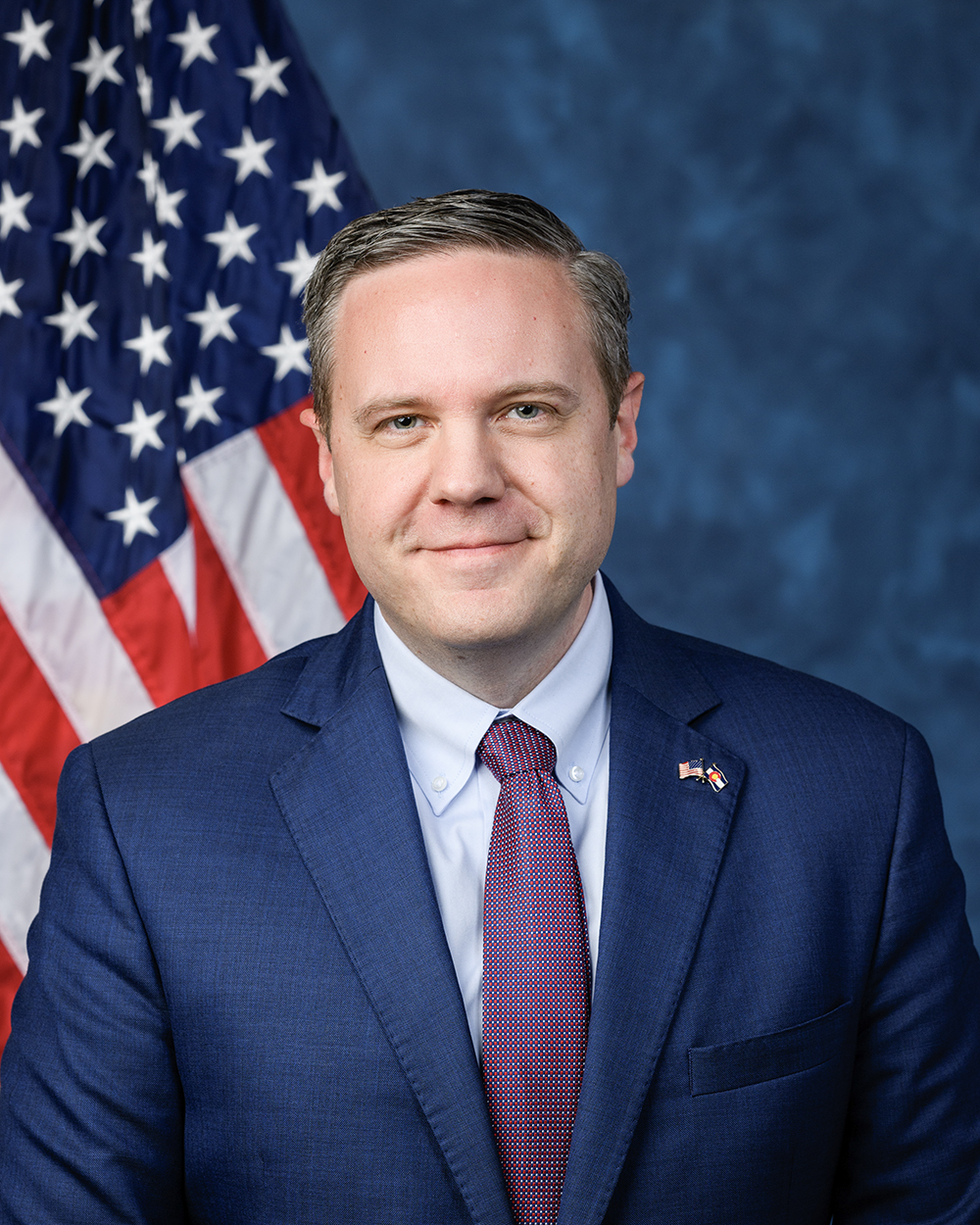
Rep. Jeff Hurd
Sponsored bills
Maddy summaryThe CIRCLE Act establishes a 30% tax credit for businesses investing in new or upgraded recycling infrastructure, such as facilities processing materials like electronics (computers, monitors, peripherals) and other recyclables. It directly affects businesses building or modernizing recycling operations by reducing their tax burden for qualifying equipment placed in service after 2025. A 10% domestic content bonus credit is available for investments meeting specific U.S. manufacturing requirements, and the full credit phases out gradually between 2032 and 2037, ending entirely by 2037. The bill aims to boost the U.S. recycling rate from ~30% toward the EPA’s 2030 goal of 50% by incentivizing domestic recycling capacity.
Maddy summaryHR 4382 authorizes the U.S. Mint to produce commemorative coins for the 2028 Los Angeles Olympics/Paralympics and 2034 Salt Lake City Winter Olympics/Paralympics. It specifies gold, silver, and half-dollar coin designs with defined mintage limits (e.g., up to 100,000 $5 gold coins for each event), all bearing inscriptions like "2028" or "2034" and standard coin features. A surcharge ($5-$50 per coin) is added to sales, with all funds directed to the respective Olympic committees to support event hosting and legacy programs like youth sports. The bill ensures no net cost to the government by requiring surcharge revenues to cover all design, production, and marketing expenses before funds are disbursed.
Maddy summaryHR 4370, the SAMS Act of 2025, codifies five existing executive orders into law to strengthen U.S. mineral supply chains. It gives legal force to orders focused on securing critical minerals (like lithium and rare earths) for national security and economic resilience, directly affecting federal agencies implementing these strategies. Key provisions require agencies to follow these established policies - addressing reliance on foreign mineral sources, supporting domestic mining, and prioritizing national security in mineral processing - without creating new regulations. The bill does not alter current mineral policies but formally enshrines them as binding federal requirements.
Maddy summaryThe CONNECT for Health Act of 2025 expands Medicare telehealth coverage by removing geographic restrictions that limited where patients could receive care, expanding the types of health care providers who can offer telehealth services, and eliminating the requirement for an in-person visit before receiving telemental health services. The bill includes specific provisions to support telehealth use for Native American health facilities, rural health clinics, and Federally Qualified Health Centers. It requires the Centers for Medicare & Medicaid Services to collect and publish data on telehealth usage and impacts, and to develop resources to improve accessibility for people with disabilities and limited English proficiency. Program integrity measures are added to monitor telehealth billing practices and prevent fraud while maintaining coverage for telehealth services during public health emergencies.
Maddy summaryThe Fire Weather Development Act of 2025 establishes a National Oceanic and Atmospheric Administration (NOAA) program to improve wildfire forecasting, detection, and communication systems. The program will develop better tools for predicting wildfire spread, smoke dispersion, and fire behavior through collaboration with federal agencies, state and local emergency officials, and stakeholders. It authorizes $5 million for fiscal year 2026 to fund research on new technologies like unmanned aircraft systems, advanced satellite detection, and improved communication systems. The bill also creates an Interagency Coordinating Committee on Wildfires and a National Advisory Committee to coordinate wildfire response efforts and provide recommendations to enhance preparedness and response capabilities.
Maddy summaryThis bill amends the existing Bureau of Land Management Foundation to rename it the "Foundation for America’s Public Lands" and adjusts its governance structure. Key provisions include gradually increasing the board size from 12 to 18 members over four years and requiring specific representation on the board (e.g., energy producers, ranchers, recreation groups, and mining industry representatives). The bill prohibits using foundation funds for litigation or lobbying and clarifies that gifts or donations can be used to support the Bureau of Land Management’s "multiple use" mission. It does not create new programs but reauthorizes and refines the existing foundation’s operations and funding mechanisms.
Maddy summaryHR 3972, the Highway Funding Flexibility Act of 2025, redirects unobligated funds from two existing federal highway programs to allow states greater flexibility in how they use these resources. Specifically, it permits states to use unused funds from the National Electric Vehicle Infrastructure Formula Program and charging/fueling infrastructure grants for highway construction, bridge repairs, wildlife crossing projects, commercial vehicle parking, and related engineering - instead of being restricted to EV charging infrastructure. The bill requires that these funds be distributed to states based on their standard highway funding apportionment and ensures they remain available for their intended highway purposes without new obligation limits. This change affects states receiving federal highway funds who have unobligated balances from these specific programs.
Maddy summaryHR 3901, the Jurisdictional Determination Backlog Reduction Act, requires the U.S. Army Corps of Engineers to eliminate existing backlogs for two specific types of applications within 60 days of the bill's enactment. It directly affects developers, construction companies, and others needing federal permits for projects involving waterways (under Clean Water Act Section 404) or jurisdictional determinations. The bill mandates the Corps to expedite processes and reallocate personnel/resources to clear all pending applications as of June 5, 2025. This is a concrete policy change focused on reducing processing delays for permit applicants.
Patient Access to Higher Quality Health Care Act of 2025 This bill repeals provisions under the Stark law (i.e., the Physician Self-Referral Law) that limit, for purposes of Medicare participation, self-referrals by newly constructed or expanded physician-owned hospitals.