

Modern GI Bill Act This bill authorizes individuals who are entitled to educational assistance under the Post-9/11 GI Bill to apply amounts of such assistance to repay federal student loans for up to 36 months. The bill sets a cap and annual cost-of-living increases for the amount of educational assistance that may be paid to an individual under this bill during FY2020 and the following years.
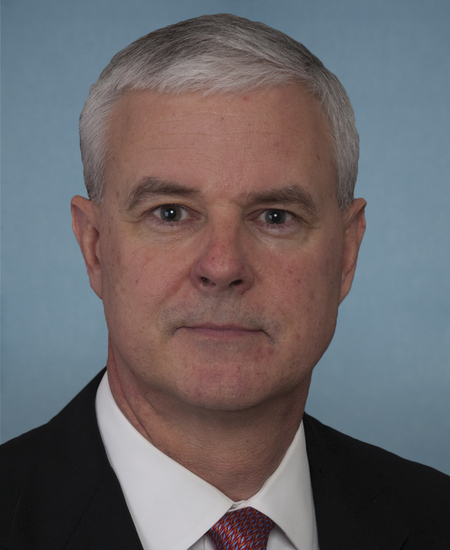
Rep. Steve Womack
Sponsored bills
This joint resolution proposes an amendment to the Constitution to require that the Supreme Court consist of nine Justices.
This resolution honors Officers Brian Sicknick and Howard Liebengood of the U.S. Capitol Police, and it commends the bravery and service demonstrated by officers of the U.S. Capitol Police, the Metropolitan Police Department of the District of Columbia, and the other law enforcement agencies and protective entities that assisted in responding to the January 6, 2021, attack on the U.S. Capitol.
Protecting the Right to Keep and Bear Arms Act of 2021 This bill prohibits (1) the President or the Department of Health and Human Services from declaring emergencies or disasters for the purpose of imposing gun control; and (2) a federal officer or employee, or person operating under color of federal law, from banning the manufacture, sale, or transfer of firearms or ammunition while acting in support of relief from a major disaster or emergency.
Protecting American Energy Production Act This bill prohibits the President from declaring a moratorium on the use of hydraulic fracturing unless Congress authorizes the moratorium. The bill also expresses the sense of Congress that states should maintain primacy for the regulation of hydraulic fracturing for oil and natural gas production on state and private lands.
Hearing Protection Act This bill removes silencers from the definition of firearms for purposes of the National Firearms Act. It also treats persons acquiring or possessing a firearm silencer as meeting any registration and licensing requirements of such Act. The Department of Justice must destroy certain records relating to the registration, transfer, or making of a silencer. The bill also revises the definitions of firearm silencer and firearm muffler under the federal criminal code and includes such items in the 10% excise tax category.
Legal Workforce Act This bill directs the Department of Homeland Security (DHS) to create an electronic employment eligibility confirmation system modeled after and to replace the E-Verify system, which allows employers and recruiters to verify the immigration status of individuals. The bill also mandates the use of such a system, where currently only some employers, such as those with federal contracts, are required to use E-Verify. The bill specifies documents that can establish an individual's identity and employment authorization. During the period starting when a job offer is made until three business days after hiring, the individual must attest to his or her employment authorization, and the employer or recruiter must attest that it has examined the individual's required documents. Employers shall reverify certain types of employees who were not previously verified using E-verify. The Social Security Administration shall notify employees if their Social Security number has been used multiple times in an unusual manner. DHS shall establish programs for blocking and suspending misused numbers. Employers that are required to use the verification system shall not be liable for any employment-related action based on a good-faith reliance on the information from the system. The bill establishes a phased-in participation deadline for different categories of employers, including agricultural employers. The bill increases civil penalties related to hiring individuals without work authorization. It also preempts state laws relating to hiring and employment eligibility verification, but states may use their authority of business licensing to penalize employers for failing to comply with the bill's provisions.
Concealed Carry Reciprocity Act This bill establishes a federal statutory framework to regulate the carry or possession of concealed firearms across state lines. Specifically, an individual who is eligible to carry a concealed firearm in one state may carry or possess a concealed handgun (other than a machine gun or destructive device) in another state that allows its residents to carry concealed firearms. It sets forth requirements for the lawful concealed carry across state lines. The bill preempts most state and local laws related to concealed carry and establishes a private right of action for a person adversely affected by interference with a concealed-carry right established by this bill.
New Markets Tax Credit Extension Act of 2021 This bill makes the new markets tax credit permanent. It also modifies the credit to (1) provide for an inflation adjustment to the limitation amount for the credit after 2021, and (2) allow an offset against the alternative minimum tax for the credit (determined with respect to qualified equity investments initially made after 2020).
Keystone XL Pipeline Construction and Jobs Preservation Act This bill authorizes the TransCanada Keystone Pipeline to construct, connect, operate, and maintain the pipeline facilities in Phillips County, Montana, for the import of oil from Canada to the United States.