

Maddy summarySB 143 requires Texas public school districts and open-enrollment charter schools to designate presidential election days (when their campuses serve as polling places) as staff development days instead of instructional days. This affects school districts hosting polling places on presidential general election dates, mandating they use that day for staff training rather than student instruction. The bill includes a waiver allowing districts to reduce required instructional minutes by the amount of time instruction is suspended, while ensuring total instructional time remains adequate. The law takes effect for the 2025-2026 school year.
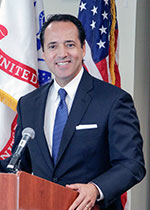
Sen. José Menéndez
Sponsored bills
Maddy summarySB 183 requires Texas public school districts to provide classroom teachers with at least two paid days of leave to testify at public hearings held by local, state, or federal government entities. This policy directly affects classroom teachers in Texas public schools, ensuring they can participate in civic engagement without losing personal leave days. The bill specifies that these leave days cannot be deducted from a teacher's existing personal leave balance. It applies starting with the 2025-2026 school year, as outlined in the legislation.
Maddy summaryThis bill requires a 30-day waiting period before delivering a firearm to anyone aged 18-21. It creates a criminal offense for sellers who transfer firearms to this age group before the 30-day period expires, punishable as a state jail felony. The law applies to all firearm sales, rentals, or leases to individuals in this age range, with exceptions for law enforcement officers and military personnel. The bill aims to delay firearm access for young adults during a period when risk of impulsive violence may be higher.
Maddy summarySB 147 requires Texas counties to establish polling places on the main campuses of public institutions of higher education within their borders if those institutions enroll at least 5,000 students. Specifically, counties must designate one polling place for campuses with 5,000-9,999 students, two places for 10,000-19,999 students, and one additional place for every 10,000 students beyond 10,000. The bill applies to all public colleges and universities meeting these enrollment thresholds located in the county. It takes effect September 1, 2025.
Maddy summarySB 175 requires Texas public school districts to offer free prekindergarten to eligible children who are at least three years old (or four years old for certain students), eliminating tuition charges for these programs. It directly affects school districts, which must provide this service to qualifying children meeting specific age and eligibility criteria under Section 29.153 of the Education Code. The bill also mandates annual public reporting on early education participation, diagnostic reading assessments, and how students who attended pre-K performed on third-grade reading tests. These provisions aim to expand access to early childhood education while tracking outcomes for accountability.
Maddy summarySB 177 requires health insurance companies and health maintenance organizations in Texas to maintain toll-free phone access for two key services: (1) verifying health benefit plans and (2) processing preauthorization and utilization review requests. The bill mandates that staff must be available 24 hours a day, seven days a week, with specific hours (6 a.m.-6 p.m. Central Time Monday-Friday, excluding holidays; 9 a.m.-noon on weekends/holidays), and requires a phone system to record calls during unavailable times. Organizations must respond to calls within two hours for verifications and within 24 hours for preauthorizations. This directly affects insurers and health plans that handle patient care coordination, aiming to reduce delays in healthcare access.
Maddy summarySB 179 requires Texas to create a public outreach campaign educating mixed-status families (those with both U.S. citizens and non-citizens) about Medicaid and child health plan eligibility. The campaign must clearly explain residency and citizenship requirements, clarify that children's benefits won't affect parents' immigration status, and provide materials in English, Spanish, or other relevant languages. It mandates distribution through health fairs, community clinics, and targeted outreach methods to reach affected families. The law takes effect September 1, 2025, aiming to improve access to health programs for eligible families.
Maddy summarySB 146 would require Texas county voter registrars to automatically register naturalized U.S. citizens who reside in the county to vote upon receiving a certificate of naturalization. The bill establishes a system where the Texas Department of Public Safety coordinates with U.S. Citizenship and Immigration Services (USCIS) to notify registrars of new naturalizations, enabling automatic voter registration without requiring separate applications. If USCIS fails to notify the state, naturalized citizens can present their certificate directly to the registrar for registration assistance. The bill takes effect September 1, 2025, and aims to streamline voter access for newly naturalized citizens.
Maddy summaryThis bill designates a specific bridge on State Highway 151 over Hunt Lane in Bexar County as the "Willie Henry Pryor Sr. Memorial Bridge." It requires the Texas Department of Transportation to install markers at both ends of the structure bearing this name and any other relevant information. The bill does not create new policies, funding, or obligations beyond the symbolic naming and signage. It takes effect September 1, 2025.
Maddy summarySB 167 requires every Texas state senator and representative to substitute teach at a public school in their legislative district for at least one school day each academic year. Legislators must report compliance to their chamber's administration committee, which will publicly list members who fail to meet this requirement under Texas law. The bill applies to all legislators and takes effect for the 2025-2026 school year. This is a procedural requirement focused on direct legislative engagement with public schools, not a policy change affecting broader education systems.