

Maddy summarySB 3018 requires Texas public school districts to include ethnic studies, world geography, or world history as one of three required social studies credits for high school students. Specifically, students must complete one credit in this category alongside U.S. history and government/economics courses. The bill amends existing curriculum requirements to mandate this choice within the social studies foundation curriculum. It directly affects all Texas public school students in grades K-12 by expanding their social studies course options.
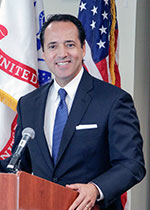
Sen. José Menéndez
Sponsored bills
Maddy summarySB 2935 establishes a program through which the Texas Department of Transportation (TxDOT) will reimburse eligible businesses for economic damages directly caused by state highway construction projects. Businesses affected include those with pedestrian/road access impacted by construction or located within five miles of a project that rerouted traffic or increased congestion, provided they can prove declined gross receipts or increased expenses. TxDOT will award quarterly grants using appropriated funds, with applicants unable to reuse the same economic damages for multiple applications. Businesses must be Texas-organized, in good standing, and submit applications via a standardized process published online by TxDOT, which must adopt implementing rules by January 2026. The program takes effect September 1, 2025.
Maddy summarySB 2851 requires Texas public schools to notify parents or guardians when their child is involved in a bullying incident or identified as at risk of suicide. Schools must provide suicide prevention materials and information on limiting access to means of self-harm (like firearms or medication), while maintaining records of notification. These requirements apply to all public school districts and open-enrollment charter schools under amendments to Education Code Sections 37.0832 and 38.351. The law takes effect for the 2025-2026 school year, directly affecting parents of students in these situations.
Maddy summarySB 3022 allows the Texas Commission on Environmental Quality (TCEQ) to deny renewal permits for environmental facilities if the holder has a history of enforcement actions for violating environmental or health/safety regulations. It specifically permits denial based on three factors: an unsatisfactory compliance history under Water Code sections 5.753-5.754, outstanding debts to the state for fees/penalties/taxes, or a pattern of violations across multiple facilities. The law applies only to renewal applications filed on or after September 1, 2025, with existing applications governed by prior rules. This policy change directly affects businesses seeking to renew environmental permits in Texas by expanding TCEQ's grounds for denial.
Maddy summarySB 2855 clarifies that courts must always prioritize the "best interest of the child" as the primary consideration in custody decisions within cases involving government agencies (like child welfare services) under Texas Family Code. It does not create new standards but explicitly reaffirms the existing legal requirement for judges handling these specific cases. The bill affects Texas family courts and government entities filing suit under Subtitle E of the Family Code. It takes effect September 1, 2025, and serves only to clarify current law, not change policy.
Maddy summarySB 2463 requires Texas cities, counties, and other local governments (political subdivisions) to adopt lighting policies for nonessential outdoor lighting - such as decorative or decorative lighting not needed for safety. During bird migration seasons (April 1-June 1 and September 1-November 1), these entities must turn off nonessential lighting between 11 p.m. and 6 a.m., reduce lighting in natural areas like trees and gardens, and use downward-facing lights with shields or motion detectors to minimize sky glow. The law takes effect September 1, 2025, and directly affects local governments’ lighting practices to reduce light pollution during critical wildlife periods. It does not apply to essential lighting for safety or functionality.
Maddy summarySB 2475 requires individuals seeking or holding certification as peer specialists or peer specialist supervisors for Medicaid mental health and substance use services to fully disclose their criminal history, including charges, convictions, or community supervision. It mandates reporting of specific serious crimes (such as sexual offenses against clients or child victims) to certification entities. Failure to disclose or report these offenses may result in denied certification, disciplinary action, or revocation of existing certification. The bill directly affects applicants and current certified specialists providing these Medicaid services in Texas.
Maddy summarySB 2462 directs the State Office of Risk Management to study property and casualty insurance costs for public school buildings, facilities, and land in Texas, working with the Texas Education Agency. It requires all public school districts and open-enrollment charter schools to submit data on their insurance costs, past property damage, and repair protocols to the agency by a specified date. The Office will analyze this data, consult with existing insurance risk pools, and develop a report by September 1, 2026, with recommendations to lower insurance costs while ensuring adequate coverage. The report must include strategies for schools, risk pools, and potential cost estimates for a statewide risk pool, if recommended.
Maddy summarySB 2466 requires the Texas Parks and Wildlife Department to create and distribute a free publication about how reflective windows endanger birds. Municipalities must receive copies and share them at no cost with local construction companies. The bill, effective September 2025, focuses solely on raising awareness through information sharing, with no new regulations or requirements for building practices.
Maddy summarySB 2471 requires Texas housing authorities to set aside a minimum portion of low-income housing tax credits specifically for "at-risk" housing developments (as defined by existing law) and allocate those credits before using regional formulas. It also mandates that 5% of tax credits in each application cycle must go to developments receiving federal assistance through the U.S. Department of Agriculture’s rural housing programs, with rehabilitation projects using funds from the at-risk set-aside. The bill directly affects developers and housing finance entities managing federal housing funds under the Cranston-Gonzalez Act, ensuring priority for vulnerable housing projects. It modifies allocation rules to prioritize at-risk developments and USDA-assisted rural housing without changing overall funding levels.