

Maddy summaryHB 5028 allows specific Texas municipalities bordering Lake Lewisville that are certified as Dark Sky Communities by DarkSky International to use hotel occupancy tax revenue for three purposes: supporting hotel operations, developing/maintaining roads and public infrastructure, and improving public parks. The bill amends the Tax Code to permit these designated cities to redirect existing hotel tax funds toward these community-focused projects. It applies only to municipalities meeting the Dark Sky certification requirement, not all cities collecting the tax. The bill takes effect on September 1, 2025, unless approved for immediate effect by a two-thirds vote.
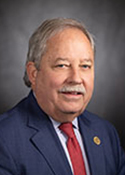
Rep. Richard Hayes
Sponsored bills
Maddy summaryHR 691 is a ceremonial resolution recognizing April 2 and 3, 2025, as "Denton County Days" at the Texas State Capitol. It formally welcomes a delegation from Denton County, Texas, to the Capitol during those dates. The resolution acknowledges the county’s history, growth (over 1 million residents), economic development, educational institutions, and cultural attractions. As a non-binding recognition resolution, it has no policy impact or direct effect on legislation.
Maddy summaryHB 4550 amends Texas law to clarify how school districts can use funds allocated for school safety under the Foundation School Program. It specifically permits spending on infrastructure upgrades (like door locks and security cameras), hiring safety personnel (including school resource officers), and evidence-based programs such as active shooter training, mental health support, and restorative justice initiatives. The bill explicitly prohibits razor wire while allowing mobile metal detectors and technology like silent panic alerts. It directly affects all Texas public school districts receiving these safety allotments, requiring funds to align with these defined safety measures rather than broader uses.
Maddy summaryThis is a ceremonial resolution (HR 658), not a substantive bill. It formally honors John Sharp for his retirement as chancellor of The Texas A&M University System after a 14-year tenure - the longest in the system's history. The resolution recognizes his leadership in expanding the system to 11 universities, growing research expenditures to over $1 billion, and overseeing major campus developments like the Texas A&M-RELLIS campus and Kyle Field renovations. As a commemorative resolution, it has no policy impact or direct effect on any individuals or programs.
Maddy summaryHB 4470 allows a tenant who is a servicemember's dependent to legally end a lease early without owing future rent or other fees under specific military service circumstances. It applies when the lease was signed before the tenant entered military service, when a servicemember gets orders for a permanent relocation or 90+ day deployment after signing the lease, or when a spouse guarantees the lease for the dependent and the servicemember later receives qualifying orders. The law only affects leases entered into or renewed on or after September 1, 2025, and requires the tenant to vacate the property before the lease ends. This change modifies existing Texas property law to provide lease termination options for military-connected families facing service-related relocations or deployments.
Maddy summaryHB 4959 modifies Texas property tax rules for agricultural land, allowing landowners to appraise certain farmland at its "productivity value" (lower than market value) for tax purposes. It affects Texas landowners who use property for agriculture, requiring continuous agricultural use for three years and making farming their primary income source to qualify. The bill clarifies that waiving this special appraisal doesn’t count as a "change of use" triggering higher taxes, and updates definitions of "qualified open-space land" to include wildlife management areas meeting specific standards. If land is sold or stops being used for agriculture, it would lose the lower tax rate. This focuses on maintaining stable tax assessments for working farmland.
Maddy summaryThis bill requires the Texas Department of Public Safety (DPS) to test all evidence containing suspected controlled substances (drugs) in criminal cases using approved laboratory methods. It applies only to evidence submitted to DPS on or after September 1, 2025, by state attorneys prosecuting criminal cases. DPS must complete testing within 180 days; if not, they must return the evidence and reimburse the state for independent testing. This affects criminal drug cases by ensuring timely, standardized evidence processing.
Maddy summaryHB 4710 makes it a first-degree felony to travel from Texas with a child residing in Texas to another state to access gender transition or reassignment procedures or treatments that would be prohibited in Texas under existing law. It directly affects Texas parents, guardians, or caregivers who travel with minors for such care outside the state. The law creates a criminal offense unless the treatment is already authorized under current Texas law (Section 161.703). The bill takes effect September 1, 2025, and applies only to procedures prohibited within Texas.
Maddy summaryThe full text of HB 4808 is not available in the provided context, only the title and basic tracking information. The bill title - "Relating to the carrying of weapons by staff in medical facilities" - suggests it addresses firearm policies for medical facility employees, but specific provisions cannot be described without the bill text. Recent actions show it was filed on March 13, 2025, and referred to the Homeland Security committee. For a complete summary, the PDF version of the bill must be consulted.
Maddy summaryHB 4846 changes Texas law to provide more flexible payment options for fines in criminal cases involving children who commit certain Class C misdemeanors. It allows courts to set payment plans for children, including installments or delayed payments, rather than requiring immediate full payment. The bill also explicitly adds children to the group eligible for fine waivers if they are poor or lack resources, and if paying the fine would cause undue hardship. These provisions apply specifically when the defendant was a child at the time of the offense.