

Maddy summaryHB 3399 prohibits physicians and health care providers in Texas from performing certain gender transition procedures or prescribing specific treatments for minors (under 18) using public funds. It bans surgeries like hysterectomy, orchiectomy, and mastectomy, as well as prescription drugs that block puberty or cause infertility (e.g., puberty blockers or high-dose hormone therapy). The bill specifically targets Medicaid and public assistance programs, restricting their use for these services for children. Exceptions allow care with parental consent for individuals under 18. The law applies to all public health programs covered under Texas Health and Safety Code Chapter 161.
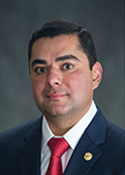
Rep. J.M. Lozano
Sponsored bills
Maddy summaryHB 3079 amends Texas law to allow the Texas Commission on Environmental Quality to establish a program under the state's emissions reduction plan specifically targeting emissions from marine vessels. The program would provide grants or funding to reduce nitrogen oxide and particulate matter emissions from vessels operating at seaports in areas that don't meet air quality standards (nonattainment areas) and from vessels used for pilot services (as defined in the Transportation Code). The commission may prioritize projects that address these emission sources to improve air quality. The bill takes effect September 1, 2025.
Maddy summaryThis is a ceremonial resolution (not a law) recognizing March 20, 2025, as "Calhoun County Day" at the Texas State Capitol. It honors Calhoun County residents gathering in Austin for this event, highlighting the county's history, geography (including 560 miles of coastline), communities, and local leaders. The resolution has no legal effect - it simply extends a ceremonial acknowledgment to the visiting delegation. It directly affects Calhoun County residents attending the Capitol event on that date.
Maddy summaryHB 2951 establishes a state grant program to help rural counties pay for minimum salaries for sheriff's and constable's office staff. The bill sets specific annual salary requirements: $75,000 for sheriffs, $45,000 for deputies making traffic stops, $40,000 for jailers and emergency dispatchers in sheriff's offices, and $45,000 for constables and $40,000 for emergency dispatchers in constable's offices. Counties receiving the grant must use funds exclusively for these salaries, hiring additional staff, or purchasing equipment, while contributing at least 75% of the required salary cost themselves. The comptroller will administer the program with standardized application rules, deadlines, and monitoring procedures.
Maddy summaryBased solely on the provided context, HB 3049's title indicates it would designate animal control officers as first responders, but the bill text is unavailable (marked "not currently available"). The summary section is empty, and no specific provisions, affected groups, or mechanisms are described in the provided information. The bill was filed on February 19, 2025, and referred to the Homeland Security committee. Without the full bill text or summary, a factual policy description cannot be provided.
Maddy summaryHB 3236 increases criminal penalties for driving while intoxicated in school crossing zones during reduced speed periods. It amends Texas Penal Code Section 49.04 to elevate such offenses from a Class B misdemeanor to a state jail felony when operating a vehicle in a school crossing zone under the reduced speed limit (as defined in Transportation Code Section 541.302). The bill applies only to offenses committed on or after its effective date of September 1, 2025. This change directly affects drivers convicted of driving under the influence near schools during designated crossing times, imposing stricter penalties than current law. The legislation does not alter existing penalties for similar offenses outside school zones.
Maddy summaryHB 3210 requires state contractors, local governments (political subdivisions), and private employers in Texas to use the federal E-Verify program to confirm employee work authorization. The bill mandates that state agencies cannot award contracts to entities not registered with E-Verify, and contracts must include a certification statement confirming compliance. Contractors must maintain E-Verify participation throughout the contract term, and violations would be referred to the comptroller for action. This policy directly affects businesses and government entities entering into state contracts by making federal employment verification a contractual condition. The bill focuses on implementing existing federal verification requirements through state contract rules.
Maddy summaryHB 2950 amends Texas law to clarify the jurisdiction of the 2nd Multicounty Court at Law and adjust juvenile board memberships in three counties. It expands the court's authority to share civil case jurisdiction (excluding cases exceeding $250,000) with district courts and adds the court's judge to the juvenile boards of Bee, Live Oak, and McMullen Counties. This change affects how these counties' juvenile boards operate and which courts handle certain civil cases. The bill applies only to cases filed or proceedings started on or after its effective date (September 1, 2025, unless passed by two-thirds vote for immediate effect).
Maddy summaryHB 2816 protects healthcare providers and facilities from being required to participate in or provide certain health care services that conflict with their sincerely held religious or philosophical beliefs. It defines key terms like "conscience," "health care provider" (including students and non-licensed staff), and "health care service" (covering family planning, abortion-related counseling, and treatment). The bill creates a civil remedy for violations and authorizes disciplinary action against entities that force non-participation in services due to conscience objections. It directly affects hospitals, clinics, pharmacists, and all healthcare workers who may decline services like abortion care or contraception-related counseling. The law aims to prevent adverse actions against providers who refuse such services based on personal beliefs.
Maddy summaryHB 2887 prohibits Texas state and local governments from enforcing rules, fees, taxes, or mandates from the World Health Organization, United Nations, or World Economic Forum. The bill explicitly states these international organizations have no jurisdiction in Texas and bars enforcement of their policies by any Texas political subdivision. Key provisions require that state and local entities disregard any mandates from these three organizations starting September 1, 2025. This directly affects Texas government operations, ensuring state and local agencies cannot implement or enforce international organization directives.