

Maddy summaryHB 2561 establishes rules for where municipal utility district boards must hold meetings. It requires boards to designate one or more meeting places within their district, though private residences or offices may be used if declared public and open to attendees. The bill allows meetings outside the district only if no suitable location exists inside (with the site near district boundaries and, if within a city, within municipal limits), and mandates written notice to the commission and public publication in a local newspaper. This directly affects municipal utility district boards across Texas, changing how they schedule and publicize meetings.
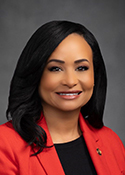
Rep. Katrina Pierson
Sponsored bills
Maddy summaryHB 10, the Regulatory Reform and Efficiency Act, creates the Texas Regulatory Efficiency Office within the governor's office to streamline how state agencies develop and enforce rules. The bill requires agencies to identify unnecessary regulations, reduce costs for businesses and individuals subject to rules, and improve public access to rule information through a new online portal. Key provisions mandate agencies set goals to eliminate ineffective rules and minimize regulatory burdens while maintaining public protection. This bill directly affects state agencies and the businesses, professionals, and residents regulated by their rules.
Maddy summaryHB 5277 amends Texas Health and Safety Code sections 34.005 and 34.013 to clarify that the Maternal Mortality and Morbidity Review Committee may not study or collect records related to voluntary termination of pregnancy (abortion). Specifically, Section 34.005 now includes voluntary termination of pregnancy as a category the committee must study, while Section 34.013 explicitly states that records about such terminations cannot be collected, maintained, or disclosed under this chapter. The bill directly affects the committee’s data collection scope and healthcare providers who would otherwise submit these records. It does not change abortion laws but modifies how maternal health data is handled for this specific category.
Maddy summaryThe bill HB 5541 addresses potential discrimination by state agencies in occupational licensing decisions. It aims to prevent state agencies from denying or revoking occupational licenses based on protected characteristics like race, gender, or religion. The bill would require agencies to provide clear, non-discriminatory reasons for licensing decisions and establish a process for applicants to challenge alleged discrimination. However, the specific provisions and scope of the bill are not detailed in the provided context, as the full text is unavailable and only the title and filing date are documented.
Maddy summaryThe provided context does not include the actual text or details of HB 4720. The bill description states "This version is not currently available, but is coming soon. In the meantime, please see the PDF for the content of this bill," and no substantive bill text, provisions, or policy changes are included in the provided information. Without access to the bill's content, a summary cannot be generated. The recent actions (filed, read first time, referred to committee) indicate the bill is in early legislative stages but do not describe its policy substance.
Maddy summaryHJR 193 proposes a constitutional amendment to remove Texas land tax rules requiring agricultural land to stay in farming for a set period to qualify for lower property tax rates based on farm productivity. Currently, landowners using this tax appraisal method face an extra tax if they switch to non-farming uses or sell the land. The bill would eliminate both the requirement for continuous agricultural use and the penalty tax for changing land use. This change would directly affect Texas landowners who currently use the agricultural appraisal method for property tax purposes. The amendment must be approved by voters in November 2025 to take effect for tax years beginning January 1, 2026.
Maddy summaryHB 4712 requires the Texas comptroller to annually report on the fiscal impact of non-citizens without legal status on state budgets. The report, due by June 30 each year, must detail costs across four areas: healthcare (uncompensated care and Medicaid), law enforcement (incarceration and border operations), public education (bilingual programs and school expenses), and welfare programs (public benefits and fraud costs). It must include methodology explanations and federal funding offsets for education costs. The comptroller must post the report online and submit it to the governor, legislature leaders, and all legislators. This bill directly affects state budget transparency for taxpayers and informs legislative decisions on resource allocation.
Maddy summaryThe context provided does not include the actual text or summary of HB 4992. The bill description states "This version is not currently available, but is coming soon," and no substantive details about the bill's provisions, affected parties, or mechanisms are included in the provided information. Without access to the bill's content or a verified summary, a factual description cannot be generated. Please refer to the official bill text or a published summary for accurate details.
Maddy summaryThe context provided does not include the actual text or provisions of HB 4857. While the bill title indicates it relates to creating a "Fiscal Risk Management Commission," no specific details about its purpose, affected parties, mechanisms, or policy changes are available in the provided materials. The bill was filed on March 13, 2025, and referred to the Appropriations committee on April 3, 2025, but no substantive content is described. A factual summary cannot be generated without access to the bill's text or detailed summary.
Maddy summaryHB 195 requires Texas counties to post specific financial details about school districts on their public websites. It applies to school districts with local revenue above a certain threshold (as defined by Texas education law) that have taken steps to reduce revenue, and to all school districts in the county for which this doesn't apply. The bill mandates counties to display the percentage of a district's maintenance and operations revenue coming from local taxes versus state funds for both the current and prior school years. For qualifying districts, it also requires posting the percentage of taxes used for attendance credits, making school funding sources more transparent to the public.