

Maddy summaryHB 1990 limits liability for owners, lessees, or occupants of nonagricultural land (like commercial or residential properties, not farms) when certain situations cause damage or injury. It specifically shields them from liability if harm results from: peace or federal officers entering the property, firefighters entering, trespassers entering, third parties damaging fences without permission, or wildlife/acts of God. The bill does not apply if the property owner acted with "wilful or wanton" conduct or gross negligence. This law only affects lawsuits arising after its effective date.
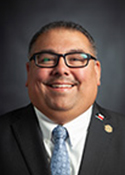
Rep. Ryan Guillen
Sponsored bills
Maddy summaryHB 1353 allows eight specific Texas state agencies - including the Department of Agriculture, Economic Development, Housing, Water Development Board, and others - to issue bonds for infrastructure projects. It establishes a mechanism for these agencies to jointly invest with Mexico’s North American Development Bank to leverage funding for Texas infrastructure. All agreements requiring state funds must be approved by the governor and Legislative Budget Board. The bill directly affects these agencies’ ability to partner on cross-border infrastructure initiatives, with no new taxes or direct impacts on residents.
Maddy summaryHB 5139 creates a legal defense for correctional facility guards and peace officers in Texas who use specific less-lethal weapons, such as tasers, pepper spray, or impact devices, during their duties. The bill states officers are justified if their use of force aligns with Texas Penal Code Chapter 9 standards and follows their required training. It applies only to offenses committed on or after the bill’s effective date (September 1, 2025, unless passed by two-thirds vote). The law does not change existing force standards but explicitly protects officers meeting these two conditions when using designated less-lethal tools.
Maddy summaryHB 318 creates a grant program to provide financial assistance to sheriff's departments in rural Texas counties with staffing shortages. Counties qualify if they have a population of 300,000 or less and a deputy-to-resident ratio of less than 15 deputies per 10,000 residents as of January 1, 2025. The program awards $50,000 per qualified deputy position for the first year of funding and $50,000 per position annually thereafter, administered by the comptroller using state funds. Counties must apply within 30 days of their fiscal year start to receive grants for new deputy positions that meet specific criteria, such as deputies making routine traffic stops.
Maddy summaryHB 1842 modifies Texas law to regulate how nonprofit wildlife conservation associations can sell charitable raffle tickets. The bill prohibits these organizations from using paid advertising (like TV, radio, or newspapers) or statewide promotion for raffles, except through their website to existing supporters. It specifically allows them to sell tickets online only to previously identified supporters, while banning animated graphics for raffle entries or drawings. This applies to qualified nonprofits under Section 2002.003(e) of the Occupations Code and takes effect September 1, 2025, if not passed with a two-thirds vote.
Maddy summarySB 503 requires Texas livestock owners (cattle, hogs, sheep, goats) to register their animal identification marks - such as brands, tattoos, or electronic tags - electronically with county clerks. County clerks must maintain these records electronically and send copies to the Texas Animal Health Commission within 30 days of receipt. The bill updates existing law to mandate electronic record-keeping instead of paper, specifying details like the date of registration and placement location on animals. This law takes effect September 1, 2025, directly impacting all livestock owners who must comply with the new registration system.
Maddy summaryHB 3439 amends Texas law to clarify the attorney general’s role in overseeing tracking equipment and communications access for specific law enforcement entities. It defines "designated law enforcement agencies" to include the attorney general’s criminal investigation division, large county sheriff’s offices, major city police departments, and juvenile/criminal justice inspectors. Key provisions require these agencies to submit annual reports on equipment expenditures and lists of officers authorized to use tracking devices like pen registers. The bill also grants the attorney general subpoena authority to obtain business records from communication providers related to these devices. This directly affects law enforcement agencies with specific population thresholds and the attorney general’s criminal investigation unit.
Maddy summaryThe provided context does not include the actual text or details of HB 3572. The bill title ("Relating to municipal zoning regulations and district boundaries") suggests it involves local land-use rules or geographic boundaries, but no specific provisions, affected parties, or mechanisms are described. Without access to the bill's content (as noted in the context: "This version is not currently available"), a factual summary cannot be created. For accurate details, consult the full bill text or official legislative resources.
Maddy summaryHB 2699 would create an optional permit process for oversize or overweight vehicles transporting cargo in Starr County, managed by the City of Roma. The bill authorizes the city to charge a fee for these permits, which would apply to businesses moving large or heavy loads in the area. This affects commercial trucking companies and logistics businesses operating in Starr County by providing a streamlined, fee-based system for vehicle movement. The key provision is the authorization of a fee for the permit, which the city may choose to implement without mandatory adoption.
Maddy summaryHB 137 designates specific routes for permits allowing oversize and overweight vehicles to travel from international border crossings to ports and industrial areas in Cameron and Hidalgo counties. The bill specifies exact roadways, including State Highways 48 and 4, U.S. Highways 77 and 83, and Farm-to-Market Roads 509 and 106, that must be used for these movements. It also grants the transportation commission authority to approve alternative routes after consulting with port authorities. This bill directly affects commercial trucking companies transporting large cargo across the U.S.-Mexico border in these counties.