

Maddy summaryHB 1806 prohibits Texas governmental entities (like cities, counties, or state agencies) from using public funds to support abortion-related services. It specifically bans taxpayer money from covering costs for travel, lodging, childcare, food, or counseling that helps individuals obtain an abortion or access abortion providers. The bill defines "abortion assistance entities" broadly to include groups providing financial aid, travel planning, or abortion-inducing drugs, and "abortion providers" as facilities performing over 50 abortions annually. This law directly affects government agencies and any organization receiving public funds that facilitates abortion access. The bill does not apply to federal programs conflicting with its provisions.
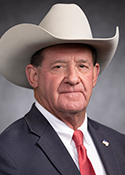
Rep. A.J. Louderback
Sponsored bills
Maddy summaryThe bill text for HB 1688 is unavailable in the provided context, though its title indicates it would allow local governments to provide a property tax exemption for homesteads (primary residences) of certain peace officers. This exemption would apply to all or part of the appraised value of these homes, reducing their tax burden. Without the full text, specific mechanisms, eligibility criteria, or affected groups cannot be detailed. For complete information, refer to the official bill PDF or legislative records.
Maddy summaryThe bill text for HB 1623 is not available in the provided context (only the title and recent actions are listed). Without access to the actual provisions or detailed description of the bill, a factual summary cannot be generated. The title mentions eligibility for property tax limitations under Texas law, but specific mechanisms, affected parties, or policy changes are not described in the available information. To provide an accurate summary, the full bill text or a detailed description would be required.
Maddy summaryThis bill proposes a constitutional amendment allowing Texas local governments to exempt part or all of the property tax on peace officers' primary homes. It would let cities or counties choose a specific dollar amount or percentage to reduce taxes for eligible peace officers (like police and deputies), defined by future state law. The exemption would apply to property taxes starting in 2026, but only if local governments adopt it through their own ordinances. The amendment must be approved by Texas voters in November 2025 before taking effect.
Maddy summaryHB 1549 bans businesses in Texas from selling, offering for sale, or holding for sale "obscene devices" (as defined in the Penal Code), except for sexually oriented businesses operating under existing local licensing rules. The bill creates a civil penalty of up to $5,000 per violation for non-compliant businesses and allows county or district attorneys to seek injunctions and recover investigation costs. It directly affects businesses selling such devices, including retailers and vendors, while exempting licensed sexually oriented businesses. Enforcement is handled through civil lawsuits filed by local prosecutors, with penalties applying per violation.
Maddy summaryThis proposed constitutional amendment would clarify that Texas's Attorney General has the authority to prosecute criminal election law violations alongside local district attorneys. It amends the state constitution to explicitly grant the Attorney General "concurrent jurisdiction" with county or district attorneys for these cases. The change requires voter approval in the 2025 election before taking effect. (Note: This is a procedural constitutional amendment, not a law affecting specific policies.)
Maddy summaryHB 3 establishes an education savings account program in Texas, allowing families to use state funds for approved educational expenses for children enrolled in public schools. The program, administered by the state comptroller, provides funding for costs like tuition at private schools, curriculum materials, or tutoring, with funds drawn from general revenue appropriations. Eligibility includes any child attending a public school who is not enrolled in a participating private school, with priority given to children with disabilities. The bill defines key terms and sets funding limits based on the previous biennium's allocation or the cost per participating child, creating a new option for families seeking alternatives to traditional public schooling.
Maddy summaryHB 1487 would eliminate a fee required to obtain or renew a license to carry a handgun in the state. The bill specifically targets the removal of this fee for original, duplicate, modified, or renewed licenses. It directly affects individuals seeking or maintaining a permit to carry a handgun. The bill has been referred to the Homeland Security, Public Safety & Veterans' Affairs committee but the full text is not currently available for review. Without the bill text, specific mechanisms or affected groups cannot be detailed beyond the title's description.
Maddy summaryHB 1486 would prohibit property owners' associations (POAs) from including restrictions on displaying Thin Blue Line flags in their governing documents (like covenants or bylaws). The bill directly affects POAs and homeowners who wish to display these flags on their properties. It aims to prevent POAs from banning or limiting such displays through their formal rules. (Note: The bill text is unavailable in the provided context, so this summary is based solely on the title and summary description.)
Maddy summaryThis resolution formally recognizes March 11, 2025, as "University of Houston-Victoria Day" at the Texas State Capitol. It commemorates the university's history, educational programs, and contributions to the Victoria community and Texas. The resolution serves only as a ceremonial acknowledgment with no policy changes or financial impact. It does not affect any laws, regulations, or individuals beyond the symbolic recognition.