

Maddy summaryHB 3265 prohibits health benefit plan issuers, pharmacy benefit managers, and drug manufacturers from discriminating against entities participating in the federal 340B drug discount program. It bans denying access to discounted drugs, restricting acquisitions, or requiring unnecessary data submission as a condition for 340B drug access. Covered entities (like community health centers and hospitals), pharmacies under contract with them, and their authorized partners are directly protected. Violations carry a civil penalty of up to $50,000 per offense, enforceable through the Texas Health and Human Services Commission.
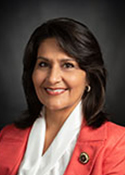
Rep. Penny Morales Shaw
Sponsored bills
Maddy summaryHB 1699 requires healthcare providers to wait at least three business days before sending certain sensitive medical test results electronically to patients or their representatives. It specifically applies to cancer-related pathology/radiology reports and genetic test results. The bill mandates that such results must be disclosed via secure electronic means (like patient portals) only after they're finalized, giving providers time to review results before sharing. This affects patients receiving these test results and healthcare systems managing electronic health records. The law takes effect September 1, 2025.
Maddy summaryThis bill requires Texas colleges, universities, and local governments to reduce electricity use by 5% annually for six years, beginning September 1, 2025. It applies to all public entities covered under the Health and Safety Code, including state agencies. Each entity must establish yearly targets to meet the 5% annual reduction goal. The law takes effect on September 1, 2025.
Maddy summaryHB 809 removes a restriction that previously prevented parties from using digital signatures on divorce paperwork. It allows digitized signatures for waivers in divorce cases and aligns with electronic notarization rules for family law documents. This change applies to all divorce cases pending or filed after September 1, 2025. The bill modernizes how divorce-related documents are signed, updating Texas law to accept digital signatures in family court proceedings.
Maddy summaryThis bill would allow Texas to join the Occupational Therapy Licensure Compact, enabling occupational therapists licensed in Texas to practice in other participating states without obtaining new licenses. It establishes mutual recognition of licenses across states to improve public access to therapy services, particularly benefiting military families relocating between states and patients in border communities. The bill authorizes fees related to Texas's participation in the compact. This creates a framework for interstate practice while preserving each state's regulatory authority over licensure standards.
Maddy summaryHB 318 creates a grant program to provide financial assistance to sheriff's departments in rural Texas counties with staffing shortages. Counties qualify if they have a population of 300,000 or less and a deputy-to-resident ratio of less than 15 deputies per 10,000 residents as of January 1, 2025. The program awards $50,000 per qualified deputy position for the first year of funding and $50,000 per position annually thereafter, administered by the comptroller using state funds. Counties must apply within 30 days of their fiscal year start to receive grants for new deputy positions that meet specific criteria, such as deputies making routine traffic stops.
Maddy summaryHB 5265 creates the Texas Health Care Professional Education Fund to dedicate state funding toward increasing health care degree production at eligible public universities. The bill directly affects Texas public universities designated as "general academic teaching institutions" that offer health care professional degrees (such as bachelor's, master's, or doctoral programs in fields listed by federal education standards). Key provisions establish the fund outside the state treasury, managed by the comptroller through a trust company, with distribution rules designed to preserve fund value and ensure predictable annual funding. The goal is to meet state workforce needs by providing a stable, independent funding stream specifically for health care degree programs at qualifying institutions.
Maddy summaryHB 3326 requires Texas public colleges and universities to help adjunct and part-time faculty qualify for the federal Public Service Loan Forgiveness Program (PSLF). Institutions must count part-time faculty hours at 3.35 hours per credit hour taught and designate them as full-time if they average 30 hours weekly. They must certify employment within 60 days of receiving a faculty member's application and provide annual written notice (by October 1) about PSLF eligibility to all employees. The law takes effect September 1, 2025.
Maddy summaryThis Texas bill amends the Occupations Code to clarify which rodeo organizations can conduct charitable raffles through their foundations. It adds specific definitions to include organizations sanctioned by the Professional Rodeo Cowboys Association (PRCA) or Women's Professional Rodeo Association (WPRA) as "professional sports teams," and defines "rodeo venues" as facilities hosting sanctioned rodeo events. This change directly affects charitable foundations affiliated with PRCA/WPRA-sanctioned rodeo organizations operating at approved venues. The bill does not create new raffle rules but updates eligibility criteria under existing law, effective September 2025.
Maddy summaryHB 2115 establishes minimum salary requirements for rural law enforcement positions funded through state grants. It sets annual minimums of $75,000 for sheriffs, $45,000 for deputies making traffic stops, and $40,000 for jailers/telecommunicators. Counties receiving grants must use funds exclusively for these salaries, hiring, or equipment, and must contribute 75% of the required salary costs. The bill directs the comptroller to create application rules, deadlines, and monitoring procedures to ensure funds are used properly. This directly affects rural Texas counties operating sheriff's offices, constable offices, and prosecutor's offices.